























The Traitors Takes Over Winter 2026: UK Finale Ratings Surge as US Season 4 Races Toward a February 26 Endgame

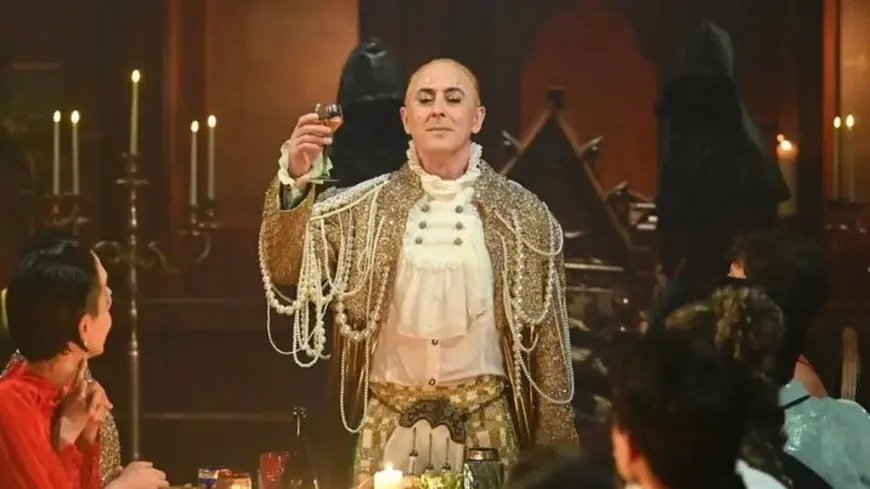
The Traitors has turned January 2026 into a month-long, global social deduction binge, with the UK edition already crowning winners and the US edition deep into its most volatile stretch ahead of a late February finish. The franchise’s grip is powered by a simple trick: it makes strategy feel personal. Alliances look like friendship, betrayals look like character, and every episode ends with the kind of cliffhanger that turns group chats into war rooms.
In the UK, the fourth series wrapped on January 23, 2026 ET with Traitors Rachel Duffy and Stephen Libbey winning and splitting a prize pot of 95,750 pounds. The finale also posted a major live audience, peaking near 9.6 million viewers, underscoring just how mainstream the format has become. In the US, Season 4 is still unfolding, with Episode 7 landing Thursday, January 29, 2026 at 9 pm ET and the finale and reunion set for Thursday, February 26, 2026 at 9 pm ET.
The Traitors in 2026: Where the story stands right now
The UK run is done, and it ended the way producers love most: a finale that feels both inevitable and shocking, with the remaining players tightening the circle until only the best positioned deceivers remain. Rachel and Stephen’s win cements a key truth about the game: late-stage success is less about lying loudly and more about managing trust quietly, one relationship at a time.
In the US, Season 4 is designed like a pressure cooker. It launched Thursday, January 8, 2026 with three episodes, added two more on January 15, and has shifted into weekly drops since. The current release runway is clear and fast:
-
Thursday, January 29, 2026 at 9 pm ET: Episode 7
-
Thursday, February 5, 2026 at 9 pm ET: Episode 8
-
Thursday, February 12, 2026 at 9 pm ET: Episode 9
-
Thursday, February 19, 2026 at 9 pm ET: Episode 10
-
Thursday, February 26, 2026 at 9 pm ET: Season finale and reunion
That schedule matters because it is engineered to keep discourse hot: enough early episodes to hook viewers, then weekly tension that encourages theory culture and rewatching.
Behind the headline: why The Traitors keeps winning the attention economy
The Traitors is not just a reality competition. It is a repeatable narrative machine that reliably generates three things modern entertainment needs: memes, villains, and moral arguments.
Context helps explain why it has hit this peak now. Viewers are saturated with formats where outcomes feel determined by producers, edits, or voting blocs. The Traitors offers a different hook: outcomes feel earned in real time, because social reads matter as much as physical performance. It also compresses big emotions into a short span. Every night includes accusation, judgment, and consequence, with money and pride attached.
The incentives line up neatly:
-
Producers want fast, legible conflict that still feels organic. A secret role game does that automatically.
-
Participants want screen time, reputation management, and a story they can carry into their next project.
-
Audiences want puzzles and payoff. The format provides both, daily, with minimal filler.
The hosts are part of the formula too. In both the UK and US, the host persona acts like a tone-setter: glamorous, theatrical, slightly ominous. That framing makes the show feel like an event even when the gameplay is essentially conversation and voting.
Stakeholders: who gains leverage from a franchise this hot
When The Traitors spikes, it reshapes multiple ecosystems at once:
-
Networks and streamers get a low-to-mid cost tentpole that can anchor winter programming.
-
Casting directors gain proof that cross-franchise reality casting can drive weekly must-watch television.
-
Brands and advertisers benefit from a rare thing: appointment viewing behavior in a fragmented landscape.
-
Contestants gain immediate monetizable attention, but also inherit risk if the edit paints them as untrustworthy, cruel, or opportunistic.
Second-order effects are already visible. Shows like this shift what audiences reward: not just likability, but strategic competence. That feedback loop encourages future casts to arrive more game-aware, which can make later seasons sharper, faster, and more cutthroat.
What we still do not know
Even with clear dates and recent winners, the biggest open questions are structural:
-
Can the US edition maintain suspense as superfan casts get better at detecting patterns?
-
Will the franchise lean harder into celebrity seasons, or rebalance toward civilians to restore unpredictability?
-
How will producers handle the growing online pile-on culture, where villain edits can trigger real-world harassment?
-
Does the format have room for innovation without breaking the simplicity that makes it work?
Those unknowns matter because popularity brings scrutiny. The larger the audience, the more the show becomes a proxy fight about ethics, manipulation, and what behavior is acceptable “for the game.”
What happens next: realistic scenarios and triggers
-
A bigger US finale week than expected
Trigger: a late-game betrayal lands cleanly and turns into a multi-day conversation that boosts reunion viewing. -
A pivot toward more civilian-led editions
Trigger: producers decide celebrities have become too media-trained, so civilians restore chaos and emotional risk. -
A rapid expansion of companion content
Trigger: weekly engagement proves strong enough to justify more aftershows, podcasts, and extra footage. -
A formal tightening of safety and conduct policies
Trigger: public backlash over cyberbullying or harassment forces clearer guardrails and on-air messaging.
The Traitors is entering 2026 with a rare advantage: it feels both simple and endlessly discussable. The UK finale proved the format can still deliver a mass-audience moment. The US season now has one job between now and February 26, 2026: stick the landing in a way that makes viewers argue, rewatch, and immediately ask who is next.