























Aryna Sabalenka beats Elina Svitolina to reach Australian Open 2026 final, sets rematch with Elena Rybakina

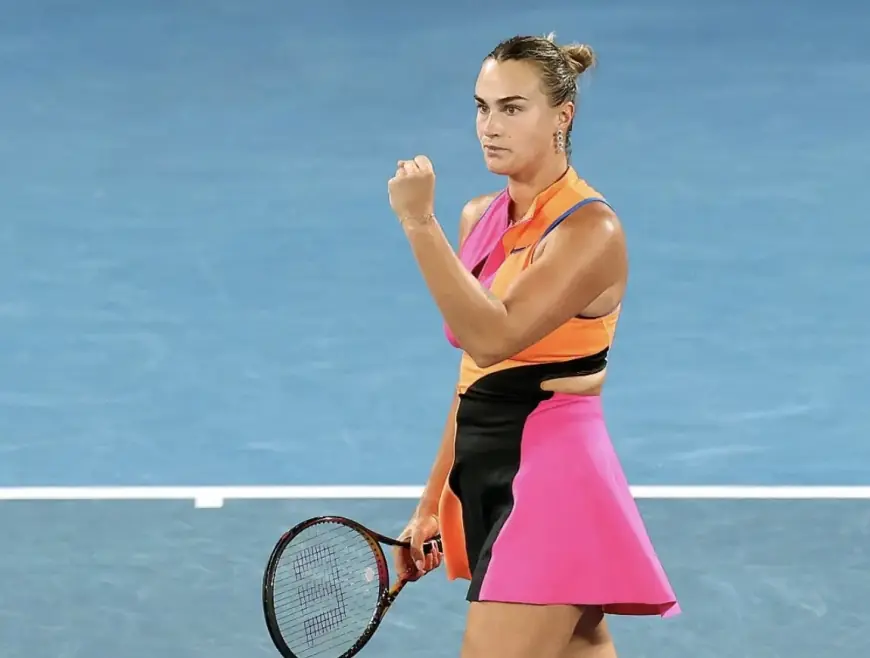
aryna sabalenka powered into the Australian Open 2026 women’s singles final with a straight-sets win over Elina Svitolina, keeping her Melbourne run spotless and setting up a familiar championship matchup. The top seed’s 6-2, 6-3 semifinal victory keeps the Aus Open trophy within reach again, while Svitolina’s strong fortnight ends one round short of the title match.
Sabalenka vs Svitolina: straight-sets semifinal sends the No. 1 back to the title match
The sabalenka vs svitolina semifinal was largely dictated by first-strike tennis, with Sabalenka stepping inside the baseline to take time away and force shorter replies. She closed the match 6-2, 6-3 in 1 hour 16 minutes on Rod Laver Arena, breaking serve four times and finishing key return games with heavy forehand pace.
Even without relying on aces, Sabalenka consistently won the most important points. She converted 4 of 7 break chances, while Svitolina managed 1 of 4, a gap that reflected how often rallies ended with Sabalenka in control rather than in defense. The numbers also told a clean story of pressure: Sabalenka won a majority of total points and repeatedly pushed Svitolina into second-serve situations when games tightened.
For Elina Svitolina, the semifinal still capped a high-level Australian Open campaign that included notable wins earlier in the draw. She kept trying to change the rhythm with variety and depth, but the margin for error shrank quickly once Sabalenka started landing returns deep and taking the ball early.
The moment that changed the tone, and what still isn’t fully clear
Early in the first set, an officiating decision involving a hindrance call became a flashpoint. The ruling was reviewed and upheld, and Sabalenka’s reaction was immediate, with her intensity spiking in the games that followed as she pressed harder on return and accelerated points.
The incident mattered less for the scoreboard than for the mood: it appeared to sharpen Sabalenka’s focus and helped turn a tense opening into a one-way stretch of games. Further specifics were not immediately available on whether the chair umpire’s decision will be reviewed again after the match, or whether any additional tournament process will follow.
As expected, there was no post-match handshake, consistent with Svitolina’s approach in matches against opponents from Belarus and Russia since the war in Ukraine began. Some specifics have not been publicly clarified about any formal on-court communication beyond the standard conclusion of play.
Rybakina survives Pegula to complete the Australian Open final pairing
In the second semifinal, Elena Rybakina defeated Jessica Pegula 6-3, 7-6(7) in 1 hour 40 minutes to reach the final and set a championship rematch. Rybakina’s first-set serving and flat baseline power built an early cushion, but the finish required real composure after Pegula mounted a late push.
Pegula saved three match points while serving at 3-5 in the second set, extending the match into a tense stretch where both players traded breaks and momentum swings. Rybakina eventually held firm in the tiebreak, finishing with six aces and a sizable edge in winners that reflected how often she could end points on her racquet when she committed to her patterns.
The result also carries recent history: Sabalenka and Rybakina have faced each other in major moments before, including their Australian Open final meeting in 2023, which Sabalenka won in three sets. This week, both have reached the final without dropping a set, setting up a matchup between two of the tour’s cleanest ball-strikers.
How the Australian Open final works, who it affects, and what comes next
Women’s singles at the Australian Open is decided in best-of-three sets: the first player to win two sets takes the title, and sets typically go to a tiebreak if they reach 6-6. At this stage, the most repeatable formula usually wins, because the environment tightens: the same court, the same ball, the same pressure, and very little room for tactical drifting once a pattern starts paying off.
The Australian Open 2026 women’s singles final is scheduled for Saturday, January 31, 2026 ET, with the published start time aligning to the early morning in the United States. That timing matters for stakeholders beyond the two finalists. Fans in North America are asked to watch at off-hours, while in Melbourne the match anchors the biggest ticket of the women’s event, impacting attendees, tournament staff, and the local businesses that surge with finals-week demand.
For players and coaches across the tour, the result also reshapes the immediate landscape: a win adds a Grand Slam title and the ranking points that come with it, while a loss still signals a level that can carry into the next stretch of the season.
Next up is the championship match itself on Saturday, followed immediately by the on-court trophy ceremony, with the Daphne Akhurst Memorial Cup awarded to the winner.