

























Exploring the Meaning of ‘Ward’ in Bridgerton

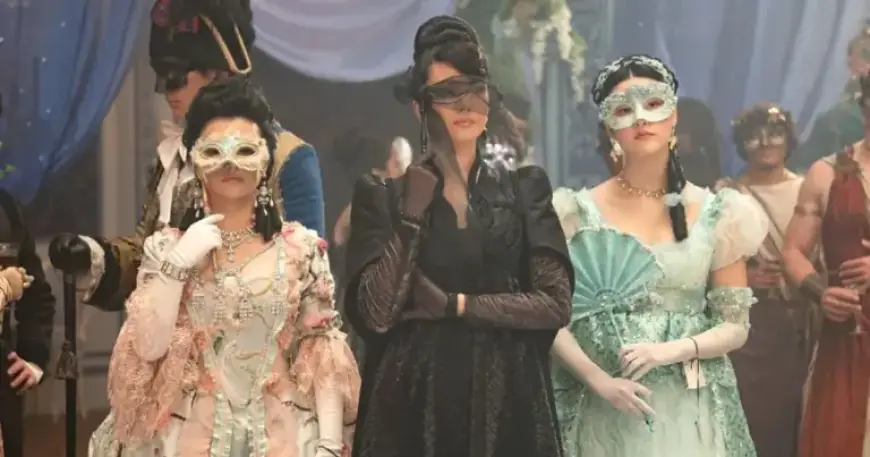
Bridgerton fans are currently intrigued by the relationship dynamics between Sophie Baek and Lord Penwood, particularly regarding the usage of the term “ward.” The fourth season of the popular Netflix series has sparked discussions about the implications of this title and its significance within both the show and its source material.
Understanding the Term ‘Ward’ in Bridgerton
In the context of Bridgerton, the term “ward” denotes a child who is typically under the care of an adult guardian. This situation becomes particularly complex when considering Lord Penwood’s connection to Sophie after a pivotal scene. During a flashback in episode two, audiences witness Sophie, portrayed by Yerin Ha, being introduced to Lady Araminta Gun, played by Katie Leung, as Lord Penwood’s ward.
Implications of Sophie’s Status
Initial reactions to Lord Penwood’s revelation indicate a hidden backstory. Araminta’s shock suggests that Sophie’s status as a ward may be a societal facade, as it implies a potentially controversial parentage. This speculation is further supported by a subsequent exchange during a funeral sequence, where Araminta hints that Sophie is the daughter of Lord Penwood and a maid. The narrative reinforces the idea that Lord Penwood’s relationship with Sophie is not merely that of guardian and ward, but one steeped in complex social dynamics.
Societal Constraints and Class Dynamics
- Sophie learns from Araminta that she must remain “invisible” to protect her status, indicating the societal pressures surrounding her.
- Despite her noble lineage, Sophie is cautioned against aspiring beyond her class, reflecting the stringent class system of Regency society.
Sophie’s character arc illustrates the struggles of navigating social status and identity. These themes echo throughout the series, capturing the audience’s intrigue as they anticipate the unfolding narrative in part two of season four.
Sophie’s Backstory in the Books
The relationship between Sophie and Lord Penwood takes on deeper meanings in the source material. “An Offer from a Gentleman,” the novel adapted for Bridgerton’s third season, reveals that Sophie is indeed the illegitimate daughter of Lord Penwood. Following her mother’s passing, Sophie was left at his doorstep, prompting a complicated relationship characterized by affection in the series, contrasted with a harsher reality in the novel.
Differences Between Show and Book
- In the show, Lord Penwood exhibits paternal affection towards Sophie, whereas, in the novel, his care is less evident.
- Araminta’s treatment of Sophie also varies significantly; her kindness is superficial and changes after Lord Penwood’s death.
These differences illustrate how adaptations can reshape character dynamics and societal commentary. The anticipation builds as viewers prepare for the release of Bridgerton season four, part two, on February 26.
For further updates on Bridgerton and more television news, please visit Filmogaz.com.