





















Why Sabalenka and Svitolina Don’t Shake Hands, and Why It Keeps Hijacking the Tennis as Rybakina Looms

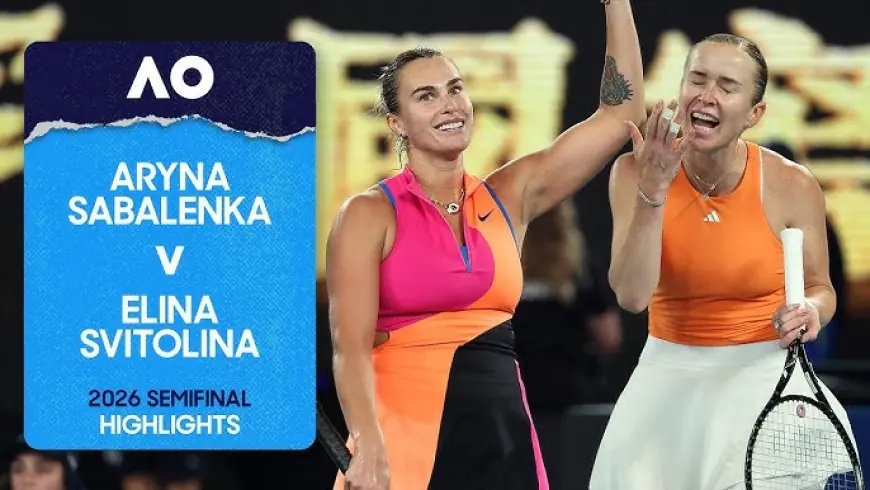
A familiar flashpoint returned at the net this week: Aryna Sabalenka and Elina Svitolina finished their match without the traditional handshake. For some fans, it looked like disrespect. For others, it was expected. Either way, the moment traveled faster than the highlights, adding fresh heat to a rivalry that already carries extra weight beyond rankings and tactics.
The timing matters. With the Australian summer swing in full force, the top end of the women’s game is clustering into repeat matchups: Sabalenka in the spotlight, Svitolina carrying a national cause onto court, and Elena Rybakina hovering as the most natural counterpunch to Sabalenka’s power-first blueprint. In US Eastern Time, the biggest matches often land overnight, turning “tennis tonight” into a mix of late-night viewing and early-morning replays.
The No-Handshake Moment: Protest, Not Personal
The missing handshake is best understood as a policy, not a feud. Since the start of the war in Ukraine, several Ukrainian players have declined post-match handshakes with opponents from Russia and Belarus. The stance is a form of protest and solidarity, and it has been applied repeatedly on major stages.
That’s why the question “Why doesn’t Sabalenka shake hands?” often has the framing flipped. In many of these matches, the Ukrainian player is the one choosing not to engage in the customary net exchange. Sabalenka, who represents Belarus, has become part of that pattern regardless of what she does or does not want in the moment.
The sport’s problem is that tennis etiquette is a built-in language. A handshake is the punctuation mark that says competition is over and respect remains. When it disappears, the audience instinctively tries to translate the silence. The translation gets messy because the meaning is political, not interpersonal, and tennis has no universal script for how to present that to a global crowd in real time.
Sabalenka vs Svitolina: Power Meets Elastic Defense
On court, Sabalenka and Svitolina represent two different answers to the same question: How do you win at the highest level when everybody hits harder than ever?
Sabalenka’s answer is acceleration. She tries to take time away, strike early, and keep opponents from settling into patterns. Her best stretches look like controlled chaos: bold returns, heavy first serves, and immediate pressure on the first neutral ball.
Svitolina’s answer is elasticity. She absorbs pace, extends rallies, and waits for the opponent’s risk to tip into error. When she gets the match into long exchanges, the scoreboard can swing quickly because she forces extra shots and extra decisions.
That contrast is why their meetings feel tense even before the handshake question arrives. The match can turn on a short run of points, and the body language at the end becomes the clip everyone shares, even when the tactical story is richer.
Rybakina vs Sabalenka: The Clean Power Counter
If Sabalenka is the sport’s loudest version of power, Rybakina is the quietest. She generates pace with minimal motion, serves with effortless depth, and keeps her tempo steady when matches tighten. Against Sabalenka, that steadiness can matter as much as shot speed.
The chess match is simple to describe and difficult to execute:
-
Sabalenka wants early contact and return dominance, forcing Rybakina to defend from uncomfortable positions.
-
Rybakina wants first-strike efficiency, holding serve with authority and redirecting pace without feeding Sabalenka’s rhythm.
When these two collide, thin margins decide everything. A single loose service game, a brief dip in first-serve percentage, or one overhit return can flip a set.
Sabalenka Age, Husband Searches, and the Attention Economy
Search spikes during big tournaments create a second, parallel storyline: quick facts and personal life queries. Sabalenka is 27 years old. Searches about a “husband” are common, but she has not publicly announced being married. The gap between what fans search and what is confirmed is exactly how rumor thrives during high-visibility weeks.
This matters because it shapes how athletes are covered. The more the spotlight widens into personal speculation, the more the tennis itself becomes background noise, especially when a political etiquette story is already dominating the conversation.
Tennis Tonight in US Eastern Time: Why It Feels Like It’s Always On
If you’re following “tennis tonight” in US Eastern Time during Australia-based events, expect the marquee sessions to land late evening through early morning. The practical tip is to treat the schedule like a rolling window:
-
Late night ET tends to carry the first wave of headline matches.
-
Early morning ET often features the biggest show courts finishing.
-
Replays and highlights fill the daytime ET gap.
If a match time shifts, it’s usually because of earlier matches running long, not because the tournament is changing its priorities.
Behind the Headline: Incentives, Stakeholders, Missing Pieces, Second-Order Effects
Context: The no-handshake pattern is now a recurring part of the tour’s biggest moments. It is no longer “news” inside the locker room, but it remains news to many fans because tennis traditionally packages itself as apolitical ritual.
Incentives: Svitolina and other Ukrainian players carry reputational risk at home if they soften their stance, while Sabalenka faces reputational risk abroad simply by being associated with Belarus. Tournament organizers want the focus on sport. Broadcasters want a clean narrative. Social media rewards conflict, not nuance.
Stakeholders: Players, their teams, tournament officials, sponsors, and fans all have leverage in different ways. Even the crowd becomes a stakeholder because boos or cheers can intensify a moment that players are trying to handle clinically.
Missing pieces: Tennis still lacks a standardized, on-court protocol for these situations. Should there be a clear post-match alternative gesture? Should announcements explain it beforehand? The absence of clarity guarantees repeated backlash.
Second-order effects: Net-moment controversies can outlive results. Martina Hingis-era storylines showed how quickly etiquette narratives become part of legacy, sometimes eclipsing years of excellence. Today, the amplification is faster, and the political context makes misinterpretation more damaging.
What happens next, realistic scenarios with triggers:
-
Quiet normalization if tournaments introduce a consistent alternative gesture that players can choose without drama.
-
Escalation if crowds keep reacting loudly, prompting more pointed post-match comments from players.
-
Deflection back to tennis if a marquee final becomes undeniable quality, shifting conversation to tactics and titles.
-
Renewed scrutiny if any player breaks the pattern unexpectedly, creating a new wave of “why now?” questions.
The frustration in “smh” is understandable, but the clearest read is this: the handshake is no longer a simple sportsmanship signal in these matchups. It’s a political symbol, and until tennis builds a better script for it, the net will keep stealing the spotlight from the baseline.