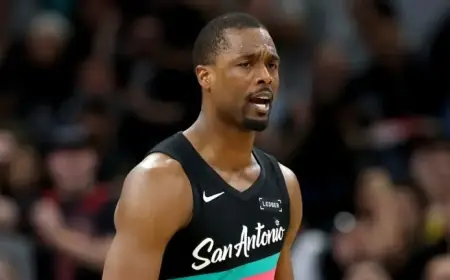

















Jarrett Allen and Jonathan Kuminga sit at the center of deadline chatter as injuries reshape priorities

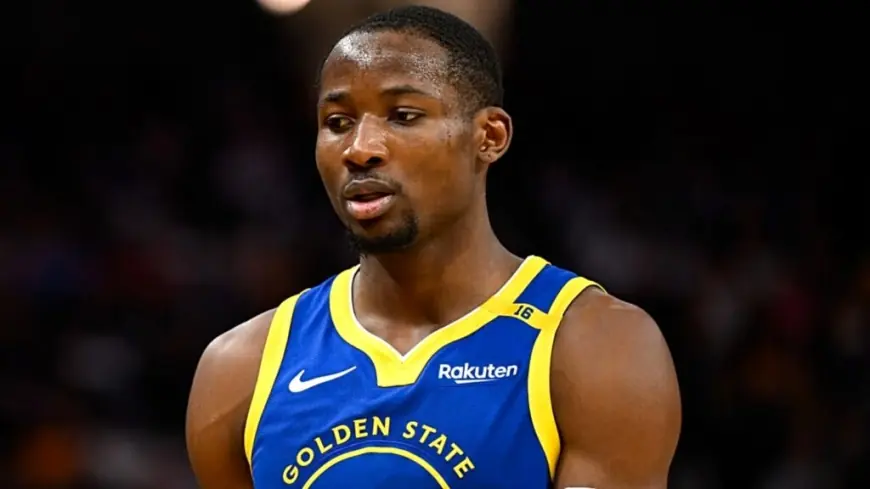
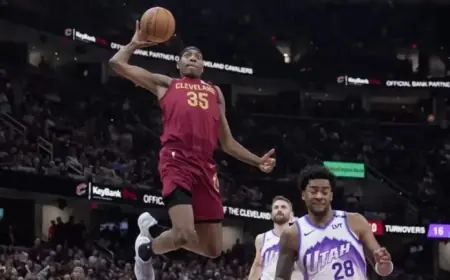
Jarrett Allen has become an even bigger pillar for Cleveland as the calendar turns toward the NBA trade deadline, while Jonathan Kuminga’s situation in Golden State has shifted from a playing-time standoff to a health-and-availability question. With the league’s in-season trade cutoff set for Feb. 5, 2026 (ET), both names are being discussed for different reasons: Allen as a stabilizing anchor for a team trying to win now, and Kuminga as a talented forward whose future is suddenly harder to evaluate in the short term.
Cleveland leans on Jarrett Allen as the frontcourt gets thinner
Cleveland’s recent stretch has demanded more steadiness than spectacle, and Allen’s role reflects that reality. The Cavaliers are sitting at 28-20, and they’ve had to navigate a rotating list of absences around their core, including time missed by key teammates. In that context, Allen’s value is simple and visible: screen-setting, rim protection, defensive rebounding, and the kind of dependable interior finishing that keeps the offense from drifting too far into jump-shot dependence.
The trade conversation around Cleveland has been less about tearing down and more about whether the roster needs a targeted adjustment for the final months of the season. Allen’s name tends to surface in those discussions because he is both highly useful and, by position, the kind of player other teams often covet. Still, there is a meaningful difference between trade chatter and actual intent.
Some specifics have not been publicly clarified about how aggressively Cleveland plans to pursue roster changes ahead of the deadline. No trade involving Allen has been announced.
Jonathan Kuminga’s trade request collides with a knee injury
Kuminga’s season has been defined by turbulence: inconsistent minutes, a public desire for a change of scenery, and now a medical pause that complicates everything. Earlier in January, Kuminga formally asked to be traded after frustration over his role. Soon after, he suffered a left knee hyperextension that imaging later confirmed as a bone bruise, and he also tweaked his right ankle during the same sequence.
The timing is brutal for all parties. For the Warriors, the next two weeks were already about balancing short-term competitiveness with the long-term need to keep the roster flexible. For Kuminga, it was a window to either force his way into a larger role or raise his value on the market with strong on-court stretches. An injury interrupts that leverage on both sides: it can limit his ability to showcase form, and it can make potential trade partners more cautious about giving up meaningful assets without a clear return timeline.
A full public timeline has not been released for Kuminga’s return, and a firm re-evaluation date has not been set publicly.
How the NBA trade deadline works and why injuries change the math
The trade deadline is a hard cutoff for in-season player movement, after which teams must carry their roster into the stretch run and postseason with only minor exceptions. In practice, the two weeks before the deadline are when front offices finalize priorities, compare prices, and decide whether to buy, sell, or stand pat.
Injuries change that math quickly. A contender may pivot into urgency if a starter goes down, raising demand for replacements at specific positions. Conversely, an injury to a player who might be moved can freeze talks or force restructured offers built around medical uncertainty. Teams also have to consider salary-matching rules and future flexibility, which is why even logical basketball fits can fail once contracts and timing collide.
That mechanism is why Allen and Kuminga can end up in the same conversation without being in the same situation: the deadline doesn’t just reward talent, it rewards availability and clarity.
What this means for stakeholders and the next milestone
Two groups feel the immediate impact first: fans and locker rooms. Fans see trade rumors as a referendum on team direction, while players live with the day-to-day uncertainty of whether a strong week of basketball will be followed by a sudden move. Front offices and coaches are another directly affected group, because they must plan lineups and rotations while also preparing for the possibility that one piece could be swapped out overnight.
For Cleveland, the short-term focus remains stability: keep winning, keep the defense reliable, and avoid making a move that creates a new weakness at center. For Golden State, Kuminga’s health status now sits alongside any roster decision, because the team must decide whether to wait for recovery, adjust expectations, or keep exploring options with the understanding that medical ambiguity can narrow the market.
The next verifiable milestone is the NBA trade deadline on Feb. 5, 2026 at 3:00 p.m. (ET), when any real outcomes for Allen or Kuminga will either become official transactions or settle into “no move” clarity for the rest of the season.