

























Hubble Captures Rare Cosmic Alignment with 3I/ATLAS

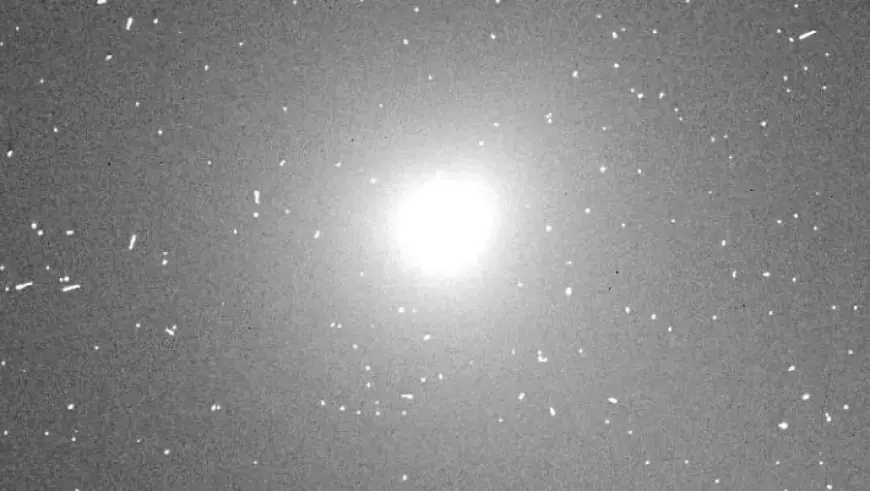
NASA and the European Space Agency’s Hubble Space Telescope made a remarkable observation on January 22, 2026. The interstellar comet 3I/ATLAS was captured in a rare alignment with the Sun-Earth axis, showcasing stunning jet structures and an elongated anti-tail.
Exceptional Cosmic Alignment
The alignment occurred at 13:10 UTC, when 3I/ATLAS was only 0.69 degrees away from the Earth-Sun axis. This positioning allowed Earth to pass almost directly between the Sun and the comet, creating favorable conditions for observation.
Importance of the Observation
Professor Abraham Loeb from Harvard University and Dr. Mauro Barbieri from INAF-Padova Observatory highlighted the significance of interstellar objects for studying extraterrestrial materials. In their research published in the Research Notes of the American Astronomical Society, they noted that earlier interstellar objects such as 1I/Oumuamua lacked detectable gas or dust, and 2I/Borisov was only observed at angles greater than 16 degrees from the Sun-Earth axis.
Details of the Hubble Capture
The images were taken using Hubble’s Wide Field Camera 3 (WFC3) during this unique observation window. The data collected revealed a system of four distinct jets emitting from the comet. Notably, one prominent anti-tail was directed towards both the Sun and Earth.
- Observation Date: January 22, 2026
- Alignment Angle: 0.69 degrees
- Instruments Used: Hubble’s Wide Field Camera 3 (WFC3)
- Jazz of Jets: 4 jets and 3 mini-jets
One of the mini-jets was faint, possibly due to its unfavorable orientation relative to Earth. This observation presents an unprecedented opportunity to study the composition and structure of the jets from 3I/ATLAS, which have shown variability in brightness influenced by the particles released during their activity.
Conclusion
The Hubble Space Telescope’s capturing of the rare cosmic alignment involving 3I/ATLAS opens new avenues for research on interstellar comets. These observations may not recur for decades, making this event significant for astrophysical studies and understanding cosmic phenomena.