

























Amazon Layoffs Hit 16,000 Corporate Employees as “Project Dawn” Email Misfire Triggers Panic and AMZN Stock Watches for Margin Gains

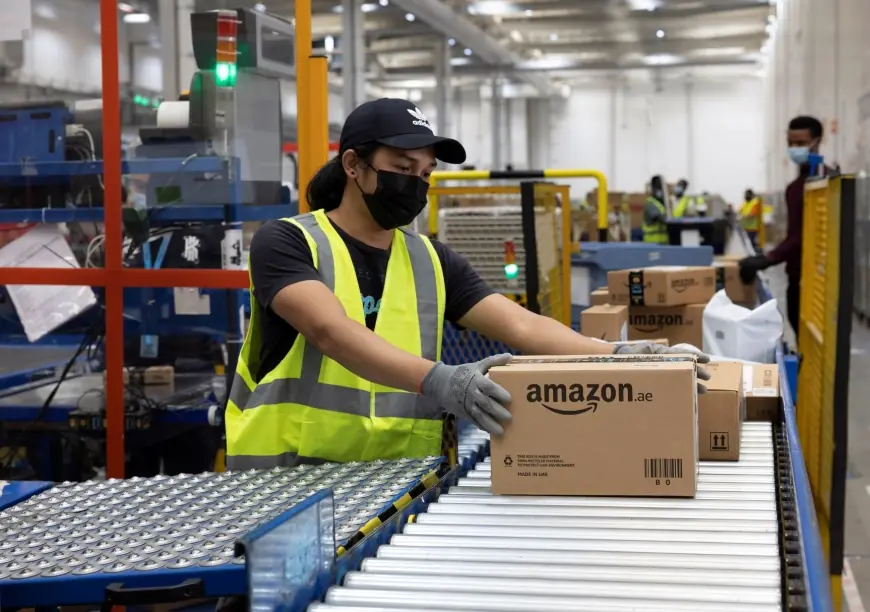
Amazon is cutting roughly 16,000 corporate roles in a new wave of layoffs, a major workforce move that surfaced in chaotic fashion after an internal message about the reductions was sent early and then quickly became the focus of employee concern across the company. The cuts, confirmed Wednesday, January 28, 2026 ET, mark the second large corporate reduction in recent months and underline how aggressively Amazon is trying to simplify management layers while pushing harder into automation and artificial intelligence.
A key name tied to the rollout is Colleen Aubrey, an Amazon executive who signed the prematurely circulated message connected to an internal efficiency effort that has been referred to as Project Dawn. The early email confusion became its own story inside the larger one: when job cuts arrive with mixed signals, trust erodes fast, and productivity often falls before the savings show up.
Amazon layoffs update: what employees are being told and which groups are in scope
Amazon’s latest reduction is framed internally as an efficiency reset, not a pullback from growth. In practical terms, it means fewer layers of approval, fewer “hand-off” roles, and more pressure on teams to ship with smaller headcount.
What’s clear so far:
-
The layoffs are corporate, not warehouse-focused.
-
Impact is expected across multiple parts of the business, including cloud operations, retail-side teams, Prime Video-related groups, and human resources functions.
-
Some employees in the U.S., Canada, and Costa Rica are within the affected footprint.
-
Employees are being told they’ll have a window to pursue internal roles before final separation terms apply, signaling Amazon wants to retain select talent even while shrinking total headcount.
What’s still opaque is exactly what employees care about most: which job families are being prioritized for elimination, how deeply the cuts run inside each organization, and whether this is a one-time reset or the start of recurring quarterly “trimming.”
Who is Colleen Aubrey and why her name is linked to the layoffs
Colleen Aubrey is a senior Amazon leader associated with the company’s AI strategy inside its cloud ecosystem. Her name being attached to the prematurely sent message matters for two reasons:
-
It ties the layoffs directly to the AI-and-efficiency narrative, reinforcing the idea that automation is not just a product line for Amazon but a restructuring tool for its own corporate workforce.
-
It makes the communications misfire more visible, because it suggests the message traveled through high-level channels rather than being an isolated HR error.
In a moment like this, executive signatures become symbols. Even when a layoff is managed by HR and business leaders together, employees read the “who signed it” detail as a clue to which part of the company is driving the strategy.
Why Amazon is doing this now: the behind-the-headline incentives
The incentives are straightforward, and they’re not purely about cost cutting.
-
Investor incentive: Corporate layoffs often signal margin discipline. Even if revenue is growing, markets reward companies that show they can grow without expanding overhead at the same pace.
-
Operational incentive: Amazon has long struggled with internal complexity at scale. Cutting layers is a way to speed decisions and reduce the number of roles dedicated to coordination rather than execution.
-
AI incentive: As generative AI becomes embedded in corporate workflows, leadership teams see a chance to redesign how work gets done, especially in administrative, program management, and internal support functions.
The tradeoff is risk: removing “glue roles” can make organizations faster, but it can also break coordination, increase burnout, and create silent failure modes where no one owns cross-team problems.
AMZN stock: why layoffs can lift shares but still worry customers and employees
AMZN stock often reacts to layoff news in a familiar pattern: optimism about efficiency, then a second look at what the cuts might imply about growth, execution, and morale. Investors like reduced overhead. Customers and employees worry about service quality, product velocity, and institutional knowledge loss.
Second-order effects investors will be watching:
-
AWS performance and customer support load: If cuts touch customer-facing operational roles, response times and retention could suffer.
-
Prime Video and entertainment execution: Creative and production pipelines don’t always respond well to “lean” reorganizations.
-
Talent signal: Repeated layoffs can make hiring harder in critical areas, even when the company says it will keep recruiting selectively.
In short, layoffs can boost near-term financial optics while increasing long-term execution risk. Markets tend to price the first part immediately and the second part only after it shows up in results.
What we still don’t know
Several missing pieces will determine how big this story becomes:
-
The full internal breakdown by organization and job family
-
Whether additional reductions are planned after this round
-
How Amazon is deciding between eliminating roles versus consolidating teams
-
Whether the misfired email leads to changes in how future restructurings are communicated
What happens next: realistic scenarios with clear triggers
-
More clarity, calmer reaction
-
Trigger: Amazon publishes detailed internal guidance, timelines, and transparent role mapping.
-
-
Secondary churn from voluntary exits
-
Trigger: high performers leave after uncertainty rises, forcing backfills in “must-keep” roles.
-
-
AMZN stock treats it as a margin story
-
Trigger: leadership reinforces efficiency goals ahead of earnings, and guidance emphasizes profit leverage.
-
-
Operational bumps show up in customer experience
-
Trigger: support queues, delivery exceptions, or internal tooling issues increase as teams shrink.
-
-
A broader restructure under the same banner
-
Trigger: additional “layer removal” announcements appear in the next quarter as Project Dawn expands.
-
For now, the core facts are these: Amazon is cutting about 16,000 corporate roles, the rollout was complicated by an early internal message associated with Colleen Aubrey, and the market is weighing near-term margin improvement against the longer-term cost of disruption inside one of the world’s most complex organizations.