
























Scott Bessent, Trump, and Canada Tariffs: Why a “100%” Threat Is Colliding With Mark Carney’s China Stance Ahead of the USMCA Review

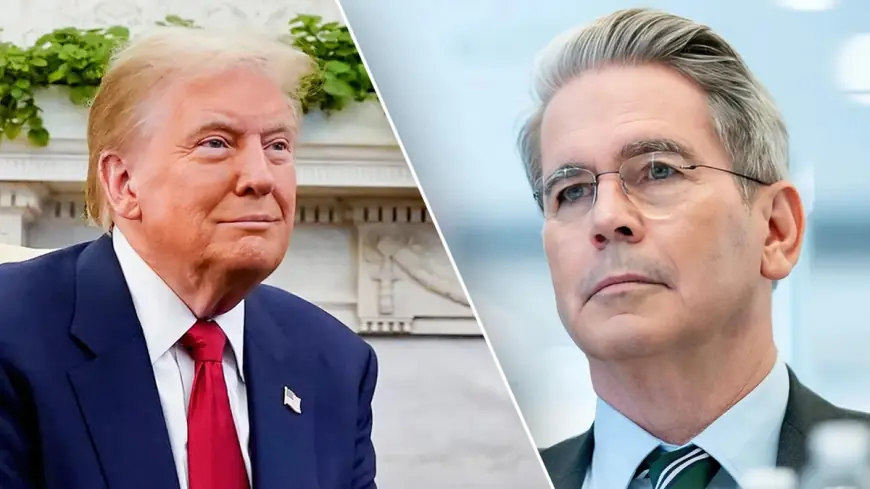
A new U.S.–Canada trade flare-up is accelerating into a high-stakes countdown to the 2026 review of the North American trade pact, after President Donald Trump threatened a sweeping 100% tariff on Canadian goods tied to fears of deeper Canada–China trade ties. The threat, posted over the weekend of January 24, 2026 (ET), quickly pulled U.S. Treasury Secretary Scott Bessent into the spotlight as the administration’s economic point-person, with Bessent warning Canadian Prime Minister Mark Carney against “picking a fight” before formal trade talks intensify.
Carney, facing a political and economic balancing act at home, responded by pushing back on the premise that Canada is seeking a free-trade pact with China, arguing the tariff talk is bluster and reiterating Canada’s interest in protecting its own national interests without becoming a conduit for anyone else’s trade agenda.
Trump tariffs Canada: what was threatened and why it escalated fast
Trump’s warning was framed as an all-or-nothing deterrent: if Canada were to move toward a trade deal with China that, in Washington’s view, could allow Chinese-made goods to slip into the U.S. market through Canada, the U.S. would respond with blanket tariffs. The number—100%—is deliberately dramatic. It signals a willingness to use tariffs not as a targeted remedy, but as a punishment-level tool meant to force a political decision.
That matters because the threat is less about a single commodity and more about leverage. A blanket tariff threat raises uncertainty across autos, steel and aluminum, energy products, agriculture, and consumer goods—exactly the sectors that make cross-border supply chains politically sensitive in both countries.
Scott Bessent’s warning: the “don’t pick a fight” message to Carney
Bessent’s intervention this week sharpened the administration’s line: Canada, he argued, should avoid posturing ahead of the USMCA review and should not risk becoming an “opening” for Chinese goods into the U.S. market. His broader message to Carney was political as much as economic—suggesting that rhetoric at global forums and any flirtation with Beijing could backfire just as North American trade negotiations move toward a formal review milestone.
The timing is the point. The first mandatory six-year joint review of the USMCA is scheduled to begin July 1, 2026 (ET), and preparatory work is already underway. When a tariff threat lands months before a known review date, it functions like a pre-negotiation stake in the ground.
Mark Carney’s response: China, sovereignty, and the domestic politics trap
Carney’s challenge is that he’s being pulled in two directions at once:
-
Economic reality: Canada’s economy is deeply integrated with the U.S., and supply chains are hard to reroute quickly without cost.
-
Political necessity: Canadian leaders are under constant pressure to show independence and diversify trade relationships, especially when U.S. policy becomes unpredictable.
Carney has publicly emphasized that Canada is not pursuing a free-trade agreement with China, while also defending the broader principle that Canada must protect its interests and avoid economic coercion—language that U.S. officials interpreted as a veiled critique of American trade tactics.
Behind the headline: what’s really driving the tariff fight
Context: The USMCA review is designed to be a pressure valve—an official moment to evaluate whether the deal is working and whether all three countries want to extend it. In practice, it becomes a bargaining arena where long-running irritants (rules of origin, industrial policy, critical minerals, labor standards, and enforcement) can be reopened.
Incentives:
-
The White House benefits politically from projecting toughness on trade and on China-linked risks.
-
Bessent benefits from framing tariff threats as strategic leverage rather than pure revenue tools, positioning the Treasury as a driver of “economic security.”
-
Carney benefits domestically from resisting the appearance of being bullied, but pays a price if uncertainty hits investment, jobs, or the currency.
Stakeholders: Automakers and parts suppliers, energy producers, steel and aluminum producers, retailers, border communities, and workers whose jobs depend on predictable cross-border logistics. Financial markets also become stakeholders because tariff threats can shift inflation expectations and central-bank decisions.
Second-order effects: Even if no tariff is imposed, the threat can cause companies to delay investment, increase inventories, revise supplier contracts, and quietly plan for worst-case scenarios—costly behaviors that can slow growth before any policy changes happen.
What we still don’t know
-
Whether the U.S. intends the “100%” number as a negotiating tactic or a real policy plan with legal scaffolding behind it
-
What Canada would actually propose on China trade—if anything beyond routine engagement
-
Whether Mexico becomes a swing actor in the USMCA review, aligning with U.S. reform demands or seeking its own concessions
-
How quickly businesses start pricing in a higher-risk trade environment through reduced investment and hiring
What happens next: 5 realistic scenarios with triggers
-
Cooling rhetoric, quiet bargaining
Trigger: backchannel talks produce a face-saving formula on China-related import controls. -
Tariff threat becomes targeted instead of blanket
Trigger: U.S. officials shift to narrower measures focused on specific sectors or transshipment enforcement. -
Canada hardens its stance publicly
Trigger: domestic political pressure forces Carney to show visible resistance ahead of the July review. -
Businesses begin contingency moves
Trigger: repeated tariff threats persist into spring, leading to delayed capex and inventory hoarding. -
USMCA review turns into a broader renegotiation fight
Trigger: the U.S. links China concerns to rules-of-origin changes, critical minerals, and enforcement demands, expanding the agenda beyond tariffs.
The immediate story is a tariff threat and a war of words. The deeper story is a leverage contest ahead of a known deadline: July 1, 2026, when the USMCA review formally begins and both sides will need either a path to stability—or a plan for disruption.