

























Kristi Noem and Corey Lewandowski Face Intensifying Scrutiny as DHS Minnesota Crackdown Triggers Calls to Resign

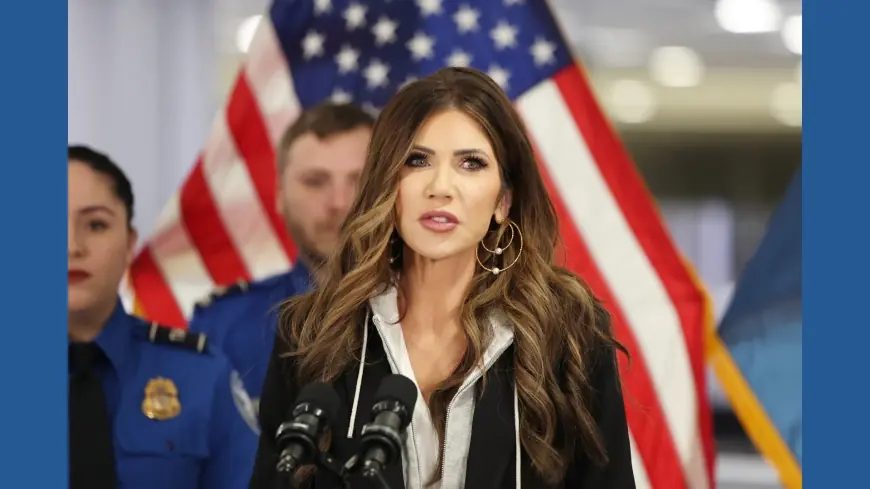
Homeland Security Secretary Kristi Noem is under growing political pressure after two fatal shootings tied to federal immigration operations in Minneapolis in January, a backlash that has now pulled her top adviser, Corey Lewandowski, into the center of the story. The latest turning point came Monday, January 26, 2026 (ET), when President Donald Trump announced that Tom Homan would take over the Minnesota operation and report directly to him, sidelining a chain of command that had been closely associated with Noem’s team.
The shift does not resolve the core questions. It raises them: Who shaped the tactics that led to public unrest? Who signed off on a posture that critics describe as escalation-first? And how much influence does Lewandowski wield inside a cabinet department at a time when its decisions have become politically combustible?
Why Kristi Noem is under fire after the Minneapolis shootings
The controversy centers on a sweeping enforcement push in Minneapolis that has generated days of protests and a fast-expanding fight over accountability. In separate incidents, two U.S. citizens died in encounters involving federal agents. The most politically damaging fallout for Noem has come from competing narratives about what happened in at least one of the shootings, where public video has fueled claims that official descriptions overstated the threat the victim posed.
Noem’s critics argue the department moved too aggressively and then handled the public explanation poorly. Democrats have threatened impeachment action if Noem is not removed, and several prominent Republicans have urged her resignation as well, framing the episode as both a moral failure and a political liability. Trump, for his part, has defended Noem publicly, even as the administration adjusted leadership of the operation and signaled interest in de-escalation.
The larger stakes go beyond one city. The administration has made immigration enforcement a defining priority of the second term, and Minneapolis has become the most visible proving ground for how far it is willing to push tactics in the face of public backlash.
Corey Lewandowski’s role: adviser, operator, and power broker
Lewandowski is not a new figure in Trump-world politics, but his proximity to a cabinet department is now a central question. Inside the Department of Homeland Security, he has been described by multiple officials as a behind-the-scenes operator who drives decisions, manages internal relationships, and pushes for a harder line on enforcement.
His position is also unusual in form. He has served as a “special government employee” style adviser, a designation generally associated with time-limited government service while allowing outside work. In practice, that structure can create a perception problem: a powerful figure who is not confirmed by the Senate, not always visible in formal org charts, and yet appears to shape day-to-day priorities.
Lewandowski’s proximity to Noem has been further amplified by persistent rumors about a personal relationship. Neither has publicly confirmed such claims, and the relevance is not gossip for its own sake; it’s governance. When a top adviser is viewed as both politically influential and personally close to the secretary, every personnel move, contract discussion, and tactical choice becomes easier to frame as loyalty-driven rather than institution-driven.
Behind the headline: incentives and the internal tug-of-war
This story is as much about incentives as it is about personalities.
Noem’s incentive is survival through strength. A secretary under fire often tries to project command, reject the premise of wrongdoing, and frame criticism as political noise. That approach can work when the facts are clear. It breaks down when visual evidence creates doubt and when allies begin to peel away.
Lewandowski’s incentive is control through results. Advisers like him gain leverage by delivering outcomes that matter to the president’s political base: visible enforcement, clear messaging, and rapid execution. The risk is that “visible” becomes the goal, not “effective,” and optics start driving tactics.
Trump’s incentive is to keep the policy moving while limiting blowback. Sending Homan to Minnesota reads like a recalibration: preserve enforcement goals, reduce the temperature, and put an experienced operator in place who can claim a fresh start without admitting the earlier approach failed.
Stakeholders include local officials trying to manage public safety, federal agents navigating a high-stress operational environment, immigrant communities and advocacy groups reacting to perceived threats, and lawmakers who see an opening either to defend the administration’s posture or to force accountability.
Second-order effects are already rippling. The more this episode looks like a credibility crisis, the more it can chill cooperation between local governments and federal agencies, harden public resistance, and increase the chance that future operations become flashpoints before they begin.
What we still don’t know
Several missing pieces will decide whether this becomes a contained scandal or a defining fight of early 2026:
-
A complete, trusted timeline of each shooting, including what investigators conclude about the immediate threat level
-
Who approved the operational rules and public messaging in the days surrounding the incidents
-
Whether internal DHS reviews find policy or leadership failures beyond individual agent decisions
-
The scope of Lewandowski’s authority, including whether he was involved in staffing and contracting decisions tied to enforcement operations
-
Whether Noem’s scheduled testimony before the Senate Judiciary Committee on March 3, 2026 (ET) clarifies or deepens the controversy
What happens next: five realistic scenarios with triggers
-
Noem remains, but authority shifts away from her
Trigger: continued public pressure leads to more operational control moving to White House-aligned enforcers. -
A resignation or forced exit
Trigger: new evidence contradicts official statements or additional incidents make the political cost unsustainable. -
A narrower, more targeted enforcement approach
Trigger: leadership decides broad sweeps are creating more unrest than results. -
A formal role change for Lewandowski
Trigger: scrutiny of his status and influence prompts tighter guardrails or a clearer chain of command. -
A prolonged accountability fight
Trigger: impeachment efforts advance or congressional investigations expand beyond Minnesota into broader DHS decision-making.
The immediate headline is leadership turbulence after a deadly flashpoint. The deeper story is the stress test of a governing model: aggressive enforcement, centralized political control, and a tight inner circle shaping outcomes inside a sprawling federal department.