

























Federal Reserve Holds Interest Rates Steady After January FOMC Meeting, Putting 2026 Rate Cuts on a Slower, Data-Driven Track

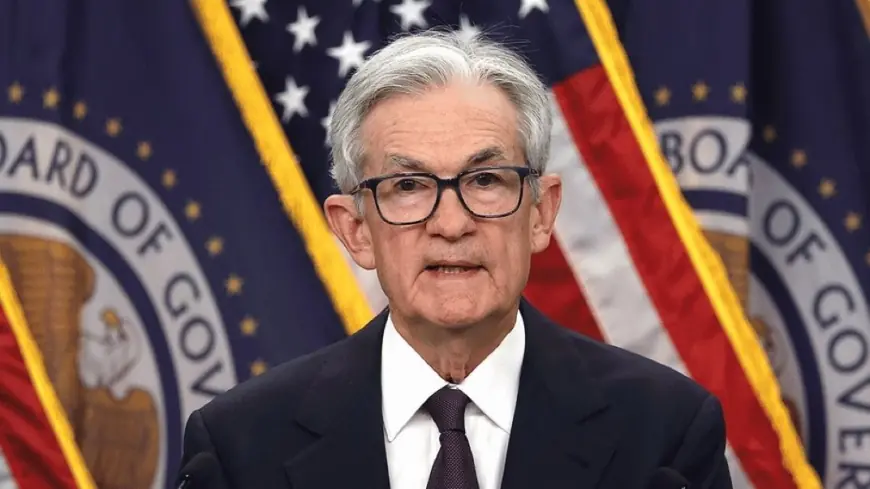
The Federal Reserve’s first policy decision of 2026 delivered a clear message to markets and households: rate cuts are still possible, but the bar for the next move is higher than many borrowers hoped. On Wednesday, January 28, 2026, the Federal Open Market Committee kept the federal funds rate target range unchanged at 3.50 percent to 3.75 percent, signaling patience as officials weigh stubborn inflation against a labor market that is no longer running hot.
For people searching “fed meeting today” or “fed decision today,” the key clarification is timing. The policy meeting ran Tuesday and Wednesday, with the decision released Wednesday afternoon. Some audiences outside the United States experienced the headlines in their local Thursday window, but the policy announcement itself was Wednesday in Eastern Time.
Fed rate decision and interest rates today: the numbers that matter
The headline rate stayed the same, but the operating details matter because they shape money-market conditions that ripple into everyday borrowing costs.
Key settings tied to the decision include:
-
Federal funds target range held at 3.50 percent to 3.75 percent
-
Interest paid on reserve balances set at 3.65 percent, effective Thursday, January 29, 2026
-
Standing overnight repo rate set at 3.75 percent
-
Standing overnight reverse repo offering rate set at 3.50 percent
-
Primary credit rate held at 3.75 percent
The Fed also reiterated its approach to maintaining ample reserves and its reinvestment practices, a reminder that rate policy and balance sheet operations are two separate dials that can influence financial conditions.
The most important surprise: a split vote that points toward future cuts
The decision was not unanimous. Two voting members dissented and preferred a quarter-point rate cut at this meeting. That matters because dissents at a rate-hold meeting send a simple signal: the committee is debating whether inflation is “good enough” to justify easing sooner, even if the majority wants more proof before moving.
Behind the headline, this is the Fed trying to avoid two mistakes at once. Cut too early and risk re-accelerating inflation. Hold too long and risk turning a cooling labor market into a deeper slowdown. The dissents underscore that reasonable officials can look at the same data and see different risks.
Why the Fed paused: inflation is still “somewhat elevated,” and uncertainty remains high
The Fed’s statement framed the economy as expanding at a solid pace, with job gains described as low and the unemployment rate showing signs of stabilization. Inflation, however, was still characterized as somewhat elevated, and uncertainty about the outlook remained elevated as well.
That combination is the core reason the Fed is not rushing. The committee wants to see continued progress toward 2 percent inflation without triggering unnecessary damage to employment. The practical takeaway for anyone watching “federal reserve interest rate cuts” is that the Fed is keeping the option open, but it is not pre-committing to a schedule.
What Jerome Powell’s post-meeting remarks mean for borrowers and markets
Chair Jerome Powell’s post-decision communication is less about one day’s rate setting and more about the reaction function. The Fed emphasized it will assess incoming data, the evolving outlook, and the balance of risks before deciding on additional adjustments. In plain terms, that means each major inflation and labor report can either pull a cut forward or push it back.
For borrowers, the near-term impact is that floating-rate debt remains expensive and fixed-rate products may move mostly on expectations of future cuts rather than on the current decision. For investors, the message is that “rate cuts” are no longer a straight line story; they are conditional on continued inflation improvement.
Behind the headline: incentives, stakeholders, and second-order effects
The Fed’s incentives are structural: protect credibility on inflation while avoiding a policy-induced jobs shock. But the stakeholders are everywhere.
-
Households feel it through credit cards, auto loans, and mortgage affordability.
-
Small businesses feel it through working-capital costs and refinancing risk.
-
Banks and money markets feel it through short-term funding rates and deposit competition.
-
The federal government feels it through interest expense and auction dynamics.
-
State and local governments feel it through borrowing costs for infrastructure.
Second-order effects matter too. A prolonged “higher for longer” stance can slow housing turnover, reduce construction momentum, and keep consumers cautious on big-ticket purchases. On the other hand, cutting prematurely can reignite price pressures that hurt real wages and force even sharper tightening later.
What we still don’t know
The next big unknown is not whether the Fed wants to cut, but when it will feel confident enough to do it. Markets will be watching:
-
Whether inflation continues trending toward 2 percent without stalling
-
Whether job growth remains merely cool, not collapsing
-
Whether financial conditions loosen too quickly on expectations alone
Another key date is the release of the January meeting minutes, scheduled for Wednesday, February 18, 2026 at 2:00 p.m. ET. Minutes often reveal how close the internal debate really was and what data thresholds different factions are using.
What happens next: five realistic scenarios and the trigger for each
-
Rates stay on hold into March
Trigger: inflation progress is uneven or re-accelerates in key categories. -
A spring cut becomes the base case
Trigger: inflation cools further while unemployment stabilizes rather than spikes. -
A faster cut cycle resumes
Trigger: labor data weakens sharply and inflation keeps improving, shifting the risk balance toward employment. -
Cuts are delayed into the second half of 2026
Trigger: growth stays solid and inflation proves sticky, keeping the Fed cautious. -
A one-off “insurance cut” debate grows
Trigger: financial stress emerges even without a broad economic downturn, pushing the Fed to weigh stability risks.
The central message from this Fed meeting is restraint. The Fed is not declaring victory on inflation, but it is not closing the door on rate cuts either. It is holding steady, waiting for the data to make the next move feel inevitable rather than merely hopeful.