
























School closings CT: delays linger after historic Sunday snow as CT snow totals top 20 inches and cold tightens grip


School closings CT remained a moving target Wednesday, January 28, 2026 ET, as districts across the state tried to balance road safety, bus access, and building conditions after the weekend storm. Many communities that were fully closed earlier in the week shifted to delayed openings, but the decision varied town by town depending on snow removal progress and the intensity of the cold.
Connecticut is also operating in the shadow of a recent CT state of emergency declaration tied to the storm, while a prolonged severe cold weather protocol is keeping extra warming resources in place. Further specifics were not immediately available on how many districts will change status again overnight, since final calls often depend on early-morning road checks.
CT school closings and delays: why Wednesday still isn’t “back to normal”
Even after plows clear main roads, the last mile matters for school operations. Side streets, steep neighborhood hills, and narrowed lanes from plow piles can make bus routes unreliable, especially before sunrise. Add extreme cold and the odds of black ice, and many superintendents choose two-hour delays to give crews time to widen intersections and for daylight to improve visibility.
Another factor is access to school buildings themselves. In some districts, entrances, sidewalks, and drop-off loops remain partially blocked by drifted snow or frozen ridges left behind by plows. When temperatures stay below freezing, that snow does not “settle” quickly, so cleanup becomes a slow, mechanical process.
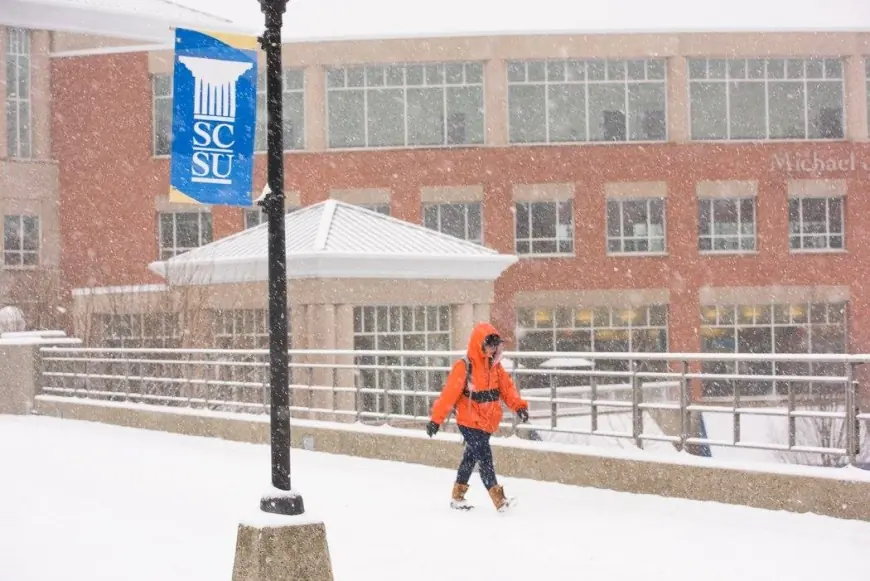
Some specifics have not been publicly clarified about how many districts will keep delays through the end of the week, but the overall pattern has been consistent: closures immediately after the storm, then widespread delays as crews catch up and the deep freeze keeps hazards locked in place.
Snow totals CT and snowfall totals CT: where the highest numbers landed
The storm that began Sunday morning, January 25, 2026 ET delivered one of the most significant snow events in recent Connecticut memory. The biggest snow totals CT were concentrated across inland and higher-terrain corridors, with multiple towns reporting roughly 18 to 21 inches.
Examples from widely reported totals include around 21 inches in Simsbury, about 20 inches in areas near Hartford’s northern suburbs, and roughly 19 to 20 inches in parts of the northwest hills, including Torrington and nearby communities. Eastern Connecticut also saw major accumulations, with several towns reporting mid-to-upper teen totals and pockets near 19 inches.
Along the southwest and coastal corridor, amounts were still substantial but generally a bit lower than the interior peak. Fairfield County had numerous reports in the 12 to 16 inch range, with towns such as Bethel and Danbury near the top end and coastal cities near 10 to 12 inches in some spots.
For anyone searching CT snow totals or snowfall totals CT, the key takeaway is that the state did not get one uniform number. Elevation, distance from the shoreline, and banding during the heaviest snow all created sharp differences over relatively short drives.
When it comes to snow accumulation last 24 hours as of Wednesday morning, most of the “new” change is not fresh snowfall so much as drifting, compaction, and snow being moved around by plows and wind. In other words, totals look higher in piles, not because another storm added inches overnight.
CT weather: the deep freeze that turns cleanup into a longer fight
The weather shift after the snow was as disruptive as the snow itself. With arctic air entrenched, temperatures have struggled to climb, and overnight lows have been near or below the single digits in colder inland pockets. Wind chills have dipped well below zero at times, raising concerns for anyone outdoors for extended periods.
Here is the mechanism that keeps problems lingering. Snow melts slightly during daytime sun, then refreezes as soon as shadows lengthen and temperatures fall. That freeze-thaw cycle, even when it is small, creates glaze ice on untreated side streets, school parking lots, and sidewalks. Meanwhile, plow piles harden into dense walls that are difficult to move without heavy equipment, slowing the return of normal traffic patterns around schools and downtown areas.
This cold also affects people directly. Heating demand rises, cars become harder to start, and the risk of frostbite increases quickly for students waiting at bus stops and for anyone working outside. The state’s severe cold weather protocol has been extended into early February, reflecting the expectation that dangerously cold conditions will persist.
CT state of emergency fallout, Sunday morning lessons, and what comes next
State officials declared an emergency ahead of the storm, activating coordinated response measures that included limits on certain highway travel for commercial vehicles and expanded operational monitoring. Those restrictions were designed to keep roads clearer for plows and emergency response. Some specifics have not been publicly clarified about how many local parking bans and municipal snow routes will remain in effect through the rest of the week, since towns update those orders independently.
Looking ahead, forecasters are also watching another potential coastal system late Saturday night into Sunday. The track and intensity are not locked in yet, and outcomes range from a minor miss to a more disruptive round of snow and wind. Some specifics have not been publicly clarified, including how far inland the heaviest impacts could reach if the storm develops closer to the shoreline.
The stakeholder impact is broad and immediate: families juggling childcare during delays, students walking past icy snowbanks, road crews working long shifts in dangerous wind chills, and vulnerable residents who rely on warming centers and shelter capacity. The next verifiable milestone will be the next round of updated winter headlines and local closure decisions posted ahead of the Thursday morning commute, when districts and towns reassess road conditions and cold-related risks.