

























Aussie Dollar Soars to Three-Year High, Gold Prices Break Record

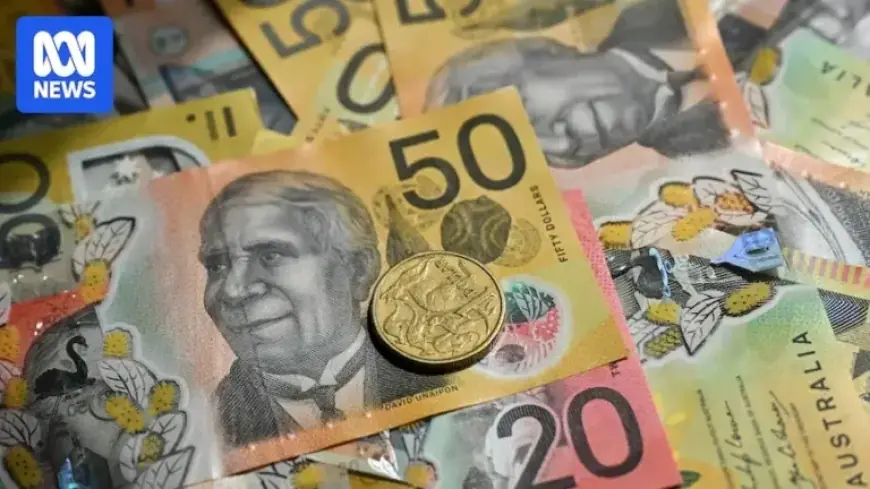
The Australian dollar has surged to its highest point in nearly three years, reaching 70.1 US cents. This increase, representing a 1.3% rise, comes as the US dollar falls to a four-year low. Factors contributing to the US dollar’s decline include concerns over President Trump’s economic policies and uncertainties regarding the Federal Reserve’s independence. The last time the Aussie dollar was at this level was mid-February 2023.
Current Market Overview
On the Australian stock market, ASX futures indicate a 0.5% increase, suggesting a strong opening. The ASX 200 closed up by 0.9% to 8,942 points on Tuesday. Wall Street experienced mixed results, with the S&P 500 reaching a record high of 6,976 points amid significant gains from major tech stocks.
Gold Prices Hit New Record
Spot gold prices have also soared, hitting a new high of $US5,114 per ounce, following a 3.3% overnight jump. This represents a remarkable 20% increase since the beginning of the year. The surge in gold prices is attributed to rising geopolitical tensions and expectations of interest rate cuts by the US Federal Reserve. Demand from central banks, particularly those in Poland, China, Azerbaijan, and Kazakhstan, further supports the rising value of gold.
Silver Prices Surge
- Spot silver has surged by 8%, reaching $US112 an ounce.
- Its value has nearly quadrupled from $US30 an ounce one year ago.
- Rising industrial demand and government classification of silver as a “critical mineral” have spurred its price increase.
Global Market Reactions
While the S&P 500 climbed due to performances from tech giants like Nvidia, Apple, and Microsoft, the Dow Jones Industrial Average declined by 0.8%, closing at 49,003 points. This drop was significantly influenced by a nearly 20% slump in UnitedHealth’s stock following disappointing revenue forecasts.
Key Economic Indicators Ahead
The Australian Bureau of Statistics is set to release new inflation figures soon, which could impact the Reserve Bank’s monetary policy. Economists anticipate a consumer price increase of 0.7% for the December quarter, leading to an annual rise of 3.5%. A lower-than-expected inflation report could reduce the likelihood of an interest rate hike in the immediate future.
In conclusion, the strengthening of the Australian dollar and skyrocketing gold and silver prices indicate significant shifts in the market, driven by macroeconomic factors and geopolitical uncertainties.