Victoria Mboko’s Australian Open surge puts Caty McNally and Emerson Jones into the same spotlight—and shifts the next-gen conversation


A single Grand Slam week can reorder the way tennis fans talk about “next up,” and Victoria Mboko is doing exactly that in Melbourne. Her run is not only about wins; it’s about proof of a higher floor—clean service games, controlled aggression, and the ability to solve different opponents quickly. For Caty (Catherine) McNally, it’s a tough-but-useful measuring stick in a comeback phase. For Emerson Jones, it’s another data point in a fast-moving transition from prodigy to pro-level problem-solver.
The bigger takeaway: Mboko is turning promise into repeatable patterns
Mboko’s recent matches have read like a player compressing the learning curve. The standout signal isn’t just who she beat—it’s how she’s holding her serve and limiting the chaos that often drags young players into three-set coin flips.
What’s changing in her profile right now:
-
First-strike clarity: She’s taking control earlier in rallies, which reduces the number of points decided by scrambling defense.
-
Serve resilience: Fewer “free” games donated through dips in first-serve percentage or loose second serves.
-
Opponent-specific solutions: The wins have come against very different skill sets, suggesting her Plan B isn’t theoretical anymore.
That matters because the next step on tour is rarely about adding a new weapon—it’s about repeating your good tennis often enough that it becomes boring. Mboko is starting to look “boring” in the best way.
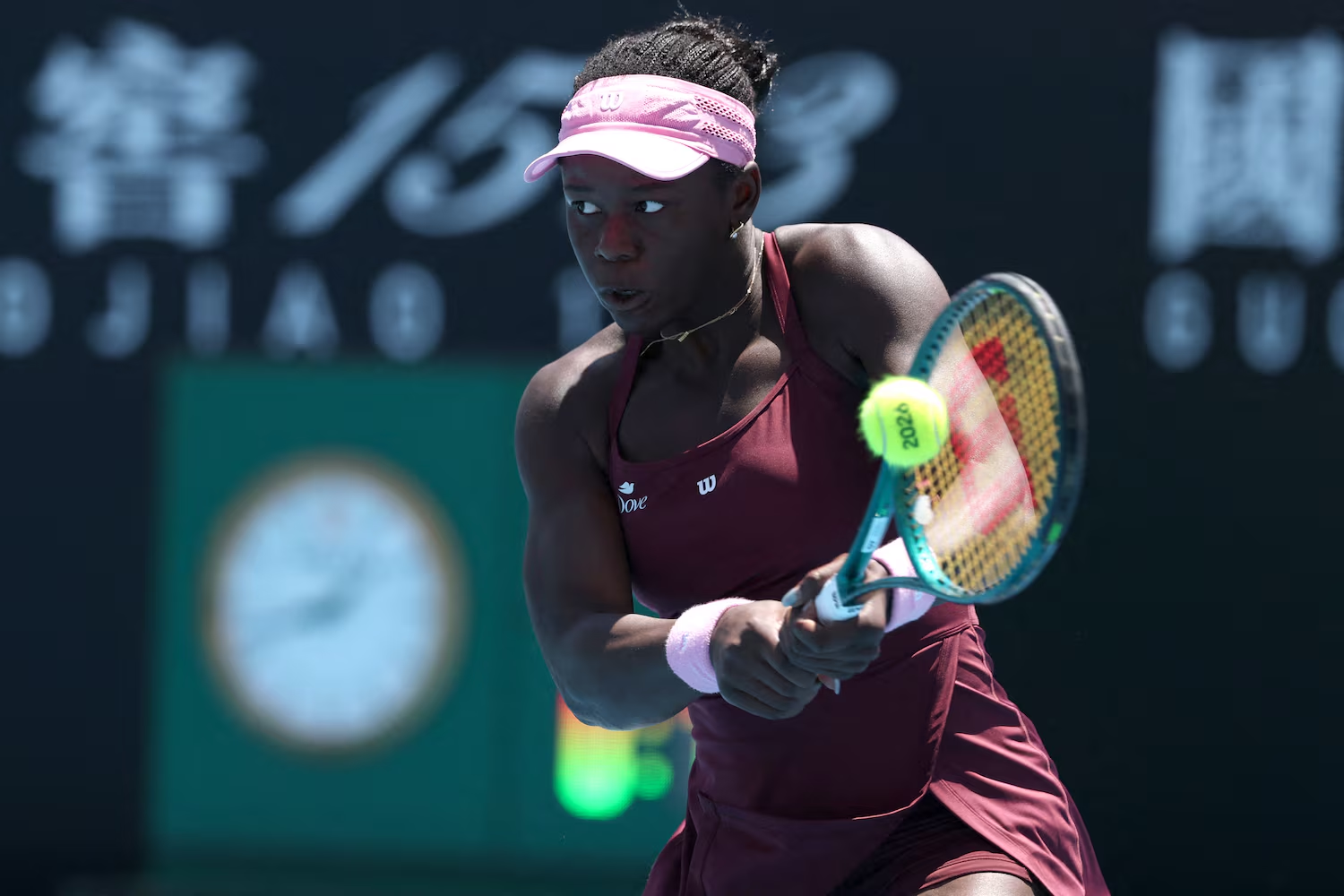
The week in Melbourne: Mboko beats Jones, then McNally, and earns a major moment
Mboko’s path has connected three narratives that usually live separately: a teen breakout, a U.S. player rebuilding after injury, and an Australian teenager learning the speed of the top level.
-
Mboko vs Emerson Jones: Mboko opened with a straight-sets win (6-4, 6-1) that stood out for its control. One of the cleanest tells: she came through without facing a break point, the kind of stat line that screams scoreboard pressure without panic.
-
Mboko vs Caty McNally: She followed by beating McNally 6-4, 6-3 to reach the third round, leveling up from “dangerous” to “seeded player who handles business.” It also carried a personal edge—this result functioned as a form of payback for a previous loss to McNally.
-
What’s next: Mboko’s next test is Clara Tauson, a matchup that typically rewards players who can absorb pace and still hit through the court when it’s time to take over.
For McNally, the loss doesn’t erase the progress. Her storyline has been about returning from elbow surgery, rebuilding match toughness, and re-establishing herself as a threat in both singles and doubles. A straight-sets defeat to a red-hot seed is frustrating, but it can also be clarifying: it shows exactly where the margins are—first-serve effectiveness, second-serve protection, and whether she can consistently win the “neutral” rally patterns against elite movers.
For Jones, the Melbourne result fits a broader early-2026 picture: flashes of readiness mixed with the reality that top-level opponents don’t offer many cheap games. Earlier this month in Brisbane, she notched a notable win over Tatjana Maria, underscoring that her upside is real. The next stage is bridging that gap from “can win a big match” to “can sustain a level across a Slam-style opponent.”
Where each player is right now
-
Victoria Mboko: momentum player and structure player—wins are coming with tactical discipline, not just confidence.
-
Caty McNally: still in the “stack good weeks” phase post-surgery, with clear upside as timing and durability settle.
-
Emerson Jones: on the steep part of the curve—capable of headline wins, now learning what it takes to avoid being rushed by top-20 pace.
What This Means Next
In the short term, Mboko’s run raises the ceiling on what “a good season” looks like for her. A deep Slam pushes ranking stability, which changes everything: draw protection, scheduling freedom, and the ability to build a season around peaking for the biggest stages rather than chasing points every week.
Who benefits if trends continue
-
Mboko: she gains not just points, but credibility—opponents start preparing for her, which is the gateway to being treated like a real threat.
-
The Canadian pipeline: one player making the second week conversation can shift expectations and investment around the program.
-
McNally (indirectly): high-level reps in big arenas accelerate comeback learning faster than smaller events can.
Who faces pressure
-
McNally: the bar in her range of the draw is rising; to jump back into the top tier, she’ll need more free points and fewer donation games.
-
Jones: the “teen phenom” label fades quickly unless the week-to-week baseline keeps climbing.
What to watch next
-
Whether Mboko can hold serve under Tauson’s pace and still choose the right moments to attack.
-
How McNally schedules the next stretch—does she prioritize match volume, specific surfaces, or doubles rhythm as a confidence engine?
-
How Jones responds after Slam disappointment—her next few tournaments will reveal whether the lesson becomes fuel or friction.
This cluster of names is worth tracking because they’re intersecting at a moment when women’s tennis is rewarding clarity: players who can identify patterns fast, protect serve, and keep their nerves quiet are the ones turning potential into ranking reality.