Rybakina faces a telling Indian Wells test: 3 clues that could decide the Kostyuk matchup

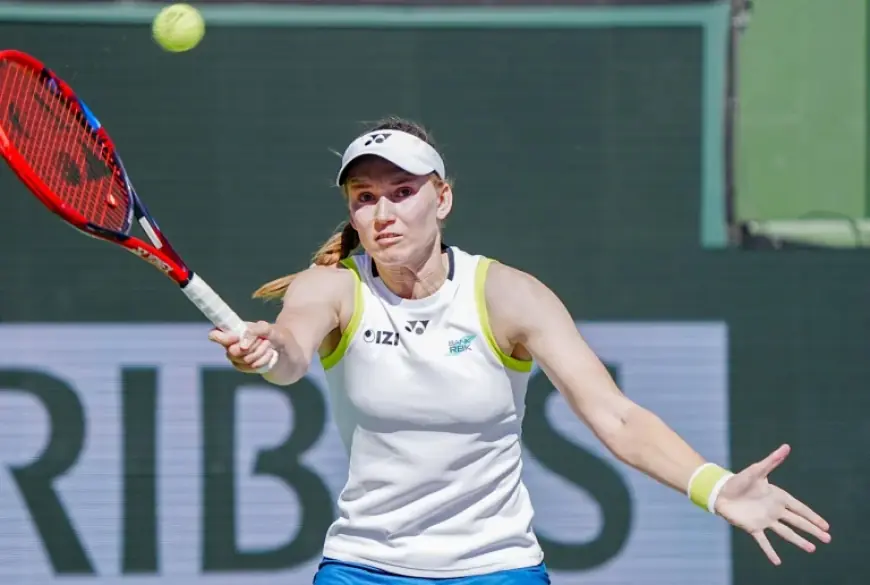
rybakina is at the center of two parallel storylines heading into Indian Wells Day 6: a marquee third-round meeting with Marta Kostyuk, and a quieter debate about where her level truly sits after a Dubai retirement. The matchup is framed as quality-on-quality, but the subtext is sharper—whether the former champion can convert pedigree into control on a day when physical condition, not just shot-making, may shape the outcome.
Indian Wells Day 6: Why this rybakina–Kostyuk meeting suddenly feels high-stakes
Day six at WTA Indian Wells brings a slate of third-round action, and the headline pairing is Elena Rybakina vs Marta Kostyuk. The tournament context matters because the winner moves into the round of 16, but the larger relevance is what the match may reveal about trajectory.
Rybakina is described as the 2023 champion, a label that carries expectations of comfort in the desert conditions and a standard of performance that tends to crowd out nuance. Yet the immediate run-up to this round is not presented as routine: Rybakina “survived a tough test” against Hailey Baptiste, saving three set points in the opener. The same snapshot also notes she is “still rebuilding after a Dubai retirement, ” introducing uncertainty that hangs over any prediction.
Kostyuk arrives with a different kind of positioning: she “cruised past Taylor Townsend” and is characterized as tricky and competitive, mixing shots effectively. The contrast in their paths into this match—one tense, one smooth—sets up a classic early-tournament tension: form versus reputation. That is why rybakina is not just playing for a result, but for evidence.
Under the surface: serve timing, physical questions, and what ‘desert history’ really buys rybakina
Two facts define the analytical frame, and they can coexist without contradiction: Rybakina owns strong “desert history, ” and there are “lingering physical questions” after a recent three-setter and a Dubai retirement. The task is to understand how those forces interact rather than cancel each other out.
The pro-Rybakina case is straightforward within the available record. The head-to-head is presented as dominant in her favor, and there is a clear performance model for why: “when her serve and forehand click on these courts, few can compete. ” This is a concrete claim about patterns and conditions, not a vague nod to talent. On Indian Wells hard courts, a serve that lands reliably can shorten points, and a forehand that lands with conviction can keep an opponent from settling into variety. If those two elements appear together, it becomes harder for a shot-mixing opponent to earn time for creativity.
The counterweight is just as explicit. Saving three set points in the opener against Baptiste signals that early-set execution and/or stress moments have been present. Add the phrase “still rebuilding after a Dubai retirement, ” and the match becomes partly about continuity—how long high-quality patterns can be sustained before timing slips. This is where the word “rebuilding” does real work: it implies a process, not a switch, and processes tend to be uneven.
Kostyuk’s described toolkit—competitive, tricky, mixing shots—functions as a stress test for any player re-finding rhythm. Variety can elongate points and force extra decisions, and extra decisions can magnify small physical or timing doubts. If rybakina is searching for repeatable, simple patterns, the risk is being pulled into a match of changing shapes. The opportunity, though, is equally clear: if the serve and forehand sequence starts landing, variety becomes less effective because the opponent is reacting rather than designing.
Expert perspectives and the matchup’s broader ripple effect
The core evaluative language around this match emphasizes both caution and confidence. The preview framing notes that Rybakina’s “recent three-setter hints at lingering physical questions, ” but also asserts that her “class and desert history should carry her through. ” In practical terms, that tension is the headline of the match: how much the past can compensate for the present.
There is also an implicit standard being applied to Kostyuk. Being labeled a former semi-finalist at this event and coming off a win described as cruising sets an expectation that she can sustain pressure. The test is whether her shot-mixing and competitiveness can meaningfully disrupt a player who “dominates their head-to-head. ” If it can, it changes the story of the matchup from familiar to volatile.
Beyond the single contest, Indian Wells Day 6 is positioned as an “intriguing slate” with multiple quality matchups. In that broader ecosystem, a stable Rybakina performance reinforces the idea of hierarchy returning—champions advancing, seeds holding, reputations matching outcomes. A wobble, by contrast, validates the tournament’s early-round theme of uncertainty, where even elite résumés do not automatically translate into clean progression. Either way, the result helps define what kind of event this edition of Indian Wells is becoming.
For Filmogaz readers tracking the headline thread, it is also worth noting why rybakina remains an attention magnet beyond brackets: she is simultaneously described as a proven champion and as a player navigating a rebuild. That duality is rare, and it makes each round feel like a referendum on readiness rather than merely a step forward.
The question now is simple but not easily answered in advance: can rybakina turn a match framed by physical questions into one decided by familiar desert patterns—and if she does, what does that say about how quickly a rebuild can become a run?