Ghost Of Yotei Legends turns a campaign memory into a co-op retelling—with roles for every kind of warrior

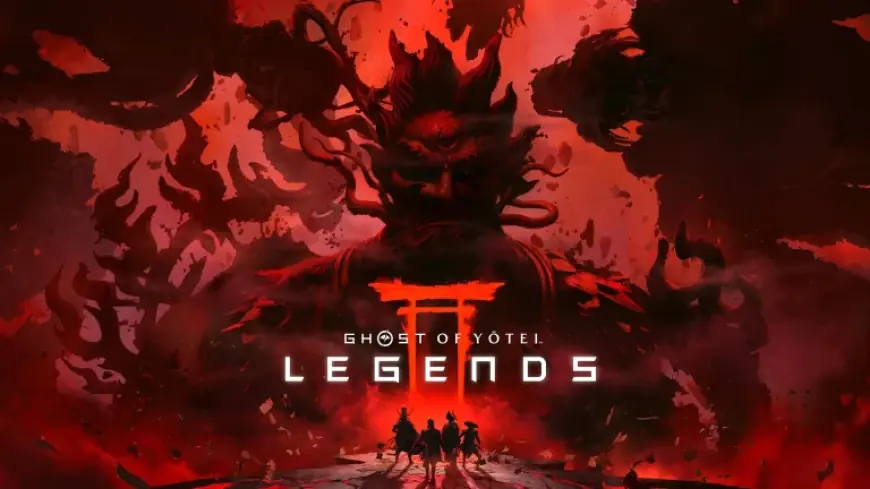
At 9: 00 am ET on the eve of launch, the talk around ghost of yotei legends wasn’t about a single hero’s next step—it was about what happens when that journey is retold by many hands at once. Sucker Punch Productions has outlined what players will encounter when the online co-op multiplayer mode arrives March 10, reframing the game’s combat into a supernatural plane built for shared fights and repeat runs.
What is Ghost Of Yotei Legends, and when does it launch?
Ghost Of Yotei Legends is an online co-op multiplayer mode for Ghost of Yōtei, launching March 10. The update is available at no additional cost for all owners of Ghost of Yōtei. The studio describes the mode as a mythical, mystical spin that builds on the foundations of Ghost of Tsushima’s Legends mode while reimagining Yōtei’s mechanics and threats for multiplayer play.
The mode was announced last year and fully revealed during February’s State of Play. Ahead of release, Darren Bridges, Legends Lead Designer at Sucker Punch Productions, described a development approach that ran in parallel with the main game rather than being added at the end.
How did the co-op mode grow alongside the campaign?
Bridges said the multiplayer work began during development of the core game, with a “core team working on multiplayer throughout” development. In his description, the team spent that period “reacting and responding and pulling the systems in, ” testing how they would function in a multiplayer context. Once the main game finished, additional developers shifted over to Legends to expand it.
He characterized the final stretch as a fast escalation from prototype-like pieces into polished content, describing an experience of frequent, noticeable improvements as more of the team contributed. That process matters for players because it signals intent: this mode is not positioned as a detached add-on, but as a planned companion to the campaign—one that depends on replayability, team roles, and a heightened sense of threat.
What will players face in ghost of yotei legends: bosses, factions, and a supernatural retelling?
In ghost of yotei legends, Sucker Punch frames the co-op experience as a retelling of the campaign’s conflict long after the original events. Bridges explained that the “Yōtei Six” are bosses—warlords who haunted Atsu’s story—yet Legends takes place “years, even centuries after the fact, ” where time has blurred specifics and exaggerated the figures into something closer to myth.
The result is a deliberate shift in scale: instead of fighting powerful warlords, players confront “15-foot demonic bosses, ” built as challenges suited for multiple players. Each boss comes with a faction of enemies tied to that domain, including sub-bosses themed around the boss’s abilities. Bridges offered examples: the Kitsune’s elite soldier is the Snow Woman, described as having frost and cold abilities; the Snake has a summoner. The structure suggests a co-op rhythm designed around reading enemy themes and adapting—treating each domain like a contained story with its own logic and hazards.
On top of the enemy design, missions are replayable, with four difficulty levels: Bronze, Silver, Gold, and Platinum. The studio’s emphasis on replayability and escalating difficulties signals that the mode is built to be returned to—less a single clear and more a repeating ritual where players learn patterns, test builds, and coordinate roles under pressure.
Which classes and weapons are available—and do players have to balance roles?
Sucker Punch says it wants players to have “different roles they can play into” so teams can complement each other—splitting focus across enemies depending on weapons and builds. At the same time, Bridges stressed flexibility: if a group wants to play the same class—for example, all Samurai—the mode still allows it, and players “will be able to solve all the challenges put in front of you. ”
Each class has a focus weapon that influences identity and progression. Bridges listed examples: the Samurai uses the Odachi; the Archer uses the Yari; the Mercenary has dual katanas; the Shinobi uses the Kusarigama. He added that tech tree choices and certain gear support those focus weapons, but classes are not exclusively limited to them—players can use other weapons as well. The mode also includes “quick fire weapons, ” and some abilities operate on cooldown, giving teams additional tactical options beyond standard melee exchanges.
Progression is tied to choice. Each class has its own tech tree, and Bridges described build crafting built around the gear and abilities players unlock and select. In practice, that means the same mission can feel different across runs depending on what a player equips, which abilities they prioritize, and how a team divides responsibilities when a domain’s enemies lean toward cold, summoning, or other themed threats.
Image caption (alt text): ghost of yotei legends co-op mode preview showing classes, bosses, and replayable missions