Young Sherlock Holmes 2026 Gives Guy Ritchie Another Run At Baker Street

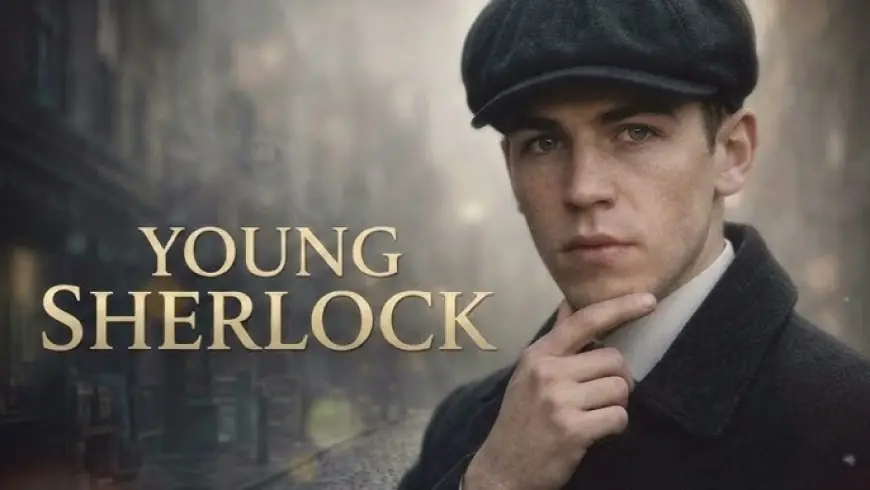
Young Sherlock Holmes 2026 has arrived with a clear pitch: take one of fiction’s most overused characters, strip away the deerstalker shorthand, and rebuild him as a volatile young man before the legend hardens. That idea alone would have been enough to draw attention. Attach Guy Ritchie to the first two episodes and the result becomes something more pointed — a period mystery trying to sell speed, swagger and franchise potential at the same time.
Young Sherlock Recasts Holmes As A Teenage Risk
The new series centers on Sherlock in his late teens, played by Hero Fiennes Tiffin, and places him in 1870s Oxford before he becomes the cold, finished instrument readers think they know. The setup matters. Instead of beginning with a master detective who already understands the room before anyone else has opened the door, Young Sherlock starts with a gifted but unstable observer whose intelligence is still a liability as much as an advantage.
That shift gives the character more danger. A young Holmes is not simply a smaller version of the classic one. He is more impulsive, easier to provoke, and far less protected by reputation. The series leans into that by tying him to a murder case and a wider conspiracy, giving the story motion before it asks for reverence.
Guy Ritchie’s Sherlock Connection Still Carries Weight
Guy Ritchie is the obvious reason the project broke through the usual noise around literary adaptations. He already helped turn Sherlock Holmes into a muscular modern screen property with the Robert Downey Jr. films, and his return to this world gives Young Sherlock Holmes 2026 a built-in frame: audiences expect velocity, wit, and a camera that treats deduction like action.
That expectation cuts both ways. Ritchie’s style is a selling point, but it also creates a test. Holmes has survived every imaginable interpretation — austere, manic, cerebral, romantic, comedic — because the core engine remains strong. What Ritchie appears to understand is that another straight retelling would have been dead on arrival. This version has to move.
So it does. The promise here is not museum-piece fidelity. It is a formative-case story, eight episodes long, built to show how Sherlock became Sherlock and who paid for that transformation.
Young Sherlock Holmes 2026 Arrives As A Full-Season Play
The series premiered on March 4, 2026, with all eight episodes released together, a choice that says plenty about how it wants to be consumed. This is not being treated as a slow-burn weekly puzzle designed to dominate group theory-building for two months. It is an immersion play: one mystery, one atmosphere, one accelerated route through an origin story.
That release model suits the concept. A young Holmes discovering the scale of the world around him works better when momentum is preserved. A weekly rollout might have made the mechanics feel more precious than urgent. Releasing the full season in a single drop instead suggests confidence that the series is strongest when watched as a long, serial novel rather than a set of isolated clever episodes.
The Cast Around Sherlock Signals A Bigger Ambition
Hero Fiennes Tiffin carries the title role, but the surrounding cast hints that the show wants more than a single-character showcase. Dónal Finn is in the mix, along with Zine Tseng, Joseph Fiennes, Natascha McElhone, Max Irons and Colin Firth. That is not the sort of lineup assembled for a disposable YA costume piece.
It also suggests the producers understand a basic truth about Holmes on screen: the detective only works when the world resisting him feels substantial. Holmes cannot look brilliant in a vacuum. He needs institutions, rivals, family pressure, class tension, and at least one figure capable of unsettling his confidence. The inclusion of James Moriarty in a younger frame is especially telling. That is long-game thinking, not just opening-night bait.
Why Young Sherlock Could Matter Beyond Launch Week
The larger question is whether Young Sherlock has arrived at exactly the right moment or slightly too late. Familiar intellectual-property characters still travel well, but audiences are quicker now to reject projects that feel algorithmically inevitable. A prequel must justify its own existence fast. Nostalgia is no longer enough.
That is where Young Sherlock Holmes 2026 has an opening. Sherlock Holmes remains one of the few literary characters with real global elasticity, and the idea of seeing him before the myth calcified gives the property a usable angle. Set in 1870s Oxford, grounded in a first major case, and pushed by Guy Ritchie’s instinct for momentum, the show has at least chosen a version of familiar material that can still surprise.
The leverage sits there now. If this series works, it does not just refresh Holmes for another cycle. It creates a younger, longer runway for one of fiction’s most durable brands — and raises the harder question hanging over every successful prequel: once audiences accept the beginning, how much of the future do they want rewritten too?