Alcaraz cruises into Indian Wells third round as Djokovic fights through — flawless start and statistical leap

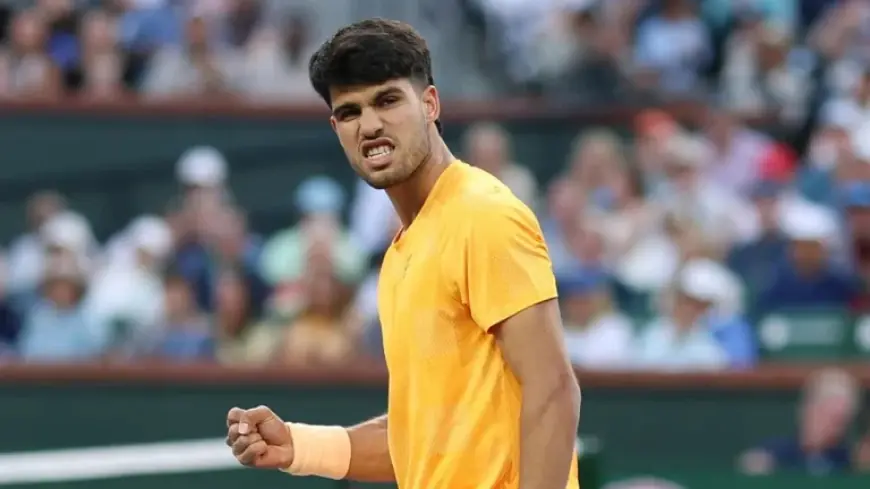
Carlos alcaraz announced his Indian Wells intentions emphatically, dispatching Grigor Dimitrov 6-2 6-3 to begin his campaign with what match data describes as a near-flawless performance. The Spaniard, a two-time champion at this event, extended his ATP Tour winning streak to 13 matches while surrendering only one break point — which he saved — in a match that underlined both form and efficiency.
Alcaraz: flawless start and statistical edge
The match scoreline masks how dominant alcaraz was across key moments. He kept break opportunities to a minimum, converted pressure points when required and avoided the kind of lapses that invite momentum swings on hard courts. That control helped him begin his Indian Wells campaign without dropping a set, reinforcing his status in this draw after earlier season meetings with some of the sport’s top players.
Beyond the immediate victory, the numbers attached to his recent run are notable. Alcaraz’s winning streak now stands at 13 ATP Tour matches, and a focused service game meant he faced only one break point, which he neutralized. Such efficiency feeds into broader metrics that have moved him up the historical Masters 1000 rankings on a win-rate basis.
Djokovic grinds through a three-setter
Novak Djokovic, a five-time champion in the California desert, required three sets to overcome Kamil Majchrzak, falling 4-6 in the first before prevailing 6-1 6-2. This was Djokovic’s first match since a high-profile meeting with alcaraz earlier in the season, and the match narrative shifted from an opening set loss to a composed comeback across the final two sets.
The three-set result for Djokovic contrasts with the smoothness of alcaraz’s opening round and illustrates the varied paths top contenders are taking through the draw. Where one contender surged, another had to weather a test, emphasizing the endurance and tactical adjustments still required as the tournament progresses.
Tournament context: comebacks, upsets and data points
The Indian Wells opening round produced a string of significant results. Reigning champion Jack Draper opened his title defense with a comeback 3-6 6-3 6-2 victory over Roberto Bautista Agut, marking his first match back after a lengthy injury lay-off. Draper described mixed emotions about the start of his defense, acknowledging both positive memories and a sense of being underprepared, and added that his form improved as the match progressed.
Joao Fonseca staged a dramatic recovery to beat Karen Khachanov 4-6 7-6 (9-7) 6-4, saving two match points in the process and becoming the second-youngest man this decade to reach the Indian Wells third round; only alcaraz, who reached the third round at 18 in 2022, did so at a younger age. Other seeded names moved on, with wins recorded by Daniil Medvedev and Alex de Minaur, while Cameron Norrie advanced and now faces De Minaur next.
From a historical-performance perspective, the tournament’s data lens highlights a narrow statistical shift: alcaraz has nudged ahead on a Masters-level win-rate measure, listed at 77. 98% with an 85-24 record, overtaking a long-standing benchmark of 77. 91% compiled over a much larger sample. That comparison places his Masters 1000 efficiency among the highest recorded for players meeting the minimum-match threshold.
What comes next and an open question for the draw
The juxtaposition of alcaraz’s composed opening and Djokovic’s three-set salvage frames a tournament where momentum and recovery will both be tested. With Draper defending his title and young challengers pushing through, the draw balances established experience and emergent threat. Tactical adjustments, stamina management and short-term form will determine how far each contender can translate early results into sustained progress.
Will alcaraz’s blend of ruthless efficiency and statistical ascendancy carry him past deeper rounds where opponents typically elevate intensity and pressure? That dynamic will shape the narrative as the event moves forward and is the central question for observers tracking contenders at Indian Wells.