










Kirk Herbstreit at the Center of Championship Week: Analysis, Controversy, and the Voice of the Biggest Game


Kirk Herbstreit has entered another College Football Playoff title week in a familiar role: the sport’s most visible analyst, tasked with translating chaos into clarity. This time, he’s also become part of the story. In the build-up to Monday night’s national championship between Miami and Indiana, Herbstreit’s recent on-air moments and pregame evaluations have sparked fresh debate, underscoring how much influence a single broadcast voice can carry when the stakes are highest.
Herbstreit’s profile rises every January, but the 2026 title run has given him an unusually sharp spotlight for two reasons: his detailed quarterback breakdowns ahead of kickoff, and the immediate scrutiny that followed a controversial sequence involving Indiana star quarterback Fernando Mendoza.
Kirk Herbstreit and the Championship Stage
Herbstreit and longtime booth partner Chris Fowler are set to call the national championship again, continuing a run that has effectively defined the modern era of the event. Their pairing has become part of the game’s ritual: the same voices, the same elevated production, the same sense that the sport’s biggest night is also a television showcase.
That production is only expanding. Title night now arrives with a menu of alternate viewing options, extra camera angles, and specialized feeds designed for fans who want everything from “film room” style analysis to hyper-focused tactical views. It’s a fitting backdrop for Herbstreit, whose brand is built on explaining what teams are trying to do and why certain matchups keep deciding games.
The Targeting Flashpoint and Why Herbstreit’s Words Traveled
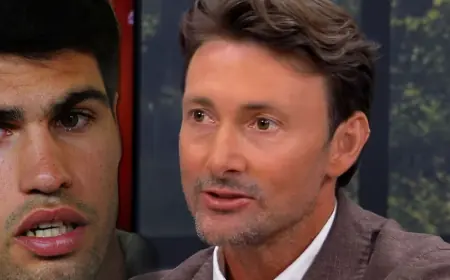
The most talked-about Herbstreit moment of the week came during a sequence in which Mendoza took a violent hit that drew immediate outrage from viewers expecting a targeting penalty. As the quarterback appeared bloodied, the absence of a flag intensified the reaction. Herbstreit’s commentary—along with rules-focused analysis during the broadcast—added fuel to the discussion about consistency in officiating and how the sport handles quarterback safety in its biggest games.
In the modern media environment, that type of moment spreads instantly because it hits two nerves at once: player safety and competitive fairness. Herbstreit’s role isn’t to officiate, but his credibility gives him unusual power to frame what the audience believes it just saw. When he signals that a call was missed, the conversation accelerates. When he emphasizes how a defense is approaching a quarterback, it shapes how fans interpret every hit that follows.
That dynamic cuts both ways. Supporters view it as accountability. Critics see it as an analyst stepping too close to the line between describing the game and becoming an advocate in real time. Either way, it illustrates why Herbstreit remains central to the college football experience: he’s not just narrating; he’s influencing how millions process the sport’s most emotional moments.
Herbstreit’s Carson Beck Breakdown Sets the Tone for Miami
Away from controversy, Herbstreit has leaned into what he does best: high-level quarterback evaluation. His recent analysis of Carson Beck has focused on the traits that make Miami hard to defend in tight games—timing, accuracy, and the ability to stay composed when protections break down.
The key point in Herbstreit’s approach has been balance. Beck’s strengths are real, but the title game environment punishes impatience. Herbstreit has highlighted how championship defenses force quarterbacks to win in uncomfortable ways: taking checkdowns without frustration, living for a few drives without explosives, and staying precise when the game plan shifts midstream.
For Miami, that framing matters because it reinforces the idea that the game won’t be decided by highlight throws alone. It will be decided by the unglamorous snaps: third-and-medium protections, red-zone decisions, and whether the quarterback avoids the one mistake that flips field position and momentum.
Kirk Herbstreit on Indiana’s Rise: “Unprecedented” Becomes the Storyline
Herbstreit has also spent the past few days amplifying the scale of Indiana’s surge under Curt Cignetti, calling it “unprecedented” and treating it as more than a feel-good run. That message has landed because Indiana’s path has been so unlikely, moving from outsider to championship participant with a style built on discipline, situational sharpness, and a quarterback who can carry late-game pressure.
By labeling the run “unprecedented,” Herbstreit isn’t just praising Indiana—he’s giving the audience permission to take the program seriously on equal footing with a more historically glamorous opponent. In a sport where perception often becomes reality, that kind of endorsement has weight.
What Happens Next: Why Herbstreit’s Night Will Be Measured in Moments
Herbstreit’s title-game performance won’t be judged the way a coach or quarterback is judged, but it will still be evaluated—clip by clip, call by call. On a night where emotions run hot, fans want two things at once: accountability when something looks wrong, and restraint when a moment is still developing.
That’s the tightrope Herbstreit is walking again. He is the sport’s explainer-in-chief, but he’s also a lightning rod whenever the game’s biggest calls, biggest hits, or biggest narratives collide. In a Miami–Indiana championship already heavy with storylines, his voice may end up being one of the defining features of the night.