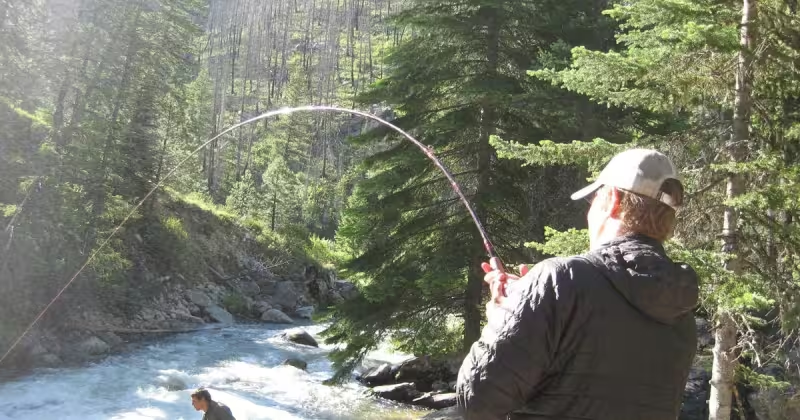
The South Fork Salmon River summer Chinook fishery opens Thursday, June 18, 2026, and Idaho Fish And Game is projecting a harvest share of roughly 420 adipose‑clipped hatchery adults for the season’s first interval.
That target sits against this week’s counts: as of June 16, an estimated 2,387 adipose‑clipped hatchery adults destined for the South Fork had crossed Bonneville Dam and 1,342 had passed Lower Granite Dam, including about 636 adipose‑clipped adults in the previous seven days. Idaho Fish And Game estimated roughly 850 adult Chinook had already entered the South Fork drainage, about 560 of them adipose‑clipped, and staff at McCall Hatchery were processing roughly 25 fish at the South Fork trap on the morning of June 16.

Flows across the Salmon Basin remain well below normal. The Krassel gauge on the South Fork read about 600 cubic feet per second on June 16, and the Salmon River at White Bird is running considerably lower than average. Lower water has sped migration in recent days; Idaho Fish And Game reports fish are moving quickly through the hydrosystem, a factor that concentrates opportunity — and uncertainty — for anglers when the fishery opens.
Idaho Fish And Game also said the harvest share had not been fully established because additional fish were still moving through the hydrosystem. Managers estimated roughly 1,000 additional South Fork fish had not yet passed Lower Granite Dam on June 16, and more fish continuing to transit the river system could change how many adipose‑clipped adults are ultimately available for harvest.
That unresolved math matters because the opener is expected to be busy and brief. The agency targeted about 420 adipose‑clipped adults for the 2026 South Fork harvest, and the first four‑day interval is expected to be the best window for anglers. Jordan Messner, who has been watching local counts, put it plainly: "The Fish Are Here!" and added, "I expect fishing to be good during the first four‑day interval." The last close parallel is 2015, when similar run timing and an identical opening weekend produced daily angler harvests between about 25 and 100 fish.
For anglers that means a narrow margin: a modest harvest share, concentrated runs, and low flows that can push fish past anglers faster than usual. Practical details remain the same — check daily counts and ramp flows before heading to the river, expect quick-moving fish, and plan for a heavy opener on June 18 — but keep in mind the final allocation could shift if the downstream counts rise.
The immediate thing to watch after the opener is simple and specific: how many more adipose‑clipped adults are recorded at the main dams over the next few days. If the roughly 1,000 fish still south of Lower Granite on June 16 continue moving at current rates, the final harvest share will be revised; if they do not, the 420‑fish target will likely hold. The June 18 opener will be the first real test of which path the run takes.