



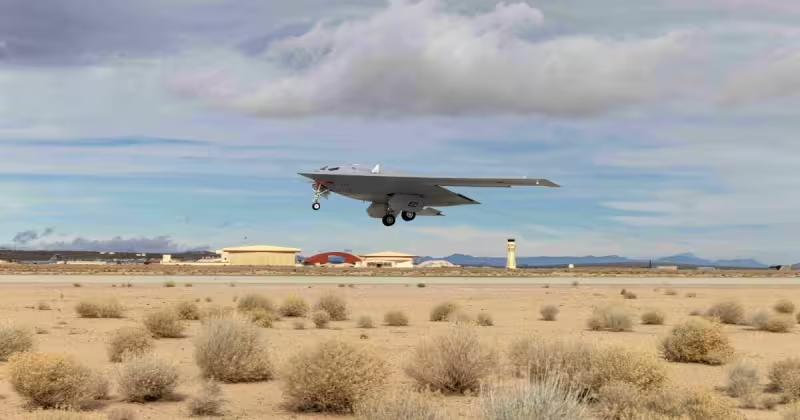
The US Air Force has flown an operational test pilot alongside a developmental test pilot early in B-21 Raider flight testing for the first time, a change designed to push feedback to Northrop Grumman sooner and cut the chance of costly fixes later.
The latest round of tests put a pilot from Air Force Operational Test and Evaluation Center Detachment 5 in the cockpit with a developmental test pilot from the Air Force Test Pilot School. Developmental testing is normally the first step, used to verify the airframe’s structural integrity, aerodynamics, performance and engineering systems. Operational testing comes later, after that groundwork is done, to judge combat effectiveness, suitability and survivability in realistic threat environments with operational crews.

That order is now being compressed. Military flight testing has traditionally moved in a slower sequence that can stretch for months or even years, but the Air Force is folding the two stages together earlier in the B-21 program as part of a broader modernization push that also includes the Sentinel intercontinental ballistic missile and the F-47 next-generation combat aircraft. Under a new directive, senior leaders are being told to prioritize resources and clear bureaucratic and administrative obstacles that could slow programs down.
General Dale White said the approach reflects the acquisition culture the service wants across the force, calling it a smarter and faster mindset that uses modern production and test tools with a proper sense of urgency and pushes old processes out of the way. The practical payoff is simple: if a problem shows up in flight, the operational pilot can feed it back in near real time, before it hardens into a modification that costs more and takes longer to fix.
The B-21 is expected to become the centerpiece of the Air Force’s next bomber fleet. The service plans to field at least 200 Raiders. The bomber is expected to augment and eventually replace the B-1B Lancer and B-2 Spirit by 2040, then ultimately succeed the B-52J Stratofortress in the 2050s. The first Raider is expected to enter operational service by 2028.
The open question is not whether the Air Force wants to move faster; it is whether the compressed test model can keep pace with the bomber’s ambition without creating problems that would have been caught later under the old system. For a program tied to one of the three legs of the American nuclear deterrence triad, the service is betting that earlier operational input is the safer bet.



