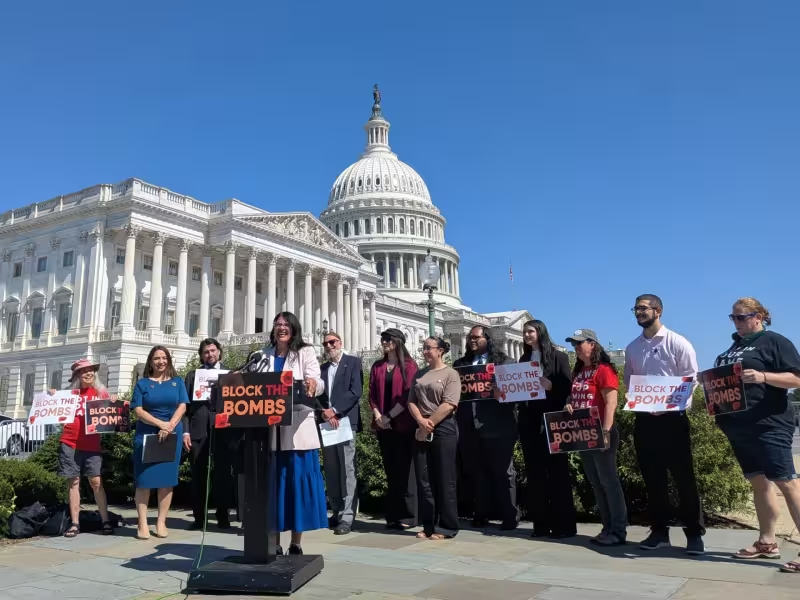
Jack Schlossberg said during a Tuesday debate that he would vote in support of the Block the Bombs Act, marking the first public pledge by the 33-year-old Manhattan congressional candidate to back the measure.
Schlossberg framed the choice as ethical. He called restrictions on offensive weaponry "a moral question that is being put to our country right now" and said the bill aims to "protect civilian lives as best we can." He also told voters he would vote for continued U.S. funding to boost Israel's Iron Dome missile-defense system.

The move is notable: the Block the Bombs Act, introduced a year ago by Rep. Delia Ramirez, has grown from 21 supporters at introduction to 73 co-sponsors in the U.S. Congress, and Schlossberg had not publicly backed it until Tuesday.
Schlossberg is running for the open House seat in Manhattan being vacated by Rep. Jerry Nadler, and he faces a June 23 primary that will decide the Democratic nominee. The district is heavily Jewish, and candidates’ positions on weapons shipments to Israel have become campaign touchpoints; at the same debate State Assemblymembers Micah Lasher and Alex Bores and former GOP attorney George Conway declined to support the bill.
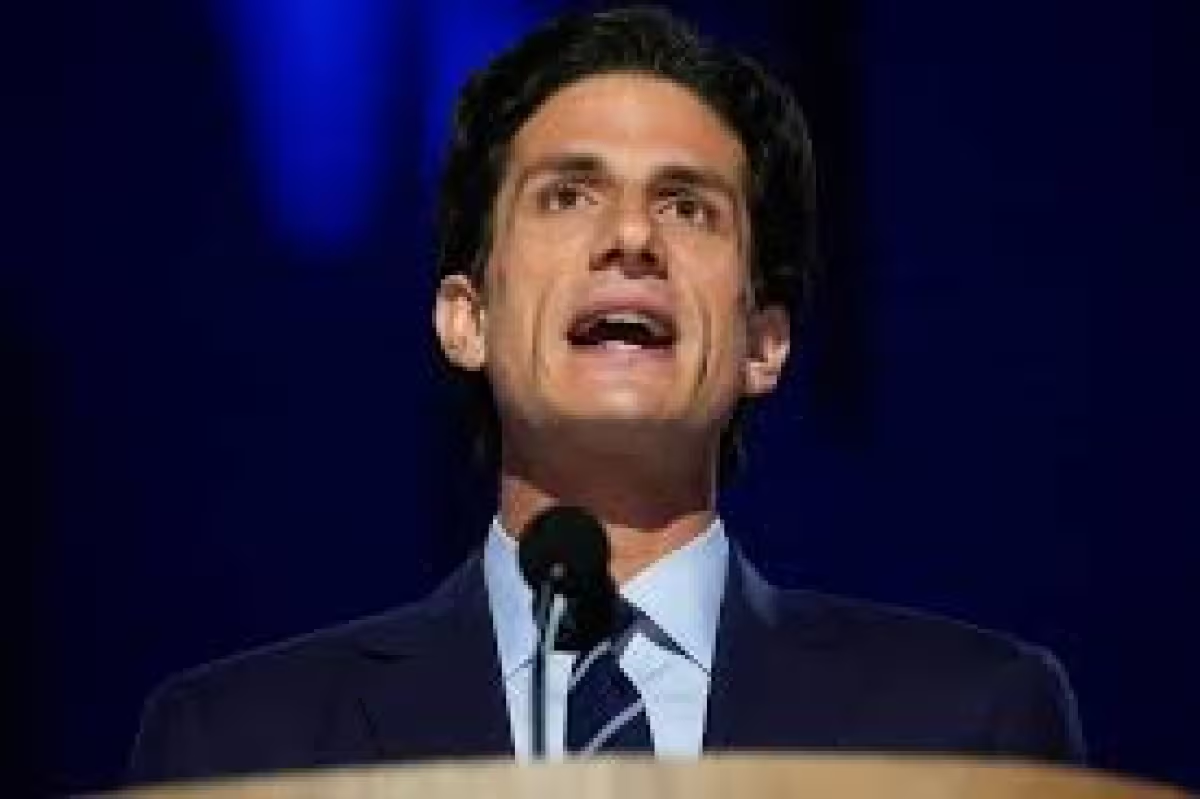
Why the rhythm of Schlossberg’s statements matters now is straightforward: his public stance shifted amid an active race. In January, Schlossberg wrote in a questionnaire that he was "unsure" whether he would support the Block the Bombs Act and in a forum that month said, "I would want to have a full intelligence briefing to try to understand the situation before supporting any specific legislation." At a private Upper East Side gathering in May, he said he "probably would have continued funding Israel’s offensive weaponry within the years following Oct. 7." Last month he posted on social media that he supported "no weapons to Israel."
Those earlier remarks sit uneasily with Tuesday’s declaration and create the campaign friction voters are watching. Schlossberg has acknowledged change: he told the debate audience that his "views have evolved as the situation has," and later added that his "position has changed as the situation does." Still, the sequence — from uncertainty and a demand for an intelligence briefing in January to a clear vote in May and Tuesday — leaves open how firmly he will apply the same standard to other Israel-related legislation.
Schlossberg paired his pledge on the Block the Bombs Act with support for bolstering defensive systems. Saying he would back Iron Dome funding narrows the vote to a specific mix of restrictions and defense assistance, but it does not map his view across the wider set of aid measures that typically appear in Congress.
That gap matters in a primary where voters weigh both principle and policy. The Block the Bombs Act has become a focal point because it seeks partial embargo restrictions rather than an all-or-nothing approach, and its growth to 73 co-sponsors reflects broader Democratic debate. For a candidate in a heavily Jewish Manhattan district, a single answer on one bill can change the stakes for constituencies weighing national security, civilian protection, and diplomatic outcomes.
Schlossberg’s Tuesday declaration clears one immediate ambiguity but leaves another: how he would vote on the range of Israel-related aid proposals that are likely to come before Congress. With the June 23 primary less than three weeks away, that unanswered question is the practical test voters will take to the ballot box.