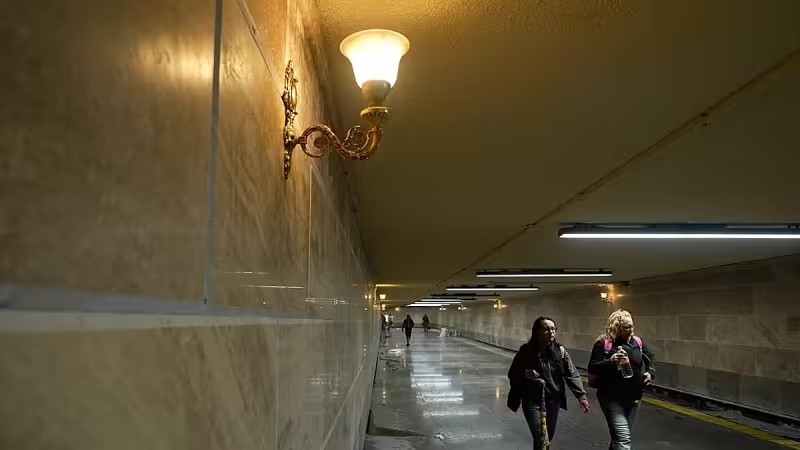
One Mexico City subway station was outfitted with chandeliers as part of lighting installed for preparations tied to the 2026 World Cup, a change shown to the public on Wednesday, June 10, that immediately became the subject of online memes.
Pictures and short videos shared on social platforms on June 10 showed commuters walking beneath new overhead fixtures more commonly associated with formal dining rooms than rapid-transit platforms. The installation stood out because Mexico City’s subway is normally associated with crowds and speed — not ornate lighting — and the contrast helped the images spread quickly.

The chandelier display is one element of a visible run-up to the 2026 World Cup in Mexico. City scenes tied to the tournament have been appearing across recent weeks: soccer fans gathered along Reforma Avenue on Saturday, June 6, airport renovation work was underway at Benito Juárez International Airport on Tuesday, May 19, and commuters were photographed in stations on Tuesday, June 9 and Wednesday, June 10 as crews prepared public spaces. The chandeliers arrived amid that broader flurry of work and attention linked to the Copa Mundial De La Fifa 2026 preparations.



The immediate consequence was attention rather than altered service: riders kept moving through the station while social media users turned the new fixtures into a running joke and a talking point about the tone of the city’s World Cup makeovers. The images shifted the conversation from transit efficiency — the usual subway story — to aesthetics, highlighting a disconnect between the utilitarian expectations of a busy network and the decorative choices now on display.
That disconnect is the story’s friction. Mexico City’s metro system is famous for moving large numbers of people quickly; chandeliers interrupt that shorthand. Commuters and online commentators treated the lights as a visual oddity, and the memes made the contrast literal: a transit system built for rush-hour throughput reframed, for a moment, as a stage for spectacle.
Officials have presented the lighting as part of World Cup preparations, but public information so far leaves a key gap: the specific station given the chandeliers has not been identified in the material released with the images, and authorities have not said whether this is a one-off decorative touch or part of a wider redesign of stations. That uncertainty matters because if the fixtures are temporary, they are a cosmetic flourish; if more stations are scheduled for similar work, the project would represent a broader change in how the city dresses its high-traffic transit spaces for a global event.
What happens next is the open question. The city’s World Cup preparations remain visible in public spaces — from airport renovations in May to crowds on Reforma Avenue in early June — but whether the chandelier installation signals a single, photo-ready intervention or the start of a larger program of station makeovers is unknown. Officials have not disclosed a plan for additional lighting or how long the new fixtures will remain, leaving commuters and observers to weigh whether the chandeliers are a whimsical aside or the first sign of a wider aesthetic shift in the Mexico City subway system.