



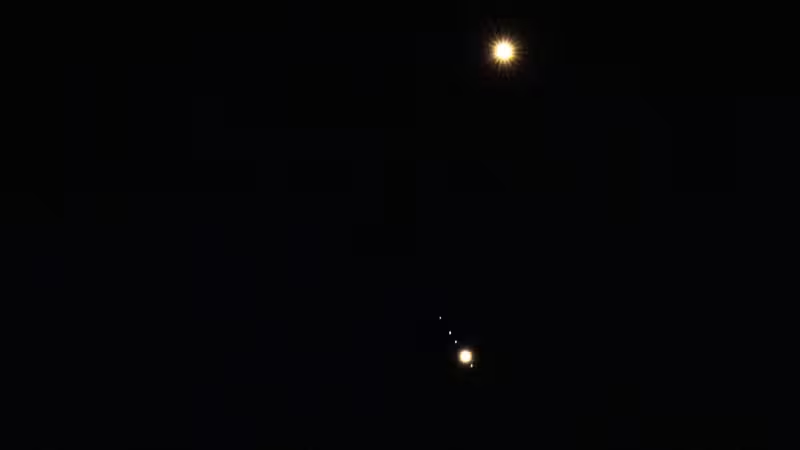
Venus and Jupiter meet in the western sky tonight, June 9, giving skywatchers a rare chance to see the two brightest planets in the same patch of evening sky. For observers in the U.S., Venus will sit less than 20 degrees above the horizon at sunset, with Jupiter appearing to its lower left.
The pair will pass within less than 2 degrees of each other, close enough that they may fit in the field of view of 10x50 binoculars. Seen with the naked eye, they should stand out quickly in a clear western sky, making this one of the easiest planetary meetings to catch without special equipment.

Mercury is also hanging in that same part of the sky, about 10 degrees below and to the lower right of Venus and Jupiter, but it is much harder to pick out than the two brighter planets. The difference matters because the western horizon can brighten fast after sunset, and a low object can disappear into the glow before most casual observers have a chance to lock onto it.
That makes the window for viewing short and the local conditions crucial. A clear, unobstructed western horizon will matter more than almost anything else tonight, especially for anyone hoping to catch Mercury as well as the conjunction itself. Venus and Jupiter are bright enough to survive some twilight glare; Mercury usually is not.
The timing also sets up a changing display over the next several nights. Venus will rise above Jupiter after tonight as it tracks toward the constellation Cancer, while Jupiter slips lower and becomes progressively harder to spot. By early July, the planet is expected to be a challenge to see, and it will not return to the evening sky until mid-August, when it reappears in the eastern morning sky.
For anyone heading out after sunset, the easiest target is simple: look west, find Venus, then check for Jupiter just below and to the left. If the sky is clear, the two planets should be close enough to make the alignment obvious before the night deepens and Jupiter fades toward the Sun.
There is another date to keep in mind for later this month. On June 20, Venus will shine with the open star cluster Messier 44 in Cancer, extending the month’s planet watch beyond tonight’s close approach. For now, though, the main event is already set: two brilliant planets, one low evening sky, and a narrow viewing window that will not last long.



