



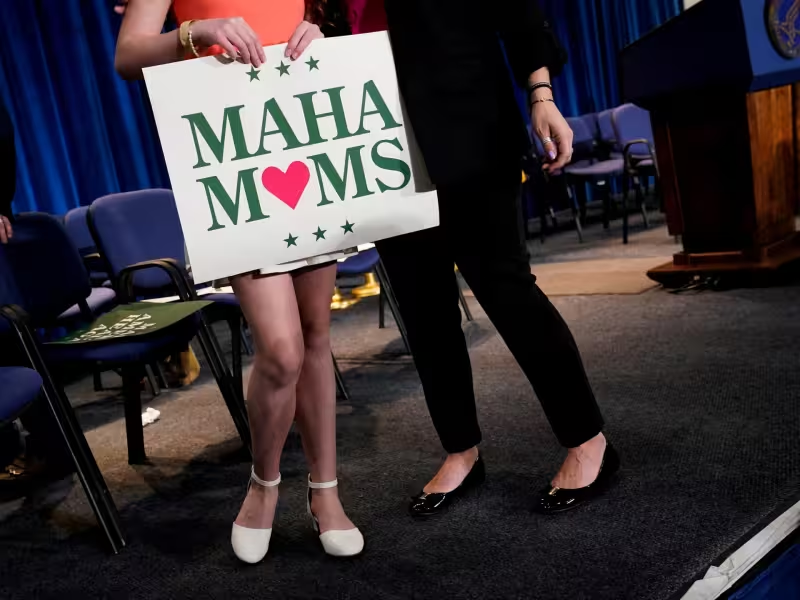
A few hundred Make America Healthy Again activists gathered outside the Supreme Court on April 27 as the justices heard oral arguments in Monsanto Company v Durnell, a case that could make it harder to sue Bayer over allegations that glyphosate causes cancer.
The rally came as Bayer faces a legal bill that has already reached about $11bn, after the company settled almost 100,000 glyphosate cases tied to Roundup, the weedkiller whose key ingredient was glyphosate until recently. Tens of thousands of cases remain unresolved, and new ones are still being filed.

The crowd in Washington was not just there to make noise. Kelly Ryerson, who appeared outside the court under the nickname “Glyphosate Girl,” joined other activists including Zen Honeycutt, Vani Hari and Alex Clark in a show of support for the health movement that has grown around Robert F. Kennedy Jr.’s agenda since the election. One banner in the protest framed the stakes bluntly: “How much cancer is acceptable?” Another carried the message, “Monsanto knew.”
The case has put an awkward split in plain view. The Trump administration backed Bayer at the Supreme Court even as MAHA activists who have supported the president’s health push were protesting the company outside. After the rally, some of the activists went to the House of Representatives and used X to press lawmakers, while the chamber was weighing whether to add liability-protection language for pesticides to the Farm Bill.
That lobbying effort shows the fight is no longer confined to the court. MAHA activists are trying to shape policy in Congress, the White House, the judiciary and, with the midterms ahead, at the ballot box. Their reach is not small: a recent Kaiser Family Foundation poll found about 40 percent of Americans say they support the movement. The question now is whether the Supreme Court will leave Bayer exposed to the remaining glyphosate lawsuits or make those claims harder to pursue in U.S. courts.



