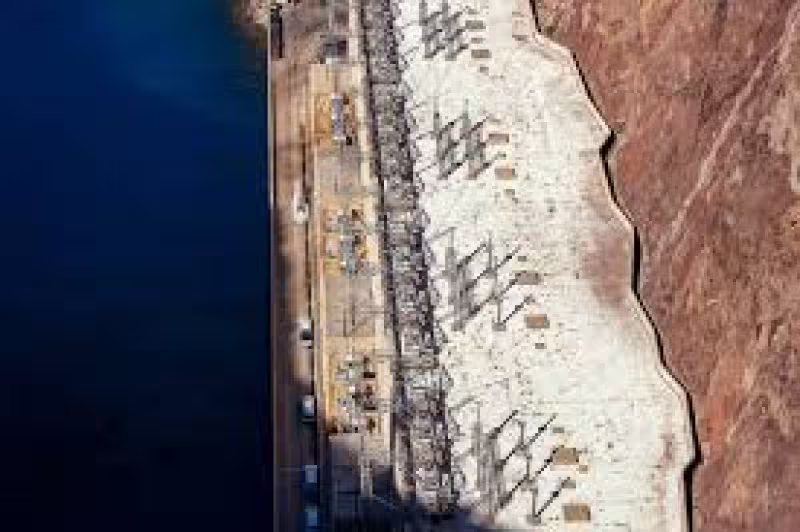
Lake Mead is now 15 feet above the level that would force a sharp drop in Hoover Dam’s electricity output, and water managers expect the reservoir to slip below that mark sometime in the next 12 months. If it does, the dam’s hydropower capacity would be cut by 70%, a loss that could ripple through the Western grid and push up costs for some customers.
The trigger point is 1,035 feet above sea level. Lake Mead stands at 1,050 feet now, but managers say the reservoir could reach the critical level by late August or not until next spring. Tom Buschatzke, a senior Arizona water official, put it plainly in a mid-May meeting: the lake is going to 1,035 feet. The question is not whether the threshold will be reached. It is how soon.

Hoover Dam is the largest hydropower plant in the Colorado River Basin, and its value comes from more than volume. The power is relatively cheap, and it can ramp up or down quickly when demand swings through the day. That flexibility matters to utilities and grid operators that need a fast, dependable source when solar output fades in the evening or when demand jumps unexpectedly.
The reason the output would fall so sharply is mechanical. Twelve of Hoover Dam’s 17 turbines are not designed to operate once Lake Mead drops below 1,035 feet. That leaves the plant with far less generation available at a time when water levels across the system are already under strain. In April, the Bureau of Reclamation cut water releases from Lake Powell by 20% to protect infrastructure and preserve hydropower there, a reminder that the shortage is spreading across the river system, not just at one reservoir.
There is a partial fix in motion. On May 21, the Bureau of Reclamation said it will spend $52 million on three new wide-head turbines that can generate power down to 950 feet. Once those units are installed and operating alongside the five wide-head turbines already at the dam, the projected capacity cut would narrow to 58% instead of 70%. But that benefit will not arrive in time if Mead crosses 1,035 feet before the work is done.
That is the unresolved problem for the grid. Bureau officials are spending now to blunt the loss later, but the near-term hit is still the larger one. At one point this month, Lake Mead was dropping by roughly one foot every five days, fast enough to keep the deadline in view even as the exact timing remains uncertain.
The stakes are especially high for places that lean hard on Hoover Dam’s electricity. Lincoln County Power District in Nevada gets about 70% of its power from the dam, and it is the kind of customer that would feel the loss most directly. Grid specialists are already modeling low-hydropower scenarios because the dam is no longer a stable assumption. The next milestone is simple to state and hard to avoid: Lake Mead is expected to fall below 1,035 feet within the next year, and when it does, Hoover Dam’s output will drop sharply before the new turbines can fully soften the blow.