




Retired Modesto Police Department detective Jon Buehler said a careless mistake — something as small as typing Nancy Guthrie’s address into an online map — could be the lead that finally breaks open the investigation into her disappearance. "If somebody ever plugged her address into a Google search for a Google Maps or whatever, if they did a reverse keyword search on that because those records are maintained for a period of time, to see any random person that would have typed in her address that had a reason to do it and then you'd contact that person and find out why did you put that address," Buehler told a reporter in a recent interview.
The point matters because Guthrie, 84, has been missing since February 1 and police believe she was abducted from her Tucson home. Investigators released doorbell camera footage showing a masked suspect and sent DNA evidence to the FBI lab in Quantico, but after five months they still have not named a suspect.

Buehler, who worked on the Laci Peterson case, framed the investigation in practical, data-driven terms. He said modern vehicles and digital trails give detectives ways to narrow the circle of who had a legitimate reason to be at Guthrie’s address. "Any tradespeople that maybe were doing plumbing repair or electrical repair, anybody who was delivering furniture, anything that came up where somebody could see her as a source of ransom because of the connection with Savannah and Savannah's notoriety," he said, could be investigated and either excluded or identified through tracking and search records.
Investigators have already made some of that evidence public: the doorbell footage of a masked person and the move to forward DNA for federal testing at Quantico. But Buehler emphasized the small, searchable mistakes that leave durable records — map searches, delivery app logs, reverse keyword traces — as potential keys. He also noted that newer cars have tracking capabilities investigators can check to place vehicles near a location at a given time.
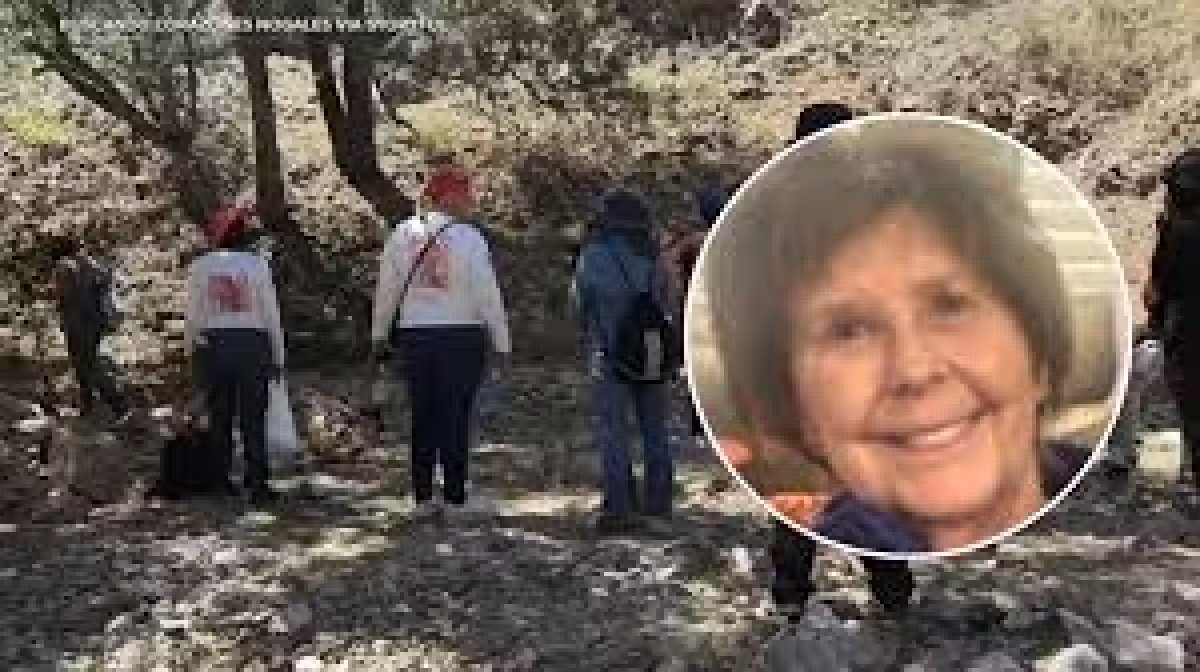
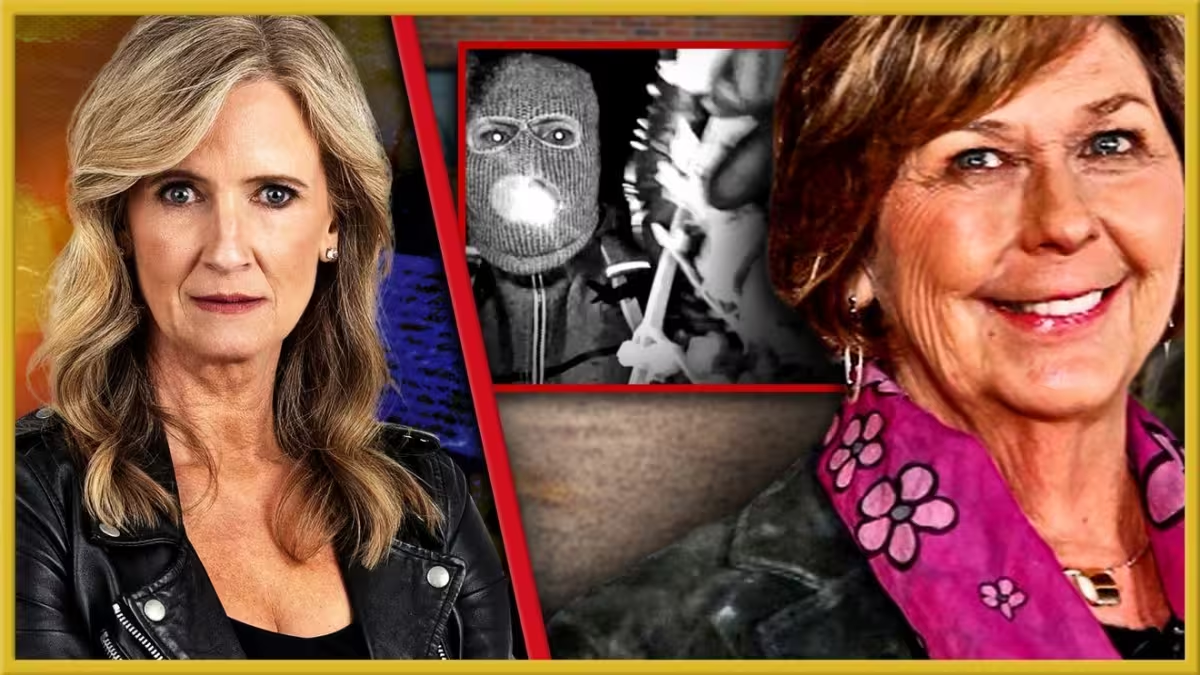
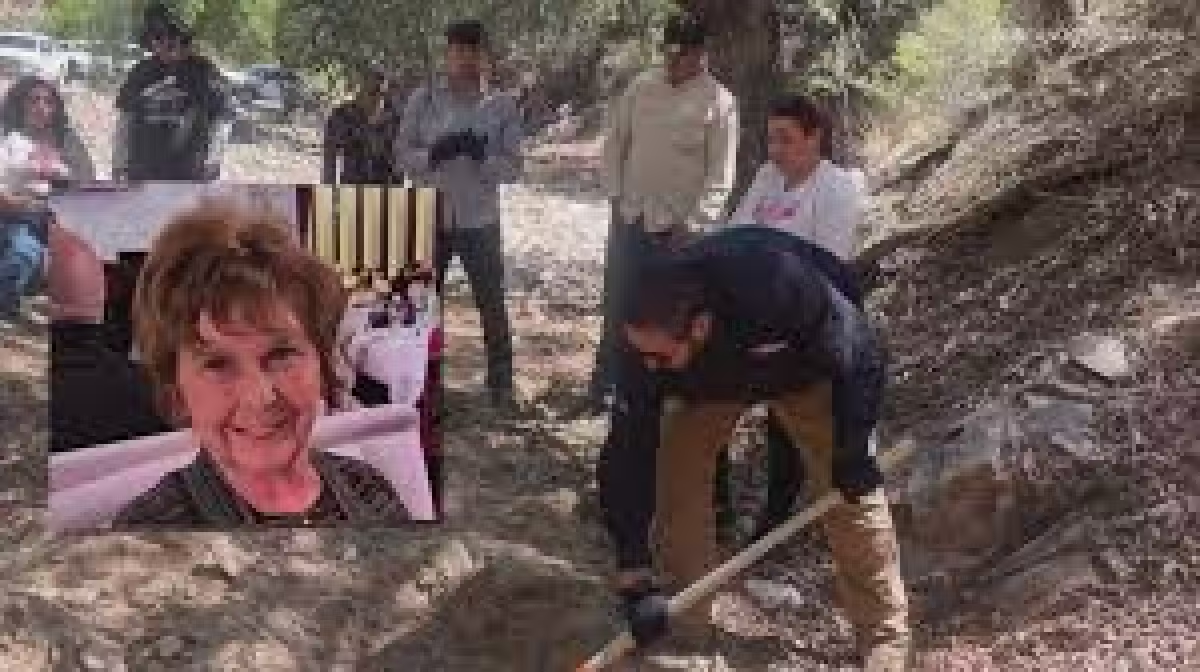
His argument rests on a narrower, harder truth: tips and data can only help if they are found, prioritized correctly and acted on. "When tips come in on a case like Nancy Guthrie's, they're prioritized as best they can, but you still don't know for sure if they're prioritized correctly," Buehler said. "And so there might be something in there that we're waiting on, that could break it wide open."
Buehler did not suggest a named suspect; his point was procedural. He warned that investigators sometimes hold a lead that requires a witness to overcome fear. "We had a random murder that went 11 years unsolved, and it was only because the one person that could give us the information was afraid to come forward, and it took 11 years for them to get over that fear," he said.
That possibility deepens the friction in this case: law enforcement can request or subpoena data, analyze vehicle tracking, and pursue delivery and service logs — yet months on, no arrest or public identification has followed. Buehler acknowledged investigators may already be chasing the same records he outlined. "If somebody ever plugged her address into a Google search..." he said again, underscoring that the records retaining such queries are preserved for a time and are exactly the sort of trace that can tie a person to an address.
For now the investigation remains evidence-driven and unresolved. Guthrie’s family has been thrust into the national spotlight because she is the mother of television anchor Savannah Guthrie, but the technical leads Buehler described are the sort of routine police work that can happen away from cameras: reverse-keyword checks, delivery-driver logs, vehicle telematics and DNA analysis at a federal lab.
The most consequential unanswered question is plain: which specific tip, search record or piece of tracking data — if any — will identify the person responsible for Nancy Guthrie’s disappearance? Investigators may be sitting on information that could point to a suspect, or they may yet need the one careless search or overdue tip that brings everything together.



