



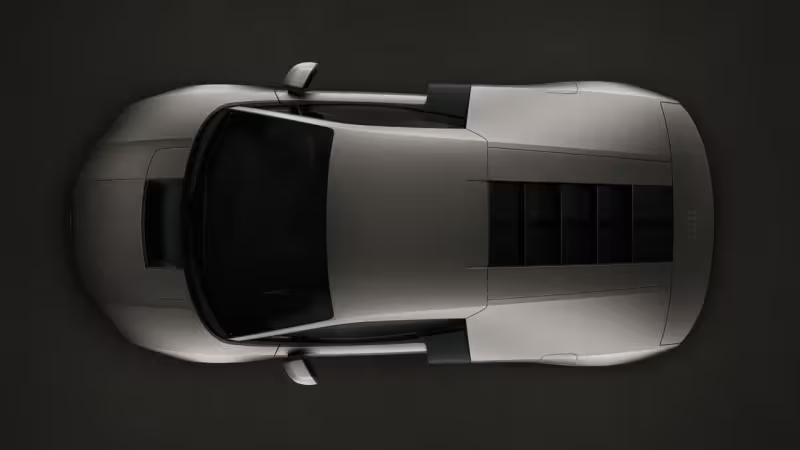
Audi has unveiled the Nuvolari, its first supercar with a high-performance hybrid powertrain, and the numbers put it straight into company record territory. The new model delivers a maximum system output of 736 kW, or 1,001 PS, reaches more than 350 km/h and sprints from 0 to 100 km/h in 2.6 seconds.
The Nuvolari combines a 4.0-liter V8 biturbo engine with three axial flux electric motors, giving it the sort of specification Audi is now using to frame its next performance era. The combustion engine produces 588 kW and 800 hp, while the hybrid system includes a 7.3 kWh lithium-ion battery and a third electric motor mounted between the mid-engine V8 and the transmission.

Audi says the front axle carries two oil-cooled axial flux motors that can deliver up to 2,150 Nm of torque, helping push the car to 200 km/h in 6.8 seconds. The V8 can rev to 10,000 rpm and generate up to 730 Nm, figures that place the Nuvolari at the sharp end of the brand's production range.

The supercar is not just a statement of speed. Audi says it will build only 499 units, even as it describes the Nuvolari as a production vehicle. Deliveries are scheduled to begin in the first half of 2027, leaving buyers with a long wait and no published price yet.
The model also introduces Audi's new design philosophy on a production car for the first time. The company says the Nuvolari uses Formula 1-inspired technology, including a high-performance hybrid system, quattro predictive ride, active aerodynamics and a new Audi Space Frame with carbon exterior, and that it is intended to become the fastest and most powerful production vehicle in the history of the four rings.
Gernot Döllner said the Nuvolari shows what is possible when the focus is on technology, performance and teamwork, while engineering chief Rouven Mohr said the project reflects the team's technical expertise and its ability to move innovations quickly and precisely into a production vehicle. The production label may be Audi's, but the 499-unit limit makes this a supercar as rare as it is fast, with the first cars due in the first half of 2027.



