
David Kelly’s new government debt analysis does not point to a sudden collapse. It points to a grind. In the most optimistic of five scenarios he mapped this week, federal debt still reaches 115% of GDP by 2036, far above today’s level.
That is the headline number because it gives a floor, not a ceiling. Kelly said the federal debt would not likely collapse on a fixed schedule, but his baseline case is worse, putting the ratio at 130% by 2036. In the scenario he described as a full-blown fiscal crisis, the outcome is even harsher — and he said that danger is “somewhat more likely” than any serious attempt to fix the problem.

The analysis lands at a time when the numbers are already stacked high. Federal debt has risen from 31% of GDP in 2001 to 101% today, while debt held by the public is on track to hit $32.2 trillion, or 100.4% of GDP, by the end of this fiscal year. The fiscal 2026 deficit is projected at roughly $1.89 trillion, with spending near $7.4 trillion, revenues around $5.5 trillion and interest payments alone topping $1 trillion this year.


Kelly’s view matters because it undercuts the idea that a little time can solve the problem on its own. He published a note last October saying America was “going broke slowly,” and he has argued that the deterioration has been gradual enough for markets to look away. But he says the drivers are already baked in: unfunded tax cuts, stimulus checks and wars pushed debt higher, and the budget path now has to absorb those choices along with much heavier interest costs.
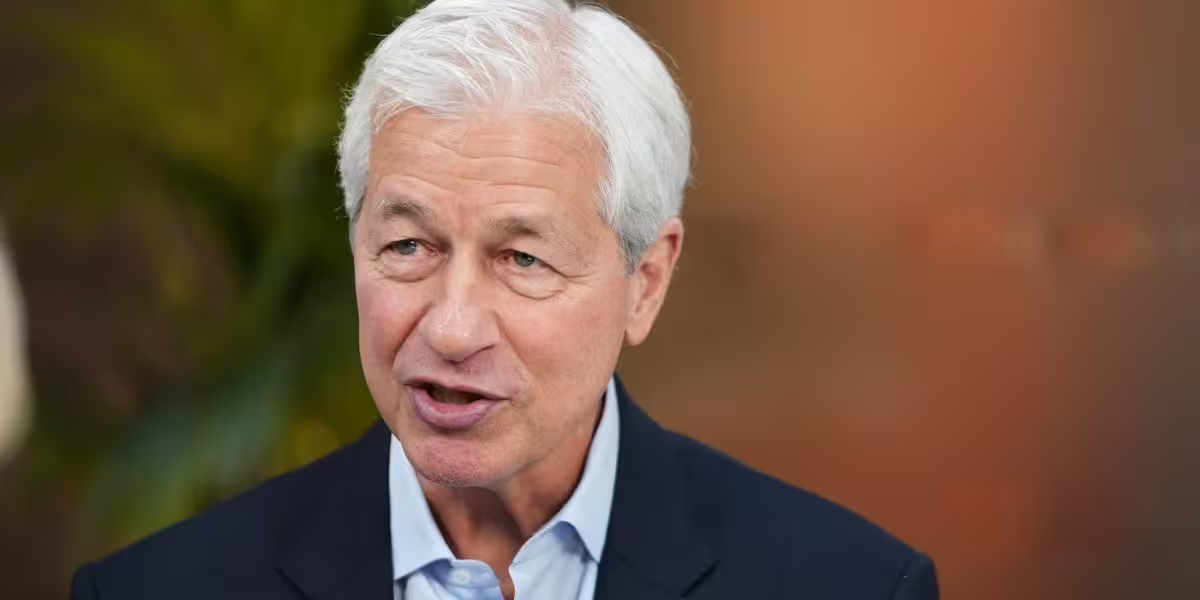
That puts him in the same broad camp as other market watchers sounding alarms, including Jamie Dimon, who warned in January that the $39 trillion national debt was going to “bite” and said in late April, “There will be a bond crisis,” at a Norway sovereign wealth fund conference. In February, the Congressional Budget Office projected debt would rise to 120% of GDP by 2036, assuming tariff revenue runs at $403 billion annually and that the tax breaks in the One Big Beautiful Budget Act expire on schedule.
The gap between those benchmarks is part of the story. Kelly’s best case is already worse than the CBO’s February projection, and his worst case is not some remote tail risk but the one he says may be more likely than a real policy fix. The unanswered question is not whether government debt keeps rising. It is which path the country lands on, and whether Washington changes course before the market does it for them.