



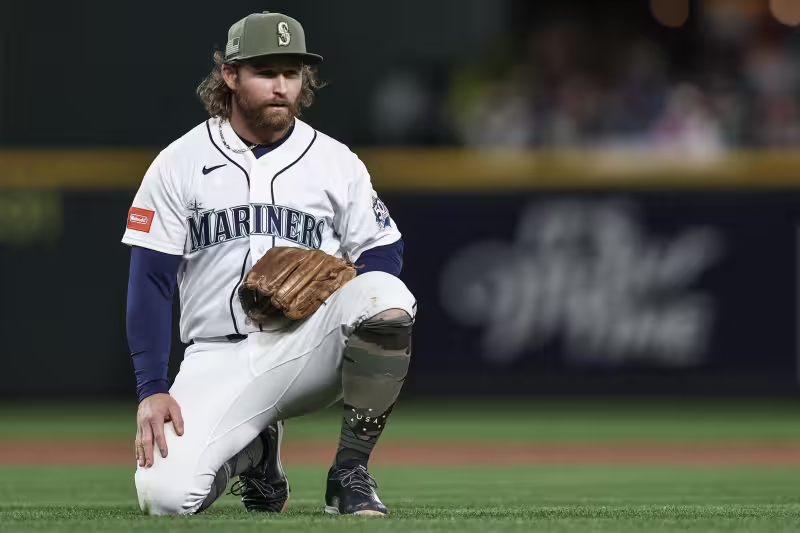
Cal Raleigh took another concrete step in his oblique recovery in Arizona, doing 15 swings per side off a tee at roughly 80% intensity while continuing to catch and play long toss.
The work, completed the same day the Mariners opened a series against the Diamondbacks, is the most dateable on-field progress Raleigh has shown since the injury. Manager Justin Hollander, meeting with reporters before the game, described the activity as a deliberate ramp-up and said the club is being careful with how it stages Raleigh’s return.

Numbers matter here: 15 swings per side at 80 percent is not a full return. It is, Hollander said, a move toward increased intensity rather than a jump in volume. "We want to build responsibly and make sure that when he cuts it loose at 100%, that he feels 100%," he said, stressing that the focus now is efficiency of effort over piling on reps.
That emphasis follows Raleigh’s steady progression through rehab drills in Arizona. He has been catching and doing long toss in addition to the tee work. The next short-term objective, according to Hollander, is to raise effort levels — not simply to add swings — a careful sequencing the team believes reduces the risk of relapse.
Behind the method is a simple calculation about the player Raleigh is: gritty, tough and willing to play through discomfort. Hollander noted that trait directly, saying, "I think he misses us," and warning that those characteristics require a cautious approach. The club is being particularly cautious with Raleigh and with Brendan Donovan — the latter sidelined with a groin issue and still in Arizona — because their high pain tolerance can mask incomplete recovery.
That caution is also practical. Hollander pointed to past setbacks as the reason for a deliberate timeline. "These are the type of injuries that you want to be really deliberate with to make sure we don’t have any kind of setback like we did last time," he said, adding that the medical and coaching staffs want to "treat the patient, not just treat the diagnosis." The result is progress without a calendar.
Hollander made the point bluntly: there is no set timetable for Raleigh’s return. The club does not want to force a rehab assignment or a calendar date before the player is ready; as Hollander put it, they are taking medical input in the context of who the players are so they don’t end up "playing to the day on the calendar that they set up for them weeks in advance."
Raleigh is expected to visit the Mariners in Seattle tomorrow after his work in Arizona. The immediate, testable next step is a higher-intensity phase of baseball activity; the club’s stated goal is to ramp effort until he can comfortably and confidently swing at full strength. The sharper question — and the one the team has not yet answered — is whether this cautious progression, measured in 15-swing blocks and incremental intensity gains, will clear him to resume catching and rejoin the lineup without another setback.



