



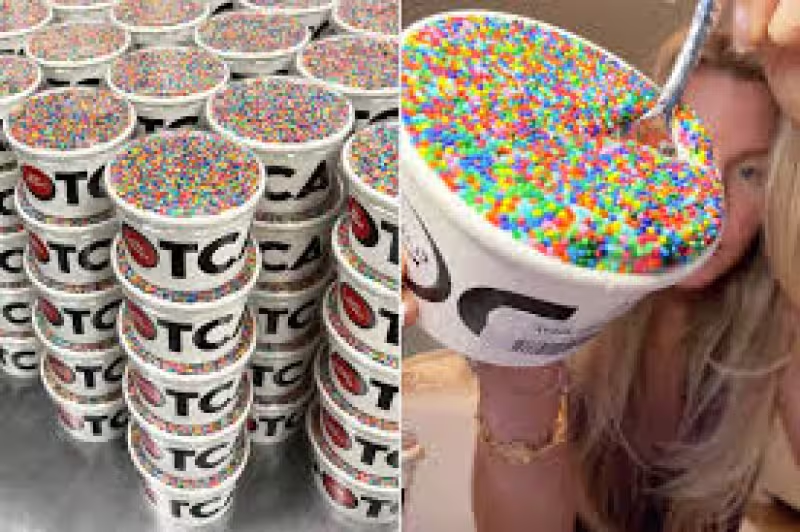
This week the colorful, nonpareil‑covered cups from Dotcakes — the New York bakery founded by Alexandra “Alex” Posner and her mother Sondra Posner — erupted across TikTok, turning a local dessert into what many are now calling the dot cake trend.
Search interest spiked because short videos of the sprinkle‑topped cups are circulating widely online: creators film close‑ups of dense sprinkle fields, ASMR‑style frosting pulls and taste tests, and some clips have climbed into the millions of views, giving the look sudden national visibility.

Dotcakes traces back to a specific, small origin. Alex Posner first began decorating cakes with nonpareil sprinkles in 2017 while she was a high school senior, making treats for friends celebrating college commitments — often in university colors or with logos — and the cakes caught on at bed party celebrations. "What began as a fun and creative way to design an aesthetically pleasing cake as a gift ultimately evolved into something much larger," Posner said, describing how a personal project became a brand.
The bakery formalized the idea into a product line, and later developed the Dotcup, a portable version of its original layered cakes pressed and topped with a flat, densely packed sprinkle surface. Posner is blunt about the product’s path: "The cups were originally designed to satisfy a practical need for transportation and portability rather than to become a viral social media product." That practical origin now collides with the cups’ sudden internet fame.
Visibility widened after Dotcakes partnered with Butterfield Market, an upscale New York grocer whose customers and in‑store creators brought the product to new audiences. Food writer Jenn Lueke, who has tracked the style online, said the appeal is simple: "It has to be visually appealing first, because that’s what draws people in and keeps them interested enough to watch a video." She added, "Dot cakes aren’t groundbreaking, but packaging is everything," and credited the compact, pressed sprinkle top: "The way they’re assembled and pressed with sprinkles for a satisfying flat top is the thing that hasn’t been seen before."
Once videos hit the platform, the look spread fast. Home bakers on TikTok and Instagram began recreating the sprinkle‑covered aesthetic at kitchen scale, and creators repackaged it into short trends — from challenge‑style recreations to step‑by‑step tutorials — which helped the term dot cake become shorthand for the style rather than a label reserved for the original brand.
The mismatch between intent and outcome is the story’s friction: a product built around portability and local orders has been recast as a visual object engineered for screens. That remake has consequences — it pushed demand beyond New York, encouraged other bakeries to copy the look, and sent scores of home bakers trying to match Dotcakes’ dense, perfectly flat sprinkle surface — but the available evidence does not show how much of that online attention has translated into long‑term sales or business growth for the Posners.
The most reasonable conclusion from what’s known is twofold: the dot cake will likely stick around as a social‑media aesthetic because it is visually arresting and easy to replicate, and Dotcakes has gained rare, rapid visibility that most small bakeries do not. Whether that visibility turns into sustained revenue for the original bakery is not proven by the facts at hand; the product’s practical origins and the flood of imitations make a permanent, exclusive business windfall unlikely without further strategic moves by the Posners.



