
























April 14 in History: Eyjafjallajökull Volcano Erupts in Iceland

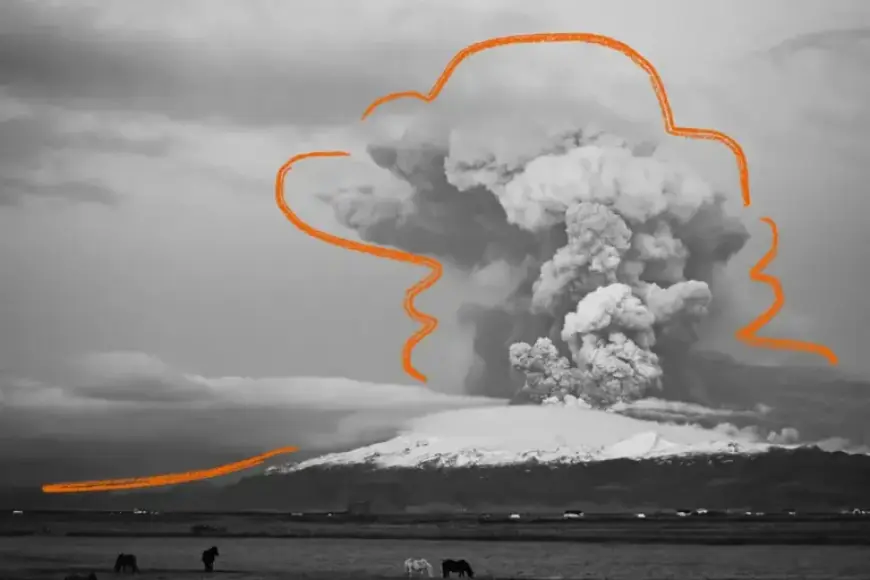
On April 14, 2010, Eyjafjallajökull erupted explosively, sending ash and steam high into commercial flight paths. Lava fountains reached temperatures near 2,192°F, and ash columns climbed tens of thousands of feet.
Background and eruption timeline
Small earthquakes shook the region beginning in January 2010. In March, the 5,417-foot subglacial volcano produced a quiet lava flow. That event ended a dormancy of about 187 years.
On April 14 the eruption turned violent, and ash rose to roughly 33,000 feet. By April 22 the ash column height had fallen by about 40 percent. Eruptive activity continued into May.
Air travel disruption and economic impact
Ash drifted into the airspace used by commercial flights the day after the April 14 explosion. By April 15 the plume covered much of western Europe, and by April 16 it reached northern Europe.
Air traffic came to a near-complete halt. About 300 airports closed, and more than seven million passengers were affected. Airlines reported revenues lost exceeding $1 billion, and over 100,000 flights were canceled.
Why ash was so dangerous
Fine volcanic particulates can damage jet engines by clogging components. That damage can, in theory, lead to engine stall. Before 2010, there was little operational data for such large-scale exposure.
Scientific and industry response
The scope of the disruption pushed scientists and engineers to set safety thresholds. Research led to a suggested limit of 2 milligrams of ash per cubic meter of air. European airlines and manufacturers now use low, medium, and high risk categories to guide decisions.
Iceland’s location along key transatlantic routes made avoiding the ash cloud impractical. Prevailing winds carried the plume over major population centers, amplifying the crisis.
Aftermath and legacy
Airspace restrictions eased after roughly a week, and tourists soon arrived to view the glowing lava. Iceland saw a surge in visitors, which helped boost its tourism industry long term.
Local farmers protected livestock by bringing animals indoors, reportedly saving every cow from ash-related harm. Today the volcano is quiet, but the eruption left lasting effects on aviation policy and Icelandic tourism.
For archival coverage and further context, see Filmogaz.com reporting on the April 14 events and their consequences.