

























Royal Navy’s Reputation Suffers Significant Blow

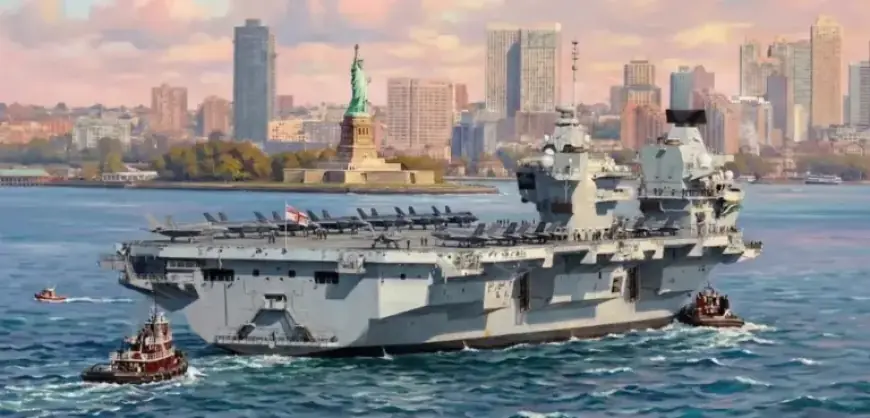
US presidential attacks on British naval capability have sharpened attention on long-standing problems in the fleet. President Donald Trump publicly mocked the United Kingdom’s carriers and naval strength during late March and early April. The comments have amplified concerns about readiness and public confidence.
What was said in Washington
On 26 March, Mr Trump told a White House Cabinet meeting the UK had offered carriers but would only send them after the war. He called them inferior to US ships.
On 1 April, he said: “You don’t even have a navy.” The following day, he repeated that Britain had “two old broken-down aircraft carriers.”
At a Pentagon briefing on 31 March, US defence official Pete Hegseth questioned why other navies were not stepping up. His comments underlined US frustration over the Strait of Hormuz closure.
Fleet size and readiness
Britain’s surface combatant numbers have fallen sharply since the Cold War. At the Cold War’s end the Royal Navy operated 51 destroyers and frigates.
Those numbers dropped to 25 by 2007. They now stand at 13. Not all of those ships are available for high readiness or deployment.
First Sea Lord General Sir Gwyn Jenkins told Swedish media the navy will only be properly prepared for war “by the end of this decade.” He added the fleet is “not ready now.”
Planned shipbuilding and budget pressures
The MoD has active programmes to rebuild capability. Contracts cover 13 frigates, two new SSNs, four SSBNs and three Solid Support Ships.
Deliveries are slow. Nuclear commitments now consume a growing slice of the defence budget. As a result, current units have been sacrificed for future platforms.
Carriers: capability and limits
The Queen Elizabeth class were designed as medium-sized, coalition-focused carriers. HMS Queen Elizabeth entered service in 2017. HMS Prince of Wales followed in 2019.
In November 2025 HMS Prince of Wales reached full operating capability with 24 F‑35B jets embarked. That deployment covered roughly 40,000 nautical miles and involved 40 nations.
The ships can potentially embark up to 36 jets and launch about 110 sorties a day. They face real limits, however.
- Embarked air group size is modest.
- Airborne early warning and organic air-to-air refuelling are limited.
- Sea-based F‑35B currently lacks an integrated stand-off strike weapon.
Propulsion faults caused embarrassment. Those problems have been reported as resolved. The more serious shortcomings relate to capability generation and sustainment.
The Strait of Hormuz and operational reality
The war with Iran began on 28 February and Iran closed the Strait of Hormuz. That waterway presents dense, layered threats.
Naval dangers there include missiles, UAVs, USVs, mini-submarines and mines launched from a defended coastline. Even the US Navy has not attempted repeated transits since closures began.
Reopening the Strait by force would be daunting. It would demand a large coalition and an extensive campaign. Operation Epic Fury has not listed reopening the Strait as a stated objective.
Alliance strain and wider politics
Public insults between allies complicate cooperation. The US-UK military relationship remains deep and institutional. But sharp rhetoric erodes goodwill.
Critics say Europe must spend more on defence. Part of Britain’s current naval squeeze followed prolonged operations in Iraq and Afghanistan. Procurement budgets were cut while troops were deployed.
That post‑9/11 funding pattern contributed to capability shortfalls and public debate about responsibility. Successive prime ministers since David Cameron face scrutiny over long-term choices.
Operational footprints and symbolic visits
The US retains major staging facilities in the UK. RAF Lakenheath, Fairford and Mildenhall have supported missions related to Iran. An Ohio-class ballistic missile submarine received support at Faslane on 13 March.
HMS Prince of Wales is scheduled to take part in Operation FIRECREST later this year. A New York visit for US Independence Day on 4 July is under consideration.
Past Royal Navy visits have provided soft-power benefits. HMS Queen Elizabeth called in New York in October 2018 and September 2022. HMS Scott and HMS Protector attended Fleet Week in 2022 and 2023.
The Royal Navy has suffered reputational damage from recent headlines, and many observers view the hit as a significant blow. Yet shipbuilding programmes and renewed focus on capability offer a path back.
How quickly the service recovers will depend on funding, timely deliveries and political will. Accountability for past choices also remains a live question.