

























Trump Unveils AI Regulation Plan: Key Inclusions and Omissions

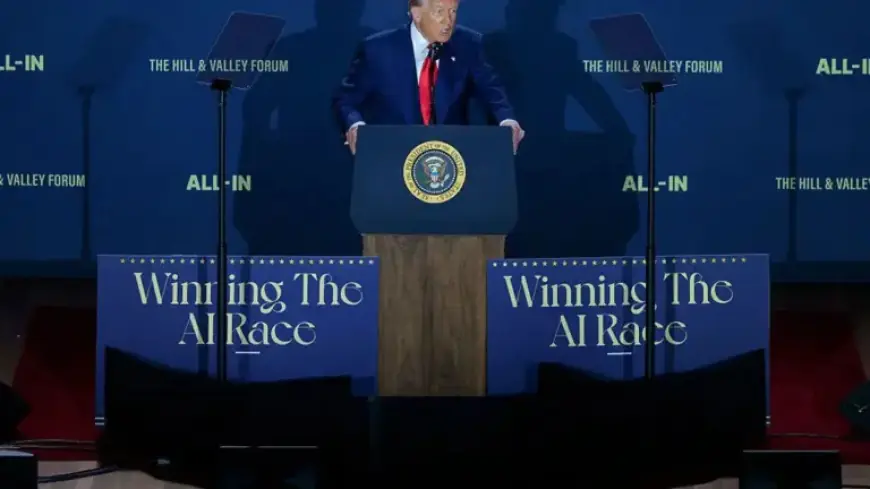
The White House released a new framework for generative AI policy on Friday. President Donald Trump seeks federal control of AI rules.
Overview of the proposal
The administration frames the approach as a national alternative to 50 separate state laws. It draws from Trump’s 2025 AI Action Plan. Senator Marsha Blackburn introduced a related bill, the Trump America AI Act, in Congress on Thursday.
The proposal urges Congress not to create a new oversight agency. Instead, it asks existing regulators and experts to set and enforce rules.
What the plan addresses
Children and online safety
The framework highlights protecting minors from AI harms, including deepfakes and CSAM. It allows states to pass their own child-safety measures.
The proposal references ongoing concerns about teens and AI-driven self-harm. Blackburn’s package includes broad language on kids’ online safety.
Workforce and jobs
The White House acknowledges job displacement risks across many professions. This includes translators, data entry workers, coders, and engineers.
Officials recommend nonregulatory steps. Those steps focus on youth development and AI workforce training.
Infrastructure and data centers
The plan urges states and localities to speed approval of data centers. It argues streamlined construction supports technological competitiveness.
Neighbors and activists warn of environmental impacts and strain on power grids. Tech firms agreed to cover higher electricity costs, but that pledge is voluntary.
Copyright and training data
The administration restates that AI training may fall under fair use. The framework favors allowing court cases to resolve many disputes.
Several lawsuits target AI training practices. Limited rulings involving Anthropic and Meta have favored tech firms in narrow ways.
The proposal also suggests the federal government could supply AI-ready datasets to industry and academia.
Policy limits and political fights
The White House rescinded an earlier effort to bar states from regulating AI. Lawmakers removed that ban in July from the large budget bill known as the One Big Beautiful Bill Act.
At the same time, the administration restricts federal intervention on some topics. It aims to prevent ideological or partisan bias in AI products.
Responses from critics and supporters
Tech industry groups largely praised a uniform national approach. The Consumer Technology Association supported a single set of rules.
Consumer and privacy advocates were skeptical. Alan Butler of the Electronic Privacy Information Center said the plan favors promotion over protection.
Samir Jain at the Center for Democracy and Technology called the framework internally inconsistent. He said it fails to reconcile tensions on issues like kids’ safety.
Ben Winters of the Consumer Federation of America said the proposal prioritizes Big Tech. He urged more funding for consumer-protection agencies.
Where the plan falls short
Observers highlight key inclusions and notable omissions. The document covers children, jobs, infrastructure, and copyright.
But it declines to create a unified regulator. It offers limited enforcement tools and few new funding commitments.
Filmogaz.com will continue to follow congressional action. Lawmakers now face choices about whether to codify or reshape the White House’s approach.