

























Planets Aligning Tonight: Skywatchers’ practical guide to the six-planet parade

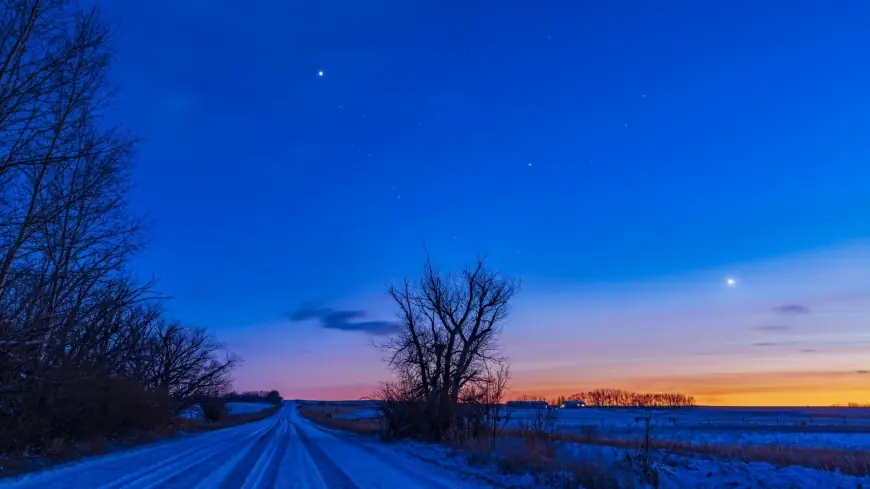
If you’re an amateur skywatcher or night-sky photographer, the planets aligning tonight create a short, crowded viewing window that rewards preparation. Here’s the part that matters: stake out a raised spot with an unobstructed western horizon, bring a scope for the dimmer worlds and plan for the glare and rapid setting of Mercury and Venus. planets aligning tonight is a rare, if technically challenging, naked-eye opportunity for many observers.
Planets Aligning Tonight — what skywatchers should prepare
Practical preparation will determine whether you see the parade or miss it. Choose a raised location with a clear view of the horizon well ahead of time and use a smartphone stargazing app with augmented-reality overlays to map where each planet will appear in your local sky. Purchases made through links on the site may generate an affiliate commission. Sign-ups are encouraged for a monthly entertainment newsletter covering sci-fi and space movies, TV shows, games and books; there’s also a skywatching newsletter for must-see night-sky events, moon phases and astrophotography highlights, and a reader’s club offering monthly sci-fi short fiction.
How the parade looks in the sky (embedded details)
- Visible lineup: Jupiter, Saturn, Venus, Neptune, Uranus and Mercury are the six planets involved in the planetary parade.
- Mercury will appear about 10 degrees above the late-winter skyline with Venus close to its left; Saturn will sit less than 10 degrees to the upper-left of Venus.
- Neptune will be positioned about two degrees to the right of Saturn but is too dim for unaided eyes; under dark skies, a telescope with an aperture of 8 inches (200 millimeters) or more can reveal its tiny bluish disk.
- Uranus will be roughly 5 degrees below the Pleiades open cluster and to the right of the "V" pattern in Taurus in the hours after sunset; it generally requires magnification for confident spotting.
- Jupiter will be high in the eastern sky, with the waxing gibbous moon below it, the moon’s reflected light obscuring the stars of Cancer.
- Mercury and Venus follow the sun out of sight roughly an hour after sunset, briefly becoming easier to spot as the sky darkens then dropping toward the horizon.
Visibility challenges and safety notes
Most of the naked-eye action sits low in the western sky, which compresses the time and gives observers little margin for error. The ice giant Neptune’s low position and proximity to the sun’s glare make it especially difficult on the nights surrounding Feb. 28. Exercise caution: ensure the sun is firmly below the horizon before pointing any telescopic equipment in that direction.
Equipment, technique and odds for success
The next two planets in brightness require added magnification and patience. A modest telescope helps, but the combination of low altitude and twilight glare means even large apertures will be challenged. Use your smartphone app’s augmented-reality feature to locate Uranus and Neptune, sweep slowly across the specified sky patches after sunset, and allow your eyes to adapt to the dark when possible. We truly hope it doesn't rain on your parade — clouds or haze will erase the entire window.
Photographing the parade and a note on experience
Award-winning night-sky photographer Josh Dury grappled with the sheer scope of the scene along with the glow of the setting sun and other challenges when capturing images of this event. It’s easy to overlook how quickly the geometry changes as twilight deepens, so set up early and bracket exposures if you’re shooting wide-field panoramas that include both bright and faint planets.
What’s easy to miss is that the parade blends naked-eye spectacle and telescope-dependent targets in one sky: bring both a wide-angle plan for the horizon parade and a small scope to hunt Neptune or Uranus. If you’re wondering why this keeps coming up for readers, it’s that the combination of weather, horizon clearance and twilight timing concentrates the reward into a very narrow window.