

























China’s Q1 Economic Rebound Challenged by Iran Conflict’s Global Impact

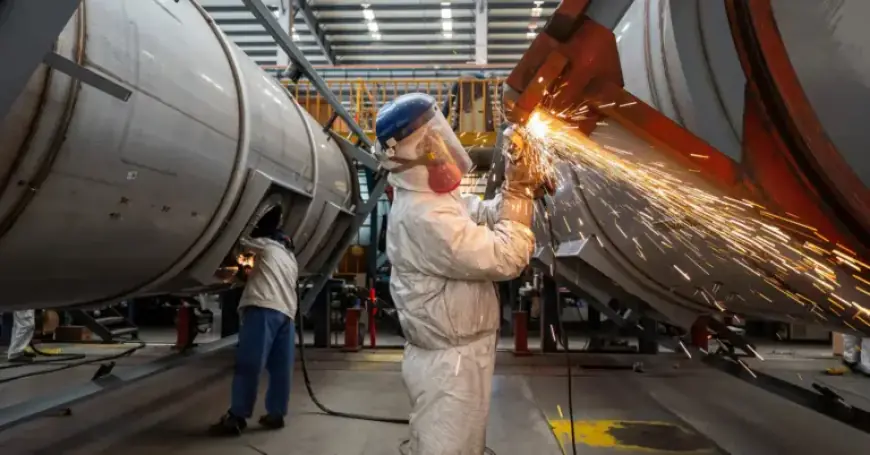
China’s economy accelerated to 5.0% year‑on‑year growth in the first quarter of 2026. This marks an improvement from the 4.5% pace recorded in the final quarter of 2025. The Q1 reading sits at the upper end of Beijing’s full‑year target range of 4.5%‑5.0%.
Trade performance and early signs of strain
Exports drove much of the early momentum. Shipments rose sharply in January‑February, by 21.8%. But March export growth slowed to just 2.5%, signaling possible fragility.
Factory‑gate prices moved out of deflation in March for the first time in over three years. Analysts warn that input‑led, or “bad,” inflation could still erode margins.
Consumption and industrial activity
Retail sales grew 1.7% in March. That was down from 2.8% in January‑February. Consumption remains weak compared with industrial activity.
Industrial output rose 5.7% in March, easing from 6.3% in the first two months. Lending data show subdued credit demand from households and firms.
Supply chain and cost pressures
Petrochemical feedstock costs have surged for some manufacturers. Guangdong Rongsu New Materials’ general manager, Peng Xin, said nylon prices spiked about 40%‑60%. Customers rushed to place orders and stockpile before further increases.
Manufacturers are negotiating prices on a per‑order basis. Many firms are passing higher costs to buyers where they can.
Impact of the Iran conflict and energy risks
The Iran conflict has raised oil prices and heightened uncertainty around global demand. Higher energy costs threaten factory margins and trade flows.
China has partial insulation against shocks. It holds strategic oil reserves and uses a diversified energy mix. Russia supplies discounted oil and gas, and coal, renewables, and electric vehicles reduce exposure.
Imbalances and property sector woes
The economy shows a split between a strong export sector and modest domestic demand. Breaking the long property slump remains key to lifting consumption.
New home prices continue to fall, keeping pressure on developers. Economists warn the export engine could be constrained if global demand weakens further.
Voices from economists
- Junyu Tan of Coface said the direct impact of the Middle East conflict is contained for now, but risks remain.
- Tianchen Xu at the Economist Intelligence Unit highlighted the imbalance between exports and domestic demand.
- Dan Wang at Eurasia Group warned net exports could turn negative in Q2, prompting more fiscal action.
Policy outlook
The central bank is unlikely to ease policy aggressively. Policymakers stand ready to increase fiscal support if export weakness deepens.
Fiscal spending rose 3.6% in January‑February, up from a 1% increase in 2025. Any further stimulus would add to public debt, already more than three times the size of the economy.
China’s Q1 economic rebound faces new tests from the Iran conflict and its global impact. How long the shock lasts will shape Beijing’s policy mix and the outlook for growth.
Reporting for Filmogaz.com.