
























Moon Phase Today: Waxing Gibbous at 88% Illuminated Ahead of March 3 Eclipse

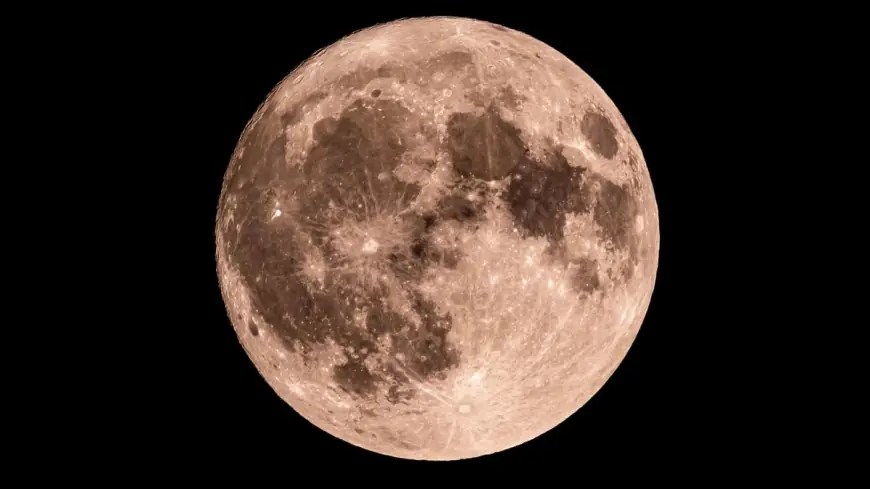
The moon phase today is a Waxing Gibbous, with roughly 88% of the lunar surface illuminated on Feb. 28, making familiar maria and craters easy to spot. This near-full appearance matters now because the same Moon will pass through Earth’s shadow in a total lunar eclipse during the early hours of March 3, 2026, between 3: 44 and 9: 22 a. m. ET.
Moon Phase Today: Waxing Gibbous and Surface Sightings
NASA's Daily Moon Guide lists the lunar illumination at about 88% for Feb. 28, placing the Moon firmly in the Waxing Gibbous stage of its roughly 29. 5-day orbit. Because more than half the face is lit but the Moon is not yet full, observers can see a mix of broad bright areas and contrasting features: with the unaided eye the Mare Tranquillitatis and Mare Crisium are visible; binoculars reveal Mare Nectaris, the Alphonsus crater and the Alps mountain range; and a telescope will bring into view the Apollo 15 and Apollo 11 landing sites along with the Fra Mauro Highlands.
For those tracking lunar rhythm, the next Full Moon is set for March 3 and the prior Full Moon fell on Feb. 1. The lunar cycle passes through eight named phases as the amount of sunlight on the Moon’s near side changes during each orbit: New Moon, Waxing Crescent, First Quarter, Waxing Gibbous, Full Moon, Waning Gibbous, Third (or Last) Quarter and Waning Crescent. What makes this notable is that the Waxing Gibbous stage combines high overall illumination with enough terminator contrast to highlight crater rims and mountain shadows, improving both naked-eye and telescopic viewing.
For anyone following the moon phase today, this is an excellent window to compare views across instruments: naked-eye spotting, binocular observation and telescope imaging will each reveal different layers of lunar detail.
Gemini, Castor and Pollux: Lunar Trio with Jupiter and the Planet Parade
This evening the waxing gibbous Moon will form a bright trio with Castor and Pollux in the constellation Gemini, and bright Jupiter sits nearby, completing a compact pattern that stands out after sunset. The grouping provides a useful orientation point for skywatchers: Castor and Pollux are the two brightest stars in Gemini, and together with the Moon and Jupiter they create a memorable skyline feature.
Look west after sunset for a separate planetary sequence that is shrinking toward the Sun’s glare: Venus remains dominant at magnitude -3. 9, Mercury is significantly dimmer at magnitude 1. 95, and Saturn is about magnitude 1. These magnitude values indicate a wide brightness spread among the three planets and explain why Venus is by far the most conspicuous in the post-sunset sky.
Beyond tonight’s sights, the waxing gibbous phase is directly relevant to the upcoming total lunar eclipse. Because the Moon will be nearly full as it reaches Earth's shadow, it will spend several hours crossing the umbra and—in the middle of that interval—turn a coppery-red hue. The total phase is part of a longer event that observers in North America can follow between 3: 44 and 9: 22 a. m. ET on March 3, 2026.
Observers should plan their viewing accordingly: the Moon’s high illumination now offers a preview of the features that will be visible just before and after the eclipse, and familiarizing oneself with Mare Tranquillitatis, Mare Crisium and the Apollo landing sites will add context to the color and shadow play expected during the eclipse.
Practical viewing tips are straightforward: a clear horizon, a comfortable observing position and a modest telescope or binoculars will significantly enhance what you can see. The waxing gibbous Moon tonight provides both attractive naked-eye scenery and rewarding targets for optical instruments as the lunar calendar moves toward a dramatic total eclipse.