

























Iran Attacks US Base: Fifth Fleet Headquarters in Bahrain Hit, Four US Bases Struck Across Middle East

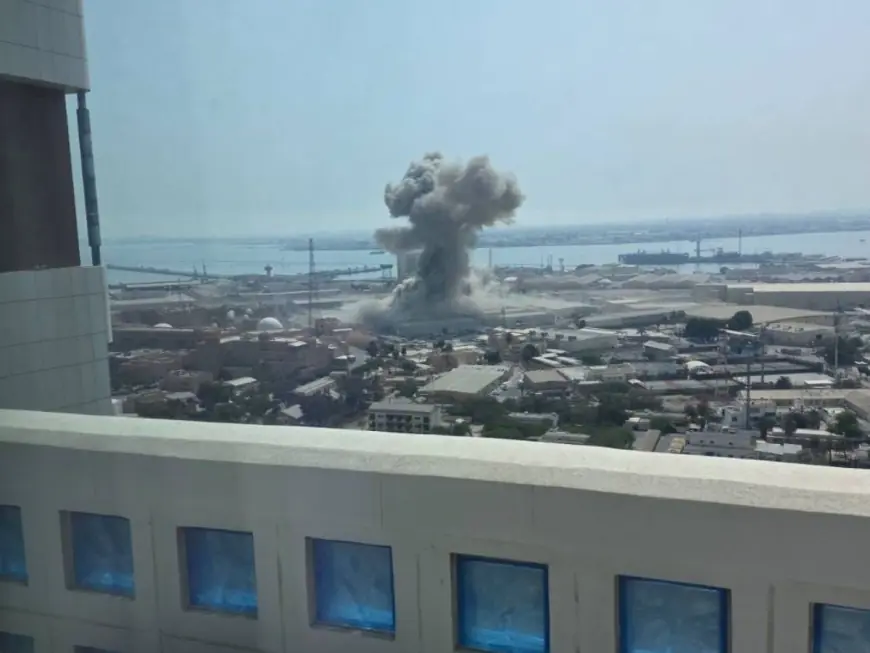
Iran has launched a sweeping missile offensive against US military bases across the Middle East on Saturday, February 28, 2026, striking the US Navy's Fifth Fleet headquarters in Bahrain, Al Udeid Air Base in Qatar, and facilities in Kuwait and the UAE. The Iran attacks on US bases represent the most direct and large-scale assault on American military infrastructure in the region in modern history.
Iran Attacks US Base in Bahrain: Fifth Fleet Headquarters Directly Targeted
Missiles targeted a center linked to the headquarters of the US Navy's Fifth Fleet in Bahrain, the most strategically critical American naval installation in the entire Middle East. Emergency sirens rang out across Bahrain's capital, Manama, as explosions shook the area. Smoke rose over parts of the city, while regional capitals including Riyadh, Abu Dhabi, and Doha also reported hearing blasts.
Bahrain called the Iran attack on the US base a "treacherous attack" and "a blatant violation of the kingdom's sovereignty and security." The Fifth Fleet oversees all US naval activity across the Persian Gulf, Red Sea, Arabian Sea, and parts of the Indian Ocean — making it one of the highest-value targets Iran could have selected in its retaliation campaign.
Four US Bases Hit as Iran Targets Qatar, Kuwait, and UAE
Four US military bases were struck across the Middle East as Iran retaliated against the joint US-Israeli offensive launched earlier Saturday morning ET. Iran's Fars News Agency confirmed the country had carried out attacks targeting military bases in each of the states, including Al Udeid Air Base in Qatar and the headquarters of the US Navy's Fifth Fleet in Bahrain.
Iran's Islamic Revolutionary Guard Corps claimed all Israeli and US military targets in the Middle East had been struck by Iranian missiles, declaring: "This operation will continue relentlessly until the enemy is decisively defeated." All US assets throughout the region were declared legitimate targets for Iran's army. The breadth and speed of Iran's retaliation surprised regional analysts who had expected a more selective response.
Iran Attacks US Military With Unprecedented Wave of Strikes
Iran retaliated with an unprecedented wave of strikes across the Middle East, targeting several nearby countries that host US military bases, as well as Israel. Blasts were heard from the beaches of Dubai to the streets of Doha. Iran appeared to be moving quickly to exhaust its missile arsenal before further US and Israeli strikes could degrade its launch capability.
The US and Israel had waged a twelve-day war against Iran back in June 2025, during which they targeted Iran's stockpile of ballistic missiles. Iran's rapid and aggressive Saturday response reflects an attempt to use its remaining arsenal while it still has operational capacity. Military analysts noted the speed of the Iran attack on US bases suggested pre-planned contingency operations had been activated.
Trump Vows to Annihilate Iran's Navy After US Base Attacks
Trump announced the stated aims of the US campaign: destroying Iran's missile capabilities, targeting Iran's navy, disrupting Iran-backed armed groups in the region, and ensuring Iran does not obtain a nuclear weapon. He also directly stated the US would "annihilate" Iran's navy — a declaration that raised immediate alarm given Iran's proximity to the Strait of Hormuz.
Trump warned earlier in February that "really bad things" would happen unless Tehran agreed to a deal over the future of its nuclear program. The weekend's attack came after a significant buildup of military assets in the oil-rich Middle East region and after a third round of talks in Switzerland on Thursday ended without resolution. Iran's refusal to include its ballistic missile program in negotiations was cited as the final breaking point.
Gulf States Respond as Iran Attacks US Base Infrastructure Region-Wide
Qatar strongly condemned the targeting of its territory with Iranian ballistic missiles, calling it a "flagrant violation of its national sovereignty." In the UAE, the Ministry of Defense confirmed the country was subjected to a blatant attack by Iranian ballistic missiles, which were dealt with by UAE air defenses with high efficiency, successfully intercepting a number of missiles.
Al Jazeera confirmed the sound of explosions in Kuwait, home to the US military's Central Command forward headquarters. The only country in the Gulf Cooperation Council that Iran has not struck is Oman, which has for years served as a liaison between Iran and other nations and played a central role in recent indirect talks between Iran and the US. Oman's role as a neutral mediator appears to have shielded it from the Iran attacks on US base allies across the region.
What Comes Next After Iran Attacks US Bases
The United States had been amassing air and naval assets in the region at a level not seen since the outset of the 2003 invasion of Iraq ahead of the strikes. The Pentagon confirmed Operation Epic Fury remains active and ongoing, with a multiday campaign expected. No official US casualty figures have been released from any of the targeted Gulf base locations as of Saturday evening ET.
Iran is a founding member of OPEC and a major oil producer sitting at the heart of the strategically vital Strait of Hormuz, through which about 20% of the world's oil passes. Oil prices had already climbed to six-month highs ahead of the strikes. With Iran attacks on US bases now confirmed across Bahrain, Qatar, Kuwait, and the UAE simultaneously, energy markets and global security planners are bracing for the next phase of a conflict that shows no immediate signs of de-escalation.