

























Jamaica Hurricane Melissa: Record-Breaking Storm Now Officially Tied as Strongest Atlantic Hurricane in History

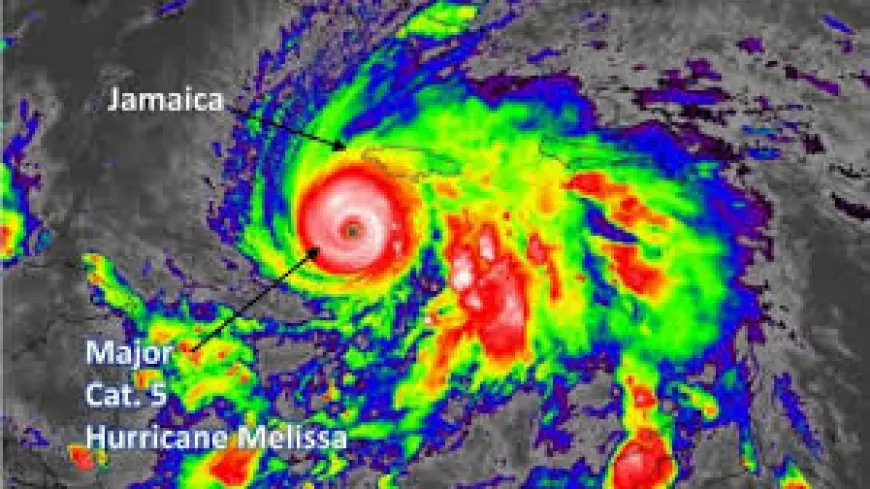
Four months after Hurricane Melissa devastated Jamaica, the National Hurricane Center has released its final post-season report, confirming what forecasters suspected in real time — Melissa is now officially tied as the strongest Atlantic hurricane ever recorded. The findings, published on February 25, 2026, paint a picture of a catastrophic storm whose full destructive scope is still being measured across Jamaica and the Caribbean.
Jamaica Hurricane Melissa: 190 MPH Winds Tied with Hurricane Allen
As Hurricane Melissa approached Jamaica, its estimated highest sustained winds topped out at a terrifying 190 mph on October 28, tying with 1980's Hurricane Allen as one of the two hurricanes with the highest wind speed on record in the Atlantic basin. The two storms now share the record nearly 46 years apart, a span that underscores just how rare this level of intensity truly is.
By the time Melissa made landfall, it had weakened slightly, but its sustained winds at landfall were still estimated at 185 mph — making it the strongest hurricane on record to make landfall in Jamaica and tying the record for the highest sustained winds at landfall in the entire Atlantic basin. Its central pressure at landfall was 897 millibars, the second lowest landfall pressure ever recorded.
The 252 MPH Wind Gust That Shattered Every Instrument Record
At around the same time as the sustained winds peaked, a wind gust of 252 mph was measured by a dropsonde instrument dropped by the crew of a Hurricane Hunter aircraft with NOAA — the highest wind speed ever recorded by the expendable instruments called dropsondes, surpassing Super Typhoon Megi in 2010.
Hurricane Melissa also generated the highest wind gust ever recorded by dropsonde data, with a reading of 252 mph at an altitude of 657 feet, exceeding the record set by Typhoon Megi in 2010. Climate scientists analyzing Melissa concluded that human-driven climate change, which raises ocean temperatures, intensified the hurricane's destructive winds and rainfall. The instrument record now stands as one of the most extreme atmospheric measurements in modern history.
Jamaica Hurricane Melissa Death Toll and Damage: 95 Dead, $8.8 Billion Lost
The known fatalities linked to Hurricane Melissa across the Caribbean include 45 in Jamaica, 43 in Haiti, four in the Dominican Republic, and one in Cuba, for a total of 95 confirmed deaths. The storm affected more than 5 million people across the region according to the United Nations.
Hurricane Melissa dropped up to 35 inches of rain in Jamaica, and produced a storm surge of 7 to 11 feet above normally dry ground along the southwestern coast. The physical damage to Jamaica's buildings, infrastructure, and agriculture was estimated at $8.8 billion in mid-November. The town of Falmouth was described as "all but destroyed," while much of Montego Bay — including its port and Sangster International Airport — was left extensively flooded.
Jamaica Hurricane Melissa Structural Damage: 150,000 Structures Hit
Around 150,000 structures were damaged by Melissa. The storm ripped the roofs off approximately 120,000 structures, and around 24,000 buildings were totaled. Much of Montego Bay was flooded, including the city's port, industrial park, and Sangster International Airport's terminal, with much of the ceiling having collapsed. The Montego Bay Sports Complex was made unusable.
Of 1,010 public schools in Jamaica, 721 were damaged and 160 remained closed six weeks after the storm. Around 40 to 50 percent of hotels were damaged by Melissa. Sandals would take until December to reopen five of its hotels and until May 2026 to reopen the other three. The Jamaican government issued a six-month moratorium on mortgages for 20,000 properties and allocated J$10 million toward housing reconstruction.
Jamaica Hurricane Melissa Agriculture Losses: 70,000 Farmers Devastated
Agricultural losses were particularly severe, with Jamaica reporting roughly 41,390 hectares of farmland affected and over 70,000 farmers suffering losses. The coffee sector sustained damage to approximately 40 percent of trees with an estimated 45 percent loss in production valued at $833.8 million. More than 1.25 million animals perished, including poultry, livestock, and aquaculture stock.
Three months after Hurricane Melissa made landfall, Jamaica's health system is still in the process of recovery. The CDC warns that travel by land may be dangerous in flood zones and that healthcare infrastructure has been damaged. There may be an increased risk of waterborne, vector-borne, and fungal diseases. Recovery across rural and agricultural communities remains far from complete as of late February 2026.
Recovery Efforts and Aid Flowing Into Jamaica Following Hurricane Melissa
Direct Relief, in partnership with Carnival Corporation, the Miami Heat, and the Micky and Madeleine Arison Family Foundation, dispatched 68 tons of critically needed medicines and medical supplies to Jamaica through a combination of air and sea transport — one of the largest private humanitarian responses supporting the country's recovery.
The Walt Disney Company announced it would contribute $1 million to help relief efforts, and American Airlines raised more than $1.2 million for the American Red Cross to aid communities affected by Hurricane Melissa. The Miami Heat and its regional partners also donated around $1 million in supplies. Jamaica's judiciary separately raised alarms this week about the continued state of courts in western Jamaica, with the Chief Justice calling for emergency budget authority to address conditions that remain dangerous months after the storm.