

























Dubai, Emirates, and Dubai Airport Face Major Disruptions After Regional Escalation

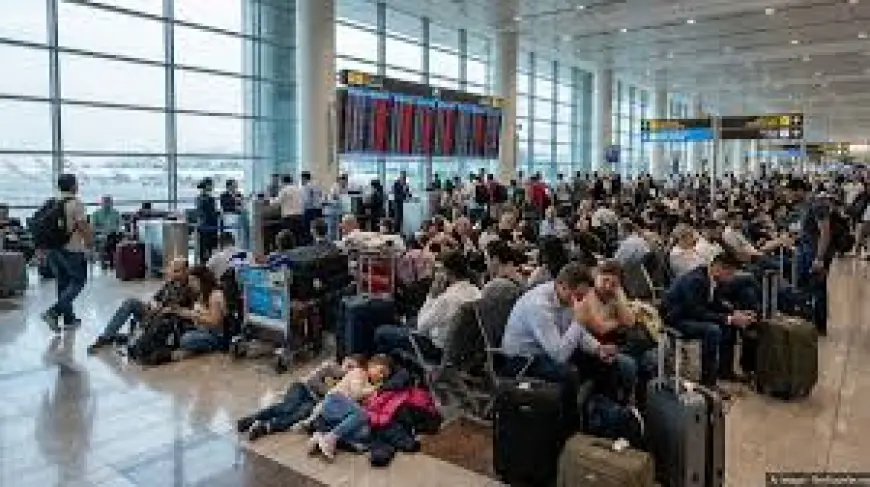
Dubai, Emirates, and Dubai Airport are at the center of significant global travel disruption this weekend, as regional military escalation in the Middle East forced temporary airspace restrictions and widespread flight cancellations. As of Saturday, Feb. 28, 2026 (ET), operations at Dubai’s main aviation hubs remain partially affected, with ripple effects felt across the US, UK, Canada, and Australia.
The United Arab Emirates introduced precautionary airspace measures following heightened regional security concerns, triggering immediate operational changes at one of the world’s busiest travel crossroads.
Dubai Airport Operations Hit by Airspace Restrictions
Dubai International Airport
Al Maktoum International Airport
Dubai International Airport (DXB), the primary global gateway for the emirate, experienced waves of cancellations, diversions, and delays beginning late Friday and continuing into Saturday morning ET. Airport authorities advised passengers not to proceed to terminals unless flights were officially confirmed.
Al Maktoum International Airport (DWC), Dubai’s secondary aviation hub, also saw schedule disruptions, though on a smaller scale compared with DXB.
Dubai International Airport consistently ranks among the busiest airports in the world for international passenger traffic, serving as a key transit point connecting Europe, North America, Asia, and Australia. Any disruption at DXB quickly cascades into global aviation networks.
Emirates Suspends and Reroutes Flights
Emirates
Emirates, Dubai’s flagship carrier, temporarily suspended select regional routes and rerouted long-haul services to avoid restricted airspace. The airline operates one of the world’s largest fleets of wide-body aircraft and connects more than 130 destinations globally.
Flights between Dubai and major cities such as New York, London, Toronto, and Sydney experienced delays or extended flight times due to rerouting around restricted zones. Some departures were postponed pending updated security assessments.
Emirates stated that passenger safety remains its top priority, while operational teams continue adjusting schedules in real time. Travelers have been urged to check booking statuses before heading to Dubai Airport.
Impact on US, UK, Canada, and Australia Travelers
Dubai functions as a major stopover for transcontinental travel. The disruption has particularly affected:
-
US travelers connecting to South Asia, Africa, and Australia
-
UK passengers using Dubai as a winter travel hub
-
Canadian long-haul travelers routing through the Gulf
-
Australian passengers traveling to Europe via DXB
Airlines serving Dubai from North America and Europe implemented contingency plans, including fuel adjustments for longer flight paths and crew rescheduling. Travel insurance inquiries also surged as uncertainty around onward connections increased.
Why Dubai Airport Matters Globally
Dubai Airport is more than a regional hub; it is a central artery of global aviation. In peak seasons, DXB handles tens of millions of international passengers annually. The airport’s geographic position allows Emirates to operate efficient east-west connections, making it a preferred transit hub for long-haul routes.
When airspace in the Gulf region becomes restricted, aircraft must reroute around Iran, Iraq, or other sensitive corridors. These diversions increase flight times, fuel consumption, and operational costs, while also affecting global scheduling reliability.
Economic and Market Reactions
The disruption in Dubai has also influenced broader markets. Aviation stocks and energy markets reacted to heightened geopolitical uncertainty. Longer flight routes increase operational expenses, particularly fuel costs, which can impact ticket pricing if prolonged.
Tourism-dependent sectors in Dubai are closely monitoring the situation. The emirate relies heavily on international travel, luxury tourism, and global business events. Even short-term interruptions can affect hotel occupancy, trade conferences, and retail performance.
What Happens Next for Dubai and Emirates
Authorities in the UAE are continuing to assess regional security developments. Aviation analysts indicate that if tensions ease within the next 24–48 hours (ET), flight schedules could gradually normalize. However, if airspace restrictions persist, airlines may maintain revised routes for several days.
For now, Dubai Airport remains operational but under adjusted capacity. Emirates continues to update passengers while managing a complex web of international connections.
The situation underscores how quickly geopolitical events can disrupt one of the world’s most important aviation hubs. As Dubai, Emirates, and Dubai Airport navigate this volatile period, global travelers are watching closely for signs of stabilization in the Gulf skies.