

























Iran News: US and Israel Launch Major Military Strikes on Iran as Tehran Fires Back

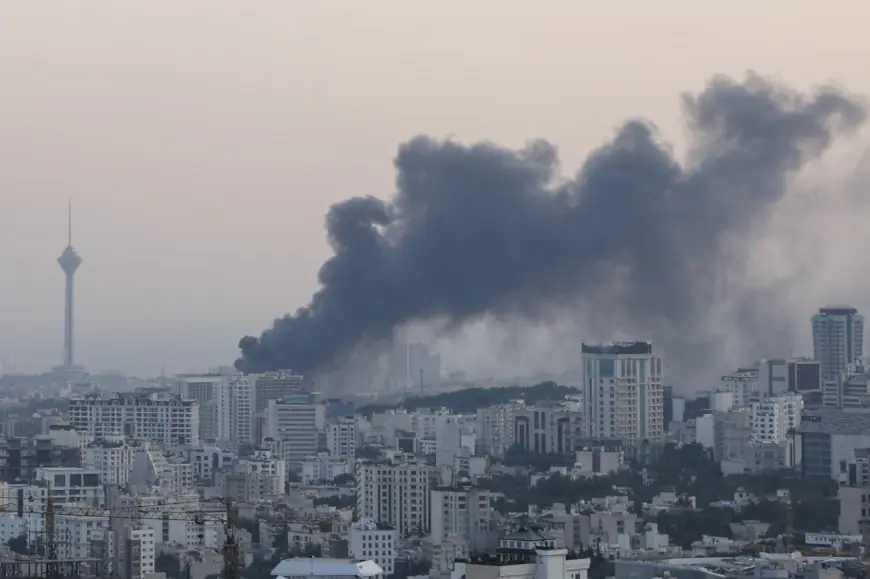
The Middle East has been plunged into full-scale conflict on Saturday, February 28, 2026. The United States and Israel launched coordinated military strikes on Iran, triggering immediate Iranian retaliation across the region. President Donald Trump confirmed the operation in a video statement, calling it a "massive and ongoing" campaign to eliminate what he described as imminent threats from the Iranian regime.
US and Israel Strike Iran in Joint Military Operation
American and Israeli forces began striking targets across Iran in the early morning hours of Saturday, February 28, ET. Explosions were reported in Tehran's University Street, the Jomhouri area, and the northern Seyyed Khandan district. Israeli Prime Minister Benjamin Netanyahu confirmed the attacks, stating the joint operation aimed to "remove an existential threat" posed by Iran's nuclear ambitions.
Israel's military said the strikes were the result of months of "close and joint planning" between Washington and Tel Aviv. Targets reportedly included Iran's supreme leader, president, and the head of the armed forces. The United States is planning for several additional days of attacks, with US forces striking by both air and sea.
Trump Announces 'Major Combat Operations' Against Iran
President Trump addressed the nation via video posted to Truth Social, declaring the US had begun "major combat operations" in Iran. He warned the American public that military casualties were possible, calling the mission "noble." Trump accused Tehran of attempting to rebuild its nuclear program despite ongoing diplomatic negotiations.
"Our objective is to defend the American people by eliminating imminent threats from the Iranian regime," Trump said. He also directly addressed the Iranian people, urging them to "take over your government" once the campaign concludes. Iran's internet connectivity collapsed to just 4% of normal levels as combat operations intensified, consistent with blackout measures used in previous conflicts.
Iran News: Tehran Launches Massive Retaliatory Strikes
Iran's Islamic Revolutionary Guard Corps wasted no time responding, launching what it described as the "first wave" of missile and drone strikes toward Israel and US military assets across the Middle East. Iranian ballistic missiles targeted the US Navy's 5th Fleet headquarters in Bahrain. Strikes also hit or targeted US bases in Qatar, Kuwait, and the UAE.
Qatar intercepted two Iranian missiles over its territory, while the UAE reported one person killed in Abu Dhabi from falling debris after air defenses intercepted incoming missiles. Qatar's Al Udeid Air Base — one of the largest US military installations in the region — was among the declared targets. Gulf Arab nations condemned the Iranian counterattacks as violations of their national sovereignty.
Failed Diplomacy Preceded the Iran Attack
The Iran news today arrives just 24 hours after diplomatic efforts appeared to be gaining momentum. On Friday, February 27, Oman's Foreign Minister Badr al-Busaidi said a deal was "within our reach," revealing that Iran had agreed during indirect talks in Geneva never to stockpile enriched uranium. He described the breakthrough as potentially eliminating Iran's path to a nuclear bomb.
Trump, however, said he was "not happy" with the pace and substance of negotiations on Friday. Iran and the US had held three rounds of indirect talks, most recently in Geneva on Thursday, without reaching a final agreement. Iran's Foreign Minister Abbas Araghchi insisted Tehran's ballistic missile program was never part of the talks' agenda, a position Trump and Secretary of State Marco Rubio called a "big, big problem."
Casualties Reported Inside Iran and Region-Wide Alerts Sound
Five students were killed at a girls' school in southern Iran when strikes struck the area, Iranian state media reported. Civilians in Tehran rushed to record thick plumes of smoke rising over the capital as fighter jets flew overhead. Sirens sounded across Israel simultaneously, with the IDF activating its air defense systems to intercept incoming Iranian fire.
Israel declared a state of emergency, with Defense Minister Israel Katz announcing nationwide precautionary alerts. Explosions were heard in Jerusalem and other parts of the country as Iran's retaliatory barrage began. The UK confirmed it did not participate in the Iran strikes and announced Prime Minister Keir Starmer would chair an emergency COBRA committee meeting Saturday morning.
What Comes Next in the Iran News Crisis
Military analysts warn the situation carries extreme escalation risk. Retired US Air Force Colonel Cedric Leighton told CNN that Iran's rapid and large-scale response suggests it had been actively preparing for this strike. Iran is estimated to retain between 2,000 and 3,000 missiles, though its launch capacity has been significantly reduced from prior conflicts. An Iranian official warned that "all American and Israeli assets and interests in the Middle East have become a legitimate target" and declared "there are no red lines after this aggression."
Oil markets, already sensitive to Iran news given the country's role as a major OPEC producer and its proximity to the Strait of Hormuz, had already surged to six-month highs ahead of the strikes. The Strait of Hormuz, through which approximately 20% of the world's oil passes, remains a central flashpoint as the conflict evolves hour by hour.