
























Washington Post Editor Warns of 'Death Spiral' as Staff Falls to Roughly 1,300 After Sweeping Cuts

The washington post's executive editor has publicly acknowledged concern that sustained financial pressures and recent mass layoffs could propel the newsroom into a damaging downward cycle. The admission follows a brutal round of job cuts and structural changes meant to bring costs in line with dwindling news consumption.
Matt Murray on Five-Year Revenue Decline and Pandemic Spending
Executive editor Matt Murray said the organization had been on a five-year trajectory of "losing revenues" with subscriptions beginning to wane, and that data supported the difficult personnel decisions. He recounted that during the coronavirus pandemic the newsroom invested heavily in editing resources and in expanding some areas of coverage to meet heightened demand.
Murray described a reversal after the pandemic: as COVID faded and news consumption dropped, those pandemic-era investments left the company carrying higher costs at a time when audiences and revenue were receding. That sequence of events — sustained revenue decline, pandemic-driven cost increases, then a return to lower consumption — was cited as the direct cause for the recent restructuring, which leadership framed as necessary to achieve a break-even operating position.
"We made very smart choices, " Murray said, adding that standing still would not have been an option. He also noted owners contributed to a long-term future for the paper and that the aim is not to be a "gigantic profit center" but to be on a trajectory to break even.
Washington Post Staff Reductions and Department Cuts
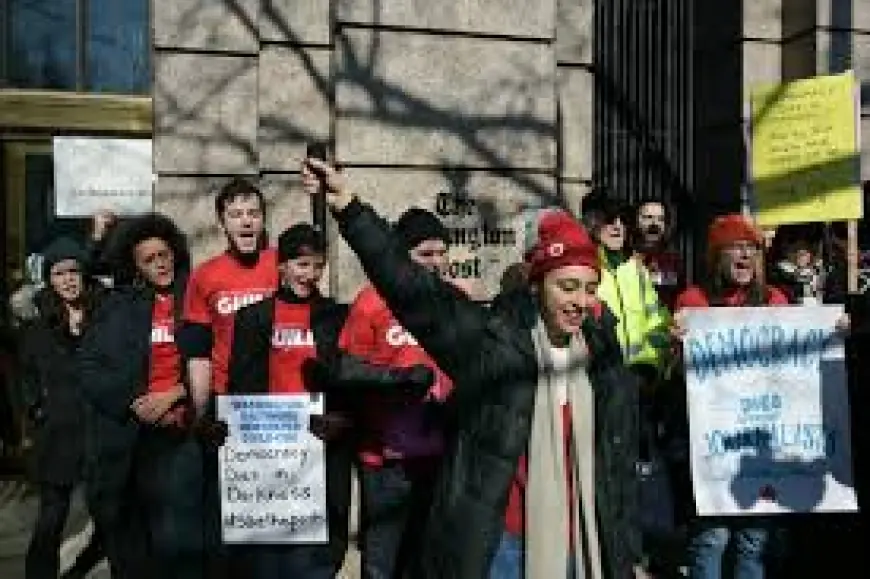
One week after a sweeping round of layoffs, roughly 1, 300 staffers remained at the newsroom, a significant decline from about 2, 500 employees reported in October 2023. The cuts included the elimination of the sports department and other structural reductions described internally as "brutal. " The timing of a staff-town-hall meeting shortly after the layoffs underscored the immediacy of the workforce impact.
Murray acknowledged morale has been a challenge for some time and characterized the recent changes as a painful exercise intended to clear space for collaboration, growth and reinvention. He said leadership hopes the organization will enter a new period defined by innovation rather than retrenchment.
What makes this notable is that management framed the upheaval not as a short-term belt-tightening but as a strategic reset intended to align costs with the current market for news, while relying on owner support to bridge the transition.
The executive editor also used the public forum to flag existential concern for the operation, invoking the phrase "death spiral" to acknowledge how sustained declines, if unaddressed, can create feedback loops of shrinking revenue and shrinking coverage.
Beyond staffing numbers, Murray emphasized that choices made over the past several years — particularly investments made when readership surged during the pandemic — had unintended consequences once consumption normalized. The effect is measurable: a halving of total employment in a period framed by leadership as roughly 18 months to two years of accelerating change, and a recalibration aimed at halting further declines.
Leadership pledged that the near-term goal is financial stabilization. Murray said the organization expects to operate on a break-even trajectory and signaled a commitment to rebuild morale and pursue collaborative innovation as the next phase. The broader implication is that newsroom economics remain fragile, and that even well-resourced news organizations can be forced into deep contraction when audience behavior shifts and costs remain elevated.