

























Jerusalem: 100,000 pray at Al-Aqsa amid Ramadan access limits

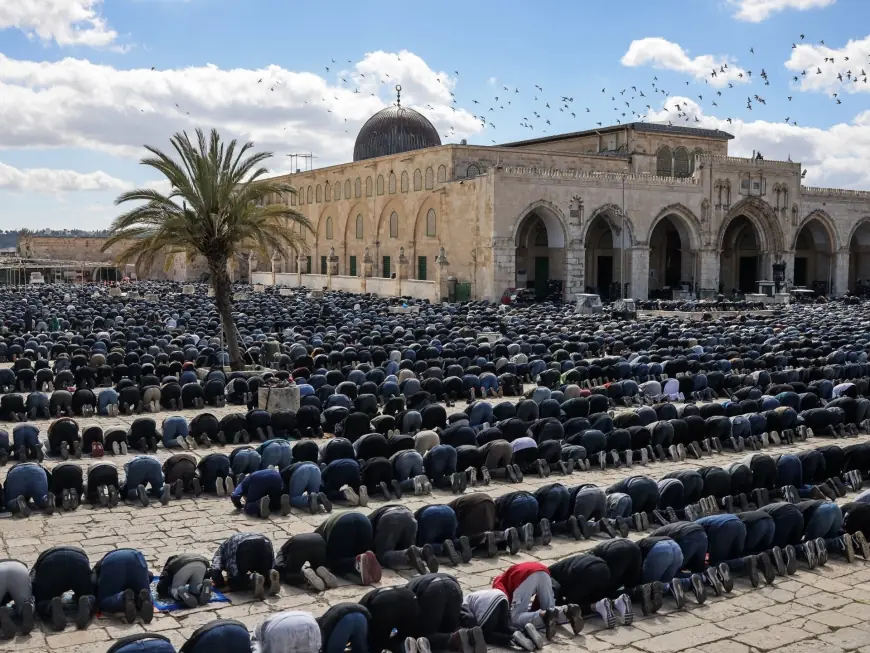
About 100, 000 Palestinian worshippers prayed at the Al-Aqsa Mosque compound in occupied jerusalem for the second Friday of the Muslim holy month of Ramadan, even as authorities enforced strict entry rules and heavy security screening at crossings.
Attendance well above official cap
Organizers and observers documented turnout far exceeding the formal limit set for Friday prayers. The stated cap for entry from the West Bank on Fridays was 10, 000 people with daily permits, and the week before the second Friday saw tens of thousands attend the first Ramadan Friday prayers. Many worshippers nonetheless passed through checkpoints and joined congregations inside the compound, while others were turned away at crossing points despite carrying permits and completing required verification procedures.
Checks, age rules and checkpoint bottlenecks
Access rules in place at the start of Ramadan limited entry by age: only men over 55, women over 50 and children under 12 accompanied by relatives were permitted to enter under the permit system. Visitors were required to complete digital verification procedures when returning to the West Bank. Worshippers were subjected to thorough security screening as they made their way through the Qalandiya checkpoint north of the city, and a heavy deployment of security forces was visible around the compound during the early-morning crossings.
What this means for Jerusalem
The second-Friday turnout and the continued enforcement of permit and age rules underline a persistent gap between official limits and the practical movement of worshippers. Coverage of the crossings captured large pre-dawn lines of Palestinians funneling through narrow inspection lanes, with scenes of congregants gathering before sunrise and tightly packed groups moving toward the compound. At the same time, a significant number of people who attempted to attend — including some who presented permits — were denied passage and forced to return to the West Bank.
Authorities have also issued bans preventing hundreds of named residents from entering for prayers, and restrictions on access have reportedly increased since the military campaign that began in October of the previous year. Those operational measures remain in place through this stage of Ramadan and continue to shape who can attend Friday prayers at the compound.
Analysis: The observable indicators — a formal cap of 10, 000 for West Bank entrants, age-based permit rules, continued digital verification at crossings, and repeated high turnouts inside the compound — point to sustained pressure on movement and religious access during Ramadan. If the permit regime and age restrictions remain unchanged for the remainder of the holy month, checkpoints and screening procedures will likely continue to produce large queues, further turnaways and contested access for worshippers.