






















Ap strike near Khamenei offices as IRGC clashes with MEK at Motahari Complex

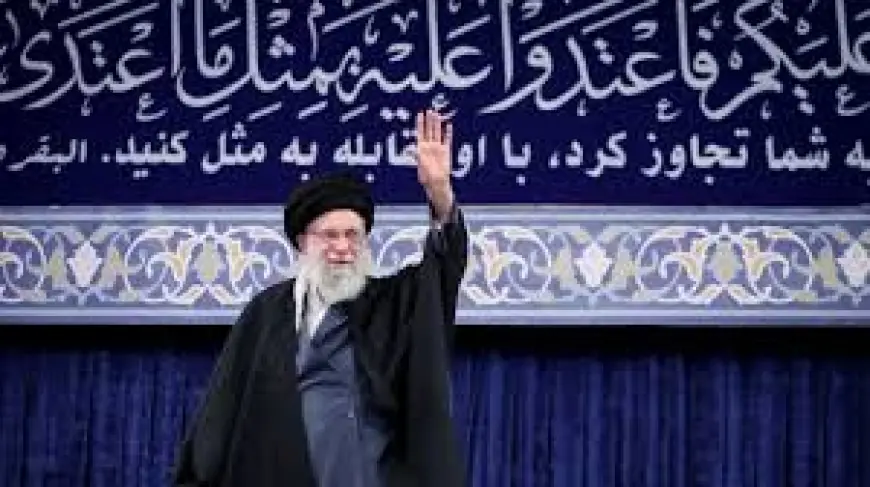
An apparent daylight strike hit near the offices of Supreme Leader Ayatollah Ali Khamenei in Tehran on Saturday, sending smoke over the downtown skyline. The attack came as U. S. forces were reported to be participating, though the full extent of that involvement was not immediately clear.
strike near Khamenei's offices
Israel launched the daylight attack on Tehran on Saturday, and the first apparent strike happened near Khamenei’s offices, where roads were later shut down and other blasts rang out across the capital on the same day (Feb. 28, 2026). Israeli Defense Minister Israel Katz described the attack as done "to remove threats. " It was not immediately clear whether the 86-year-old Supreme Leader had been in his offices; he had not been seen publicly in days.
U. S. participation and regional posture
The United States participated in the operation, though the full extent of its role was unclear; a U. S. official and a person familiar with the operation spoke on condition of anonymity about their involvement. The strike came as the United States had assembled a vast fleet of fighter jets and warships in the region to try to pressure Iran into a deal over its nuclear program. Former U. S. President Donald Trump had sought a deal to constrain Iran’s nuclear program, and that goal was cited as a factor in the region’s heightened posture.
IRGC clashes with MEK near Motahari Complex
Separately, clashes erupted near the Motahari Complex, the package of buildings that hosts Khamenei's headquarters and other key institutions, when forces from the Islamic Revolutionary Guard Corps fought with members of Mojahedin-e-Khalq, the MEK. The IRGC killed or arrested at least 100 MEK fighters in clashes on Monday, the MEK confirmed, while the group said over 150 other fighters "safely returned to their bases" by Monday night. MEK also said it would provide the names of the killed and injured fighters to international human rights organizations.
MEK said 17 surveillance cameras around the complex were operational and that some were disabled at dawn on Monday; the group reported heavy ambulance traffic into the compound after the clashes and said pro-regime casualties were "heavy, " without giving precise figures. The operation near the Motahari Complex was described by a Hezbollah-affiliated outlet as one of the most dangerous and complex operations carried out by MEK in Iran, with claims of direct support from foreign intelligence agencies; MEK said its planned infiltration was foiled in its early stages.
What happens next
It was not immediately clear whether Iran would launch immediate retaliation; Iran had warned that American military personnel and bases across the region would be targets for any retaliation. As a confirmed next step, the MEK said it will provide the names of the killed and injured fighters to international human rights organizations, and the U. S. naval and air assets already assembled in the region remained in place.