






















Abc News Schedules Linsey Davis Interview With Zach Braff and Donald Faison, and Airs 'Yogurt Shop Murders' Special

abc news is rolling out back-to-back programming that pairs celebrity interviews on a weeknight livestream with a prime-time true-crime special revisiting the 1991 Austin yogurt shop slayings. The timing matters because the 20/20 episode arrives during a renewed public focus on the case nearly 35 years after the murders.
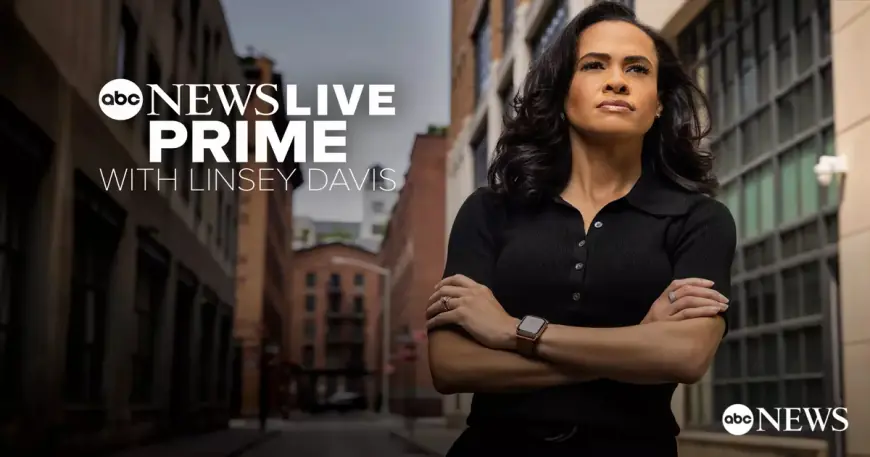
Abc News Live Prime with Linsey Davis to host Zach Braff and Donald Faison
The Linsey Davis newscast will stream each weeknight beginning at 7: 00 p. m. EDT on ABC News Live, offering extended context and interviews that complement the evening's headlines. Zach Braff and Donald Faison are listed among the highlighted guests on the program lineup, part of a schedule that distributes new episodes across multiple streaming platforms and makes limited-time episodes available the next day on on-demand services.
abc news' decision to showcase recognizable entertainment figures in the prime livestream reflects an editorial mix of culture and current events designed to broaden viewership across simultaneous distribution channels. What makes this notable is the pairing of celebrity conversation with deeper reporting elsewhere in the network's schedule, concentrating national attention on a high-profile true-crime story airing the same week.
20/20 'Yogurt Shop Murders' episode revisits Dec. 6, 1991 killings
The network's long-form newsmagazine will air a new episode titled "Yogurt Shop Murders" on Friday, Feb. 27 at 9 p. m. ET, with streaming access the following day on major platforms. The installment draws on original reporting and interviews to trace how four teenage girls—Amy Ayers, 13; Jennifer Harbison, 17; Sarah Harbison, 15; and Eliza Thomas, 17—were killed after closing an Austin yogurt shop on Dec. 6, 1991.
The program includes interviews with prosecutors and family members and revisits key investigative steps. First responders discovered the victims' bodies after extinguishing a fire at the shop on West Anderson Lane; authorities said the girls had been herded to the rear of the store, shot execution-style, left tied and nude, and showed evidence of sexual assault. Eight days after the crime, investigators located 15-year-old Maurice Pierce carrying a. 22-caliber firearm at a Northcross Mall that the two younger victims had visited the night they were killed. Pierce told police he had been with Forrest Welborn, Michael Scott and Robert Springsteen on the evening in question.
Polygraph tests were administered to Pierce and Welborn; ultimately the four juveniles were dismissed from the immediate inquiry. Defense Attorney Amber Farrelly noted that investigators at the time lacked fingerprints, hair, DNA or any physical evidence tying those boys to the crime. The absence of conclusive forensic links contributed to decades of stalled leads, prompting families to erect billboards, maintain tip lines and offer rewards as they sought closure.
Investigative reporting and exclusive interview elements
The special features original reporting by a local investigative reporter and includes an exclusive interview with the daughter of a man identified as a yogurt shop killer, offering new personal perspectives alongside prosecutorial and forensic retrospectives. Former prosecutors and cold-case specialists who appear in the episode discuss how the investigation evolved and how long-term investigative work and public attention intersected to advance the case nearly 35 years after the murders.
The effect of bringing the case back into primetime is twofold: it amplifies family testimony and forensic discussion for a national audience, and it reframes long-running investigative gaps in a modern context of renewed scrutiny. The families’ sustained advocacy—billboards, rewards and persistent outreach—helped keep the investigation visible, and the broadcast aims to translate that history into a clearer public record.
Both the late-afternoon livestream interviews and the 20/20 episode deploy different formats to reach audiences: the nightly 7: 00 p. m. EDT stream delivers daily context and guest-driven segments, while the Feb. 27 9 p. m. ET special compiles investigative reporting and firsthand accounts. Together, the programming underscores how broadcast and streaming platforms are being used to revisit unresolved crimes and to spotlight the voices of victims’ families and investigators.