























Yogurt Shop Murders Solved: DNA Breakthrough Brings Closure After 34 Years

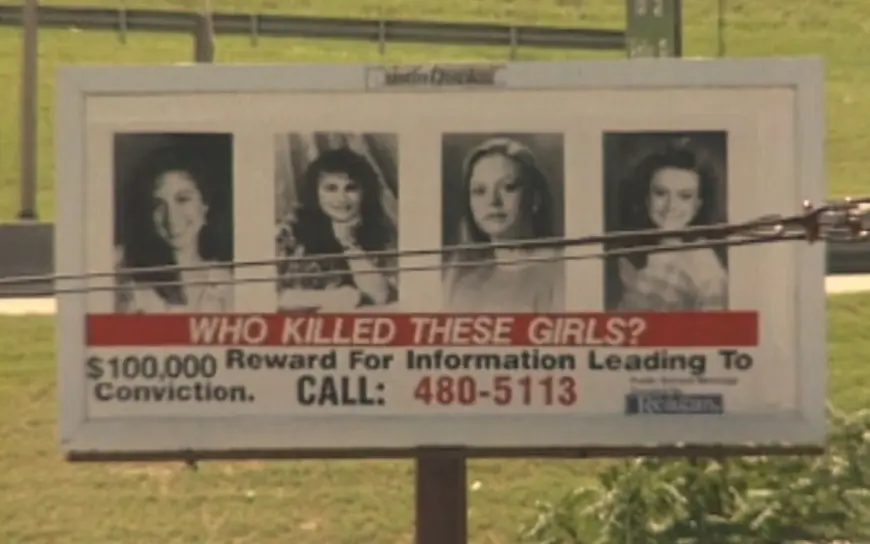
The yogurt shop murders that haunted Austin, Texas for more than three decades are now widely described as yogurt shop murders solved, after modern DNA work identified a deceased suspect and a judge formally cleared the four men once accused of the crime. The renewed attention in late February 2026 has centered on two developments: the scientific path that pointed to a single likely perpetrator, and the legal cleanup that finally erased the wrongful convictions tied to one of the most notorious cold cases in modern US criminal history.
Yogurt Shop Murders Solved: What Changed in 2025–2026
The case breakthrough hinges on advances in forensic DNA analysis that were not available in the 1990s. Investigators re-examined trace biological material recovered from the crime scene and compared it against newer databases and updated testing techniques. That work led to Robert Eugene Brashers, a man with a violent criminal history who died in 1999.
Authorities have said the DNA findings were supported by additional forensic links, including evidence tied to a firearm caliber associated with the murders. While Brashers is no longer alive to face prosecution, the identification has been treated as the clearest resolution the case has ever had—enough to shift public understanding from “unsolved” to yogurt shop murders solved in practical terms.
The 1991 Yogurt Shop Murders: What Happened in Austin
The yogurt shop murders occurred on the night of December 6, 1991 (ET) at an “I Can’t Believe It’s Yogurt!” shop in Austin. Four teenage girls—Jennifer Harbison (17), Sarah Harbison (15), Eliza Thomas (17), and Amy Ayers (13)—were attacked inside the store. The crime included sexual assault, the victims were shot, and the shop was set on fire in an apparent attempt to destroy evidence.
The brutality and the age of the victims turned the murders into a defining local trauma. It also became a national reference point for how a major investigation can be derailed by pressure for quick answers, especially when physical evidence is limited, witness memories conflict, and public demand for resolution is intense.
Clinton-Era Policing Lessons: False Confessions and Wrongful Convictions
For years, the case was a cautionary tale about interrogation and wrongful conviction. Four men—Michael Scott, Robert Springsteen, Forrest Welborn, and Maurice Pierce—were accused in the 1990s. The prosecutions later drew scrutiny over interrogation methods, inconsistent statements, and the absence of conclusive physical evidence linking them to the murders.
Two of the men spent years in prison before the case against them fell apart. The long delay in fully clearing their names became another wound layered onto the original tragedy—one felt by families of the victims, the wrongfully accused, and a community that lived with uncertainty and anger.
February 2026 Court Ruling: Wrongfully Accused Men Fully Exonerated
A key moment in the “solved” narrative came in February 2026, when a judge formally declared all four previously accused men innocent, clearing their records. That legal step matters because releases and dropped charges do not always equal exoneration. A clear judicial finding rewrites the official history: these men are no longer “former suspects,” but people the court has recognized as wrongfully accused.
For the families of the victims, the exonerations and the DNA-driven suspect identification arrive together as a complicated form of closure—relief that the wrong men are no longer carrying the blame, paired with grief that the person identified as responsible is not alive to answer questions in court.
Timeline of Key Moments in the Yogurt Shop Murders Case (ET)
| Date | Moment |
|---|---|
| Dec. 6, 1991 | Four teens killed in the Austin yogurt shop; fire set at the scene |
| 1990s | Four men arrested and prosecuted amid intense pressure to solve the case |
| 2000s–2010s | Convictions unravel; scrutiny grows over confessions and evidentiary gaps |
| Sep. 26, 2025 | Investigators publicly identify Robert Eugene Brashers through DNA work |
| Feb. 2026 | Judge formally exonerates all four men once accused in the case |
Why the Yogurt Shop Murders Still Matter Beyond the US
Interest in the yogurt shop murders has surged again well outside Texas, including in the UK, Canada, and Australia, for two reasons. First, the case sits at the intersection of true-crime attention and real-world criminal justice reform debates. Second, it’s a clear example of how cold cases can shift when technology catches up to evidence that sat for decades.
The story also resonates internationally because the themes are universal: the danger of tunnel vision in investigations, the human cost of wrongful convictions, and the slow, uneven path to accountability even when the truth eventually becomes clearer.
As the public absorbs the latest legal and forensic milestones, the central reality remains stark: the yogurt shop murders solved headline represents not a clean ending, but a hard-earned clarification—who likely committed the crime, and who did not—after 34 years of grief, doubt, and unanswered questions.