
























Pizzagate Echoes as Bill and Hillary Clinton Face Epstein Probe Depositions — Why the Clintons’ Ordeal Might End Up Backfiring on Trump

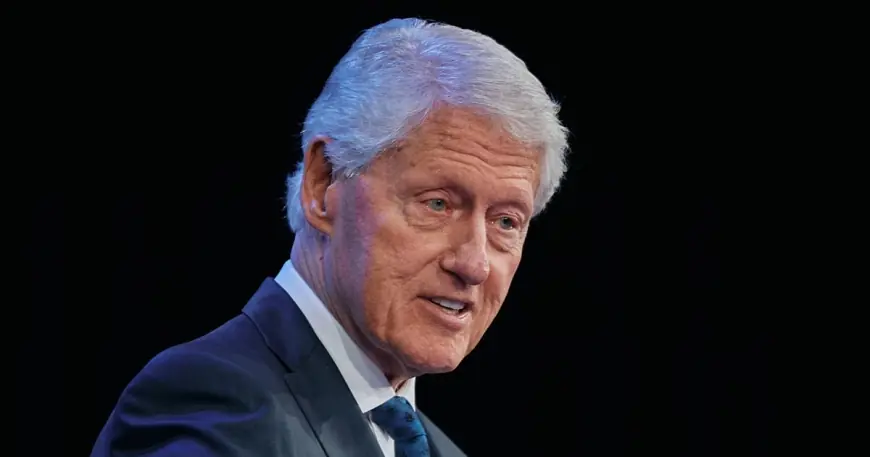
Former President Bill Clinton testified before the Republican-led House Oversight Committee one day after his wife, Hillary Clinton, was deposed in the Epstein probe, and the sequence has already revived the keyword pizzagate in public discussion. The high-profile, closed-door depositions and a flood of released materials matter because they reshape the political narrative and fuel intense scrutiny of both the committee’s tactics and the Clintons’ responses.
Pizzagate and the resurfacing of conspiratorial threads
The simple presence of the word pizzagate in headlines and online chatter underscores how quickly complex, high-stakes inquiries can intersect with long-running conspiratorial themes. That dynamic is now playing out alongside the committee’s work in the Epstein probe, amplifying public attention and complicating the political backdrop for everyone involved.
What Bill Clinton told the committee
Bill Clinton spent roughly six hours in a closed-door deposition with the Republican-led House Oversight Committee. He told members, "I saw nothing" and "did nothing wrong, " and he criticized the panel for making his wife sit for a deposition. In an opening statement he said he would not have flown on Jeffrey Epstein’s plane if he had any inkling of wrongdoing and that he would have turned Epstein in and led calls for justice if he had known. His statement also warned that, while under oath, he would answer questions to the best of his abilities "consistent with the facts as I know them: the legitimate, the logical and even the outlandish. "
Hillary Clinton’s deposition and the sequence of events
The former secretary of state was deposed for about six hours the day before her husband’s deposition, answering questions about what she knew regarding Epstein and co-conspirator Ghislaine Maxwell. The back-to-back timing—Hillary’s deposition followed immediately by Bill’s—has become a focal point in coverage and commentary.
Committee reactions and key lawmakers’ remarks
Oversight Chair James Comer, R-Ky., spoke to reporters outside the venue in Chappaqua, New York, saying Clinton "answered every question" or "attempted to answer every question" and calling the deposition "very productive. " Comer added that "we learned some things" but that the panel had been "hoping to get more, " and described Clinton as "charming. " Representative Nancy Mace, R-S. C., said Clinton answered questions "even when his attorneys told him to shut up. " Comer also characterized the moment as "a historical day for the United States Congress" and noted that "no one is accusing anyone of any wrongdoing" while stressing that the committee seeks answers for the American people.
Evidence released so far and disputed images
Files tied to the Epstein probes that have been released include numerous pictures of Bill Clinton with Jeffrey Epstein and Ghislaine Maxwell. Some images show Clinton in a hot tub, swimming in a pool with Maxwell, and sitting at a table with a woman sitting on his leg. The pictures are undated, and it is unclear where they were taken; none suggests wrongdoing. During his deposition Clinton said he did not know the woman pictured with him in a jacuzzi in the Justice Department’s file release and denied having sex with her when asked. He also repeatedly said he never visited Epstein’s island.
Sworn declarations and procedural notes
The Clintons previously told the committee in sworn declarations that they had "no personal knowledge" of any "criminal activities" by Epstein or Maxwell. Unlike Hillary Clinton, Bill Clinton did not speak to reporters after his deposition. The interview took place in Chappaqua, where the Clintons have a house. Oversight Chair Comer said he expects a video and transcript of the Hillary Clinton deposition to be made [unclear in the provided context].
Why the ordeal could shift political calculations
The combination of visible photos, extended closed-door questioning of a former president and first lady, and charged lawmaker comments creates a political environment that observers describe as volatile. That volatility can magnify collateral narratives—illustrated by renewed mentions of pizzagate and other conspiratorial flashes—and could have unintended consequences for multiple political actors. This remains a developing story; details and impacts may evolve as depositions are reviewed and committee materials are released.