






















S26 Ultra and the wider Galaxy S26 line: why higher prices and new AI assistants change the buying calculus

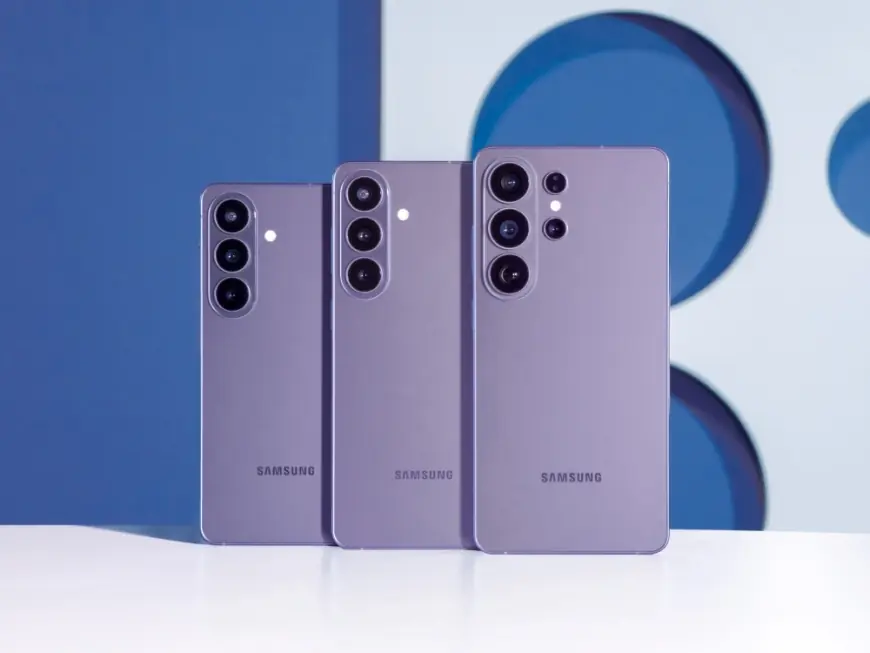
The immediate consequence of Samsung’s Galaxy Unpacked is that the s26 ultra and its siblings arrive with more ambition—and higher prices—shifting where buyers might spend and what they expect from flagship phones. Beyond raw specs, the event emphasized new privacy display controls, expanded agent-style AI on-device, and accessory updates that reshape daily use and the OS ecosystem.
S26 Ultra: price, positioning and the practical impact
Higher entry prices put pressure on buyer choices: the Galaxy S26 now starts at $899 (a $100 increase), the S26 Plus at $1, 099 (also $100 higher), and the S26 Ultra starts at $1, 200. That pricing move changes how consumers weigh camera and AI upgrades versus last year’s models, and it raises the bar for perceived value from the new S26 Ultra hardware and software features.
Event essentials from San Francisco and what Samsung unveiled
The Unpacked event in San Francisco on Wednesday introduced three smartphones—the Galaxy S26 Ultra, Galaxy S26 Plus, and Galaxy S26—and a pair of new earbuds. The company framed these as iterative updates but layered in a set of changes that shift functionality: the S26 Ultra is the flagship with a Snapdragon 8 Elite Gen 5 processor, a 6. 9-inch QHD+ display and a 5, 000 mAh battery; it supports an S-Pen and can charge from 0% to 75% in 30 minutes with a 60W charger.
Camera hardware on the S26 Ultra retains the same pixel counts as its predecessor—a 200-megapixel wide and a 50-megapixel telephoto—but both the wide and telephoto lenses now have larger apertures, f/1. 4 and f/2. 9 respectively. The other two phones share the same processor as the S26 Ultra in some configurations, although the company will use its Exynos 2600 processor in some geographies. The smaller Galaxy S26 receives a battery bump over the prior model, and the S26 Plus adds 20W wireless charging capability.
AI assistants, agent demos and what changes in daily use
Google previewed an agentic version of Gemini that can act on a user’s behalf—examples shown included hailing a cab from Uber. Samir Samat, head of Android ecosystem at Google, demonstrated Gemini reading a group chat to determine a meal order and placing it on Grubhub. A new Circle to Search update was shown using multi-object recognition to identify multiple items on-screen.
Samsung is broadening the AI stack on its phones: devices will include three AI assistants—Bixby, Google Gemini, and Perplexity—and the company is partnering with Perplexity to preload its app and use Perplexity’s APIs for tasks like setting alarms, taking notes and powering browser search features. Galaxy AI will also screen calls and produce a summary of what the caller says, shifting some everyday interactions from manual to assisted.
Accessories, privacy display tweaks and dust/water ratings
Samsung introduced two earphones, the Galaxy Buds4 and the Galaxy Buds4 Pro, updated with a flatter stem design. The earphones carry IP ratings—IP54 and IP57—described as somewhat protected from dust and water. On the display side, the S26 Ultra gains a configurable privacy display that can hide parts of the screen (notification area, password fields or the entire screen) on a per-app basis; an additional “maximum privacy protection” mode tones down bright areas while lifting dark parts of the image to reduce onlookers’ ability to read content.
Pricing and ecosystem signals
Pricing shifts (S26 $899, S26 Plus $1, 099, S26 Ultra $1, 200) and the mix of hardware and AI tie-ins suggest a push to monetize differentiated software and services alongside premium hardware. Here’s the part that matters: buyers will now be weighing new agentic capabilities, privacy features and battery/charging improvements against the steeper entry points.
- Save up to $680 on your pass with Super Early Bird rates.
- Save up to $680 on your Disrupt 2026 pass. Ends February 27.
- Three new phones announced: Galaxy S26 Ultra, Galaxy S26 Plus, Galaxy S26.
- S26 Ultra highlights: Snapdragon 8 Elite Gen 5, 6. 9-inch QHD+ display, 5, 000 mAh battery, 0–75% in 30 minutes with 60W, S-Pen support.
- Camera changes: wide 200MP (f/1. 4) and telephoto 50MP (f/2. 9) retain predecessor pixel counts.
- AI stack now includes Bixby, Google Gemini and Perplexity; Perplexity will be preloaded and used for alarms, notes and browser search APIs.
It’s easy to overlook, but the pairing of preloaded AI apps, agent demos and the privacy display feature signals a shift: hardware gains are coupled tightly with software experience choices that could determine which buyers upgrade this year. The real test will be whether those software features land reliably across regions where different processors are used and whether users find the multi-assistant approach less confusing than it is useful.
Writer’s aside: changes like per-app privacy displays and agentic assistants rearrange daily habits more than raw megapixels do; users will decide if that trade-off justifies the price increase.