






















Australian Economy Faces Peril Over Rising Fuel Prices


Australia’s economy is currently facing significant threats due to escalating fuel prices, which could radically alter its economic landscape. Recent modeling by Deloitte Access Economics highlights two potential scenarios if crude oil prices soar. If prices rise to $US150 per barrel, nearly 1 million Australians may find themselves unemployed, and inflation could exceed 6.5%. In a more severe scenario, with oil priced at $US175 per barrel amid ongoing Middle Eastern conflicts, joblessness could surpass 1 million, driving up unemployment rates to 6.8%, and inflation could reach as high as 7.5%.
Impact of Rising Fuel Prices on Employment and Inflation
The potential implications of rising fuel prices extend beyond mere statistics. Analysts from firms such as AMP and Oxford Economics caution that $US150 per barrel prices are possible if access to the Strait of Hormuz remains restricted. Under this condition, Deloitte forecasts inflation could rise to 6.6% by the end of the year, and the economy would begin to contract, leading to approximately 950,000 unemployed individuals.
Sectoral Effects and Economic Decline
The air transport sector could witness a dramatic decline, with activity dropping by 8.3%, equivalent to about 150,000 fewer inbound tourist flights during the holiday season. Both the manufacturing and tourism sectors would likely suffer the most under these adverse conditions.
- Rising oil prices spiked from below $US60 per barrel earlier this year to over $US110 following U.S. and Israeli military actions against Iran.
- Despite a recent ceasefire negotiations resulting in lower prices, apprehensions remain regarding future stability.
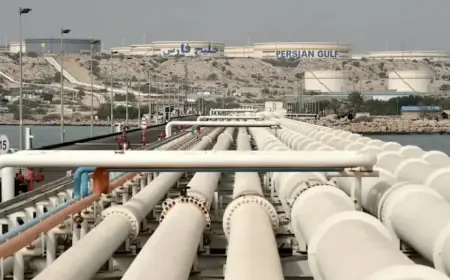
- A source from Iran’s Tasnim News Agency indicated that the country would limit access through the Strait of Hormuz, crucial for 20% of the world’s oil supply.
Government Response to Economic Challenges
In light of these developments, Australian Treasurer Jim Chalmers recently updated economic forecasts, suggesting a potential growth decrease of 0.2% if oil prices stabilize around $US100 a barrel. Inflation is projected to reach near 5%, exceeding the Reserve Bank’s target range.
Oil Price Volatility and its Economic Fallout
Further complicating the situation is the ongoing volatility in oil prices, attributed to failed U.S.-Iran negotiations regarding nuclear policies. U.S. Vice President JD Vance noted that significant issues prevent any agreement, impacting both nations’ economies.
Budget analyst Chris Richardson has urged the government to leverage an anticipated $30 billion increase in budget revenue, fueled by rising oil prices and inflation. Updated forecasts suggest that the previous estimates of a $34.3 billion deficit may be reduced to around $14.3 billion for the fiscal year 2026-27.
- This revenue is partly due to an increase in personal income tax collections and stronger corporate tax contributions.
- With a current budgetary plan, the government is preparing reforms focused on spending, taxation, and productivity.
Political Considerations and Future Outlook
Opposition Leader Angus Taylor emphasized the need for caution, urging that the government should use any additional funds prudently to pay down debt and enhance fiscal resilience rather than for new spending initiatives.
Ultimately, as Australia grapples with these complex economic threats, the government must balance responding to rising fuel prices with ensuring sustainable fiscal practices to safeguard the nation’s overall economic health.