























Flamingo Land decision raises urgent questions over flood risk, ancient woodland and the resort's future at Loch Lomond

Why this matters now: the rejection of the Lomond Banks proposals leaves technical and legal uncertainties that will shape whether any major leisure investment can proceed at Balloch. For residents, campaigners and the developer, the Scottish ministers' refusal — driven by concerns about flood risk, woodland loss and wider planning conflicts — changes the immediate calculation around mitigation, appeals and local economic promises tied to flamingo land's scheme.
Flamingo Land ruling frames the debate around risk and unresolved modelling
Ministers described their choice as "finely balanced" but ultimately driven by what they called significant concerns over flood risk and the permanent loss of historic woodland, alongside other development-plan conflicts. The government accepted that the proposed resort would bring socio-economic benefits yet reached a different conclusion from an independent adviser who had recommended approval; that adviser had placed conditions on any consent, including 49 conditions noted in the planning record. That divergence leaves technical uncertainties—on flood modelling, the adequacy of compensatory planting for ancient trees and how those uncertainties interact with national park aims—that are now central to the project's fate.
What was proposed at Balloch and the long planning history
The Lomond Banks proposals — put forward by Lomond Banks, which is owned by Flamingo Land — sought to develop a major leisure scheme on the banks of Loch Lomond in Balloch, West Dunbartonshire. Plans described a £40m holiday park including two hotels, more than 100 lodges, a waterpark, a monorail, restaurants and parking for more than 300 cars. Developer documents also projected an increase of more than 250 extra cars per hour on local roads at peak times.
The planning saga stretches back to 2018 when the developer first submitted proposals, before withdrawing them the following year after substantial local opposition. Revised plans were later submitted in 2020 and were unanimously rejected by the Loch Lomond and the Trossachs Park Authority; that rejection appears in the record as having occurred in September 2024. A government reporter later recommended approval in principle but attached a set of conditions; ministers then "called in" the plans in June 2025 and ultimately refused permission in principle.
Local reaction and the developer's response
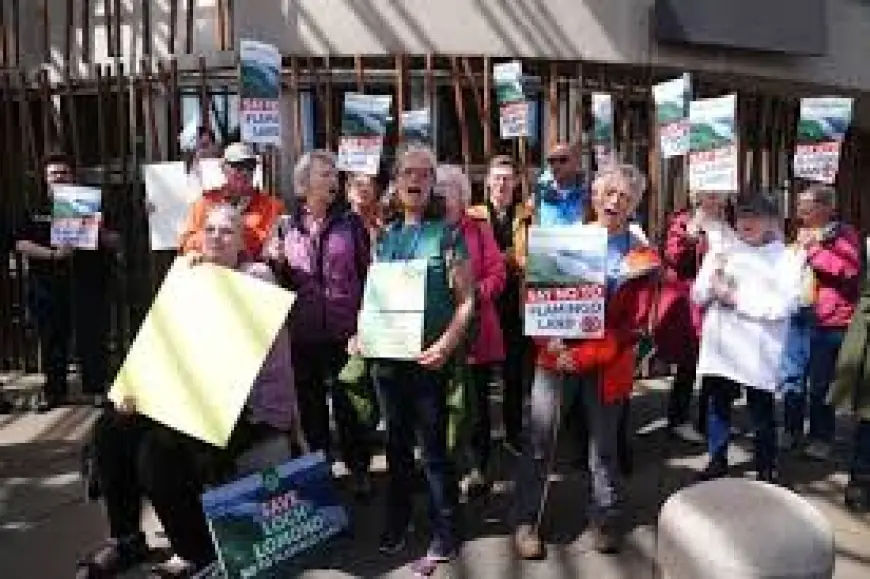
The campaign against the scheme included a large petition and vocal opposition from environmental groups and political figures who argued the development would harm an iconic landscape and local communities. One prominent political opponent described the outcome as a major victory for the local campaign and urged the developer to abandon the proposals. The developer, through Lomond Banks, criticised the refusal as dismissive of regeneration promises and long-term economic benefits for disadvantaged communities, and said it remained confident issues such as flood modelling and impacts on ancient woodland could be addressed.
- 2018: Initial submission of the Lomond Banks proposal.
- 2019: Proposal withdrawn after strong negative reaction.
- 2020: Updated plans submitted; later unanimously rejected by the park authority.
- September 2024: Loch Lomond and the Trossachs Park Authority initially rejected the plan.
- June 2025: Ministers called in the plans a month after a government reporter had approved planning permission in principle; the timing and sequencing of recalls and recalls in other years is unclear in the provided context.
- Forward signal: an appeal to the Court of Session remains a possible route for the developer.
Here’s the part that matters for local residents and planners: ministers have accepted that there are socio-economic upsides, but they judged environmental and flood-related risks to outweigh those benefits under the development plan. The real question now is whether technical fixes, additional planting or legal challenge will be sufficient to reopen the route to consent.
Legal options, unresolved technical tests and what could confirm a shift
The ministers' refusal is final in planning terms for now, but the decision could be challenged at the Court of Session. Outstanding tests include whether flood risk modelling can be revised to reduce uncertainty and whether compensatory planting could adequately replace historic woodland. If revised, independently verified modelling and a clear, deliverable woodland compensation package would be the concrete signals that might alter the calculus.
What’s easy to miss is that ministers explicitly acknowledged the potential economic benefits while still refusing permission; that combination makes any future case complex because it requires not only technical fixes but persuasive planning justification that those fixes remove the particular policy conflicts ministers identified.
Timeline and next steps are subject to legal process and technical work, and details may evolve as any appeal or revised submission is pursued.