
























Supreme Court decision imperils $175 billion; treasury chief says he 'got a feeling' the supreme funds won't return

Few households were banking on a tariff rebate check from the White House, but it’s looking even less likely now following last week’s supreme Court decision. Treasury Secretary Scott Bessent told the Economic Club of Dallas that he has “a feeling” the funds collected under the IEEPA may never reach consumers.
What the court ruled
The Supreme Court on Friday ruled President Trump could not use the International Emergency Economic Powers Act (IEEPA) to levy duties on trading partners. The court found the Oval Office’s use of the IEEPA to introduce sweeping global tariffs was unlawful, a decision that prompted a weekend of updates from the Oval Office as it scrambled to find new legal footing to continue collecting its import duties.
IEEPA tariffs timeline
IEEPA tariffs were initially imposed on China in February 2025, and a month later were imposed on Canada and Mexico. April’s “Liberation Day” tariffs also came under the IEEPA authority. The funds initially generated under the IEEPA tariffs are now in dispute even as the White House considers other options to continue generating tariff revenue.
Treasury secretary's assessment
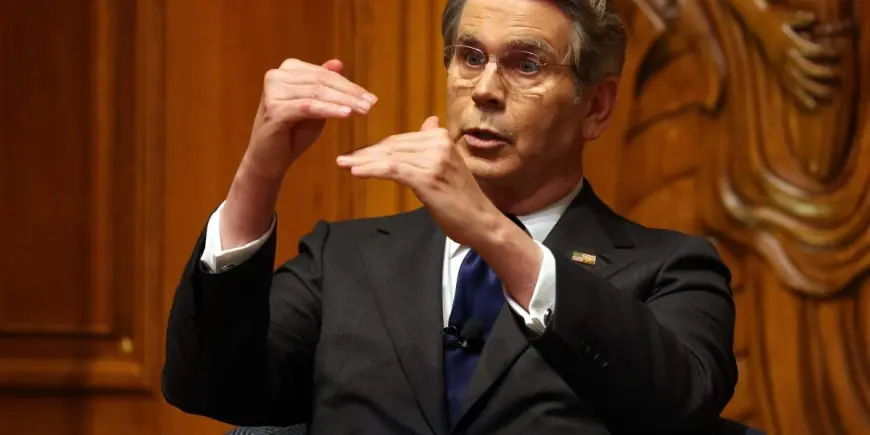
Speaking at the Economic Club of Dallas in the aftermath of the ruling, Treasury Secretary Scott Bessent said the Supreme Court had not ruled on how the funds generated under the IEEPA should be handled, and that that decision will be pushed back to international trade courts. He said, “My sense is that could be dragged out for weeks, months, years, so … we’ll see what happens there. ” Bessent added that using alternative methods like Section 232 (a national security justification) or Section 301 (unfair trade practices) means tariff revenue generation won’t drop or slow. On the IEEPA revenues specifically, he noted: “I got a feeling the American people won’t see it. ”
White House reactions and legal path
Other members of the Trump team expressed similar views. In an interview on Sunday, U. S. Trade Representative Jamieson Greer was asked if the White House will fight efforts to seek compensation or pay out refunds. Greer said, “So it’s a matter for the courts. They created the situation, and we’ll follow whatever they say to do. ” The White House has a number of options for continuing to generate tariff revenue, but the collections generated under the IEEPA remain tied up in legal dispute.
How much is at stake
Precise totals are still up for debate because IEEPA funds will need to be separated from customs duties and levies already in place under previous and new trading agreements. The latest analysis from the Penn Wharton Budget Model at the University of Pennsylvania projects up to $175 billion in potential refunds, reflecting cumulative IEEPA collections of roughly $164. 7 billion by January 2026, with collections running at about $500 million per day.
Economic views on refunds
Optimists have suggested the refunds could act as an economic stimulus, since U. S. importers would be the entities receiving the cash influx. Consumers might hope for lower prices if corporations pass on the influx of cash. UBS chief economist Paul Donovan told clients this morning that any hopes of businesses passing the rebates back through to consumers may be naive: “Tariff rebates will increase the U. S. fiscal deficit, and act as a fiscal stimulus. Any rebates will be paid to U. S. importers (as they are the ones who made payments to the U. S. Treasury). With new tariffs coming in, it seems unlikely anyone will rush to lower prices to their customers. ”
The Supreme Court ruling has set in motion legal questions about separation of IEEPA collections from other duties, a potential multiyear litigation timeline, and the practical prospect that the $175 billion projected in potential refunds may never reach consumers.